


Table of Contents
- What Are Archival Safe Card Sleeves?
- Why Card Sleeves Matter for Preservation
- Understanding Sleeve Materials: Polypropylene, Polyethylene, and Polyester
- Trading Card Sleeve Sizes and Fit
- Best Card Sleeves for Long-Term Storage
- How to Sleeve Trading Cards Correctly
- Card Sleeves vs. Top Loaders: Which Should You Use?
- Storage Conditions and Handling Best Practices
- Frequently Asked Questions
Last Updated: October 12, 2026
What Are Archival Safe Card Sleeves?
Archival safe card sleeves are made from chemically stable, non-reactive materials designed to preserve trading cards without causing long-term damage or transferring harmful chemicals over time.

"Archival safe" means the material is acid-free and contains no plasticizers that leach into your cards. These sleeves maintain their integrity for decades, preventing surface scratches, fingerprints, dust, and environmental degradation whether you're protecting a $5 card or a graded gem worth thousands.
The difference between a protective sleeve and an archival safe one can determine whether a card maintains its condition or deteriorates despite your best efforts.
Why Card Sleeves Matter for Preservation
Card sleeves are your first line of defense against dust, moisture, fingerprints, and physical damage. Without one, even careful handling leaves microscopic scratches visible under magnification.
Humidity fluctuations warp cards, temperature swings stress cardboard fibers, and UV light fades ink and artwork. A quality sleeve barriers against all of these, directly preserving resale value for serious collectors.
Sleeve cost is trivial compared to the value they protect. A card worth $100 or more absolutely needs proper sleeving, and even commons deserve protection for long-term keeping.
The Library of Congress preservation guidelines emphasize that protective enclosures are among the most effective tools for extending the lifespan of collectible materials. The same principle applies to trading cards: the sleeve you choose today determines whether your collection looks pristine or deteriorated in 20 years.
Understanding Sleeve Materials: Polypropylene, Polyethylene, and Polyester
Polypropylene: The Industry Standard
Polypropylene is the most common card sleeve material for good reason: it's chemically stable, acid-free, and non-reactive with cardboard. It maintains clarity for decades without yellowing or becoming brittle, and is flexible enough for easy insertion yet rigid enough to prevent bending.
It resists moisture absorption and won't leach plasticizers into your cards, which is why polypropylene dominates the archival safe card sleeves market with reliable, long-term protection at a reasonable cost.
One limitation: polypropylene can become slightly cloudy under extended extreme heat or UV light, but in normal storage conditions this isn't a practical concern.
Polyethylene: Flexible and Durable
Polyethylene is softer and more flexible than polypropylene, which some collectors prefer for easier insertion. It's acid-free, chemically stable, and slightly thicker, offering additional cushioning.
The trade-off is clarity: polyethylene has a slightly milky appearance versus polypropylene's crystal clarity. For storage-focused collectors, the extra cushioning and durability often outweigh the minor clarity reduction.
Polyethylene is less common, meaning fewer options and sometimes higher prices, but quality polyethylene sleeves perform exceptionally well for long-term storage.
Polyester: Premium Long-Term Stability
Polyester is the premium tier of archival safe card sleeves, offering superior chemical stability, exceptional clarity, and durability. It resists yellowing better than polypropylene or polyethylene, ideal for 50+ year storage periods.
The drawback is cost: polyester typically runs 2-3 times the price of polypropylene.
Polyester's stiffness makes insertion slightly more deliberate, a minor inconvenience for superior protection.
PVC and Why to Avoid It
PVC (polyvinyl chloride) was once standard but is now the material you must absolutely avoid. Its plasticizers leach into cards over time, causing permanent staining, warping, and irreversible chemical degradation.
PVC damage develops slowly, so you might not notice for months or years, and by the time discoloration appears it's too late. Cards stored in PVC for a decade often show yellowing and brittleness, and grading companies dock or refuse cards with PVC damage.
If you have old cards in PVC sleeves, remove them immediately and transfer them to polypropylene or polyester sleeves. The longer they remain, the more damage accumulates.
Trading Card Sleeve Sizes and Fit
Standard trading cards measure 2.5 by 3.5 inches, the size you'll sleeve most often. A snug fit prevents cards from sliding inside the sleeve, reducing friction and potential scratching.
Specialty cards need different sleeves: oversized promos need larger sleeves, and some game cards require mini sleeves. Always check dimensions before purchasing, since a loose card shifts during handling and defeats the purpose of protection.
Sleeve thickness is measured in points (pt), with standard sleeves typically 2-3 mils thick. Thicker sleeves (4-5 mils) offer more protection but cramp storage boxes. Thinner sleeves suit display collections; thicker protection is worth the space trade-off for cards you handle frequently.
Double-sleeving, a card in an inner sleeve, then both into an outer sleeve, provides maximum protection, especially for collectors preparing cards for grading. The thin, smooth polypropylene inner sleeve minimizes friction; the outer sleeve adds a barrier against dust and handling damage.
Best Card Sleeves for Long-Term Storage
For long-term storage, prioritize archival safe card sleeves made from polypropylene, polyethylene, or polyester.
The Rip & Protect Bundle 200 Penny Sleeves, 200 Semi Rigid Card Savers from Cardboard Superstars combines everyday protection with storage-grade protection. Penny sleeves offer quick, affordable protection for sorting and handling. Semi-rigid card savers provide the structural support needed for long-term storage and shipping. This combination covers both your immediate and archival needs without overspending.

For beginners, penny sleeves are sufficient for common and uncommon cards and affordable enough to sleeve an entire collection. As you acquire higher-value cards, invest in semi-rigid holders or top loaders for those specific cards.
Rip & Protect Bundle 200 Penny Sleeves, 200 Semi Rigid Card Savers →
How to Sleeve Trading Cards Correctly
Proper sleeving technique prevents damage during insertion and removal. Start with clean, dry hands, and wash frequently when sleeving many cards to minimize oil transfer.
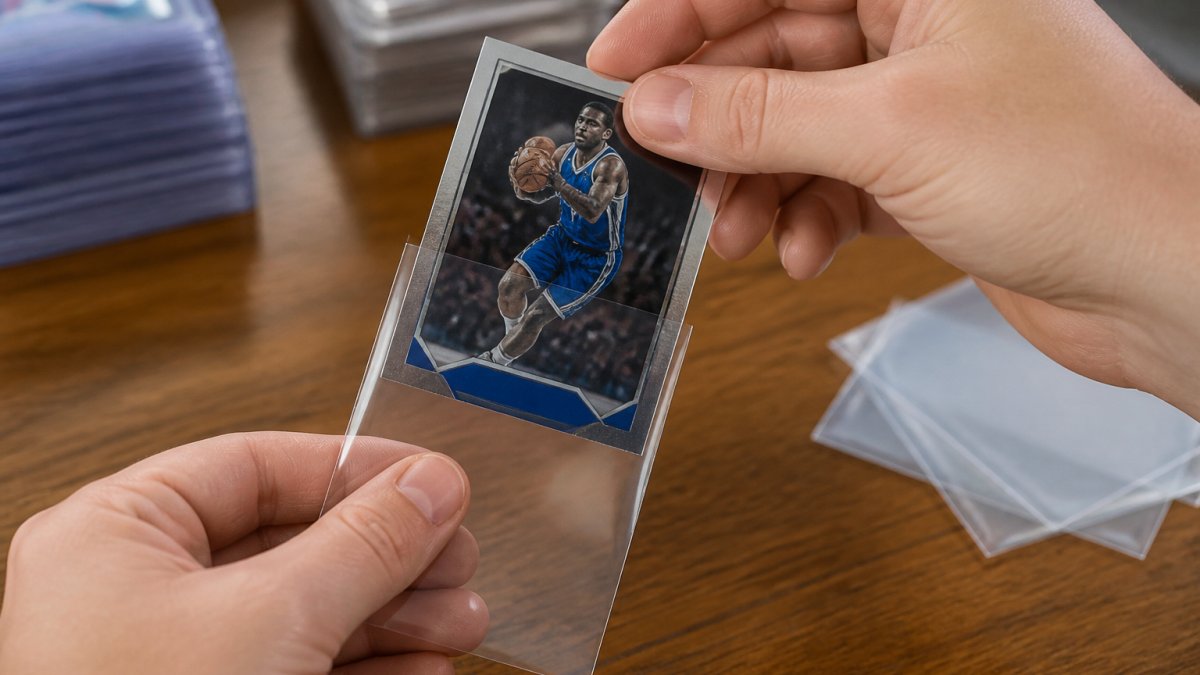
Hold the card by its edges, never the face or back. Slide it slowly into the sleeve at a slight angle, aligned with the opening.
Once inserted, straighten the card so it sits flat. A small gap at the top is intentional, allowing for expansion due to humidity changes; a sleeve that's too tight can cause warping over time.
For double-sleeving, insert the card into the inner sleeve first, then carefully insert both into the outer sleeve. It requires more dexterity but provides superior protection.
Remove sleeved cards by gently pushing the card out from the bottom, not pulling from the top. Pulling creates friction and potential surface scratches.
Practice on common cards before sleeving high-value cards. Once you develop the muscle memory, the process becomes automatic and safe.
Card Sleeves vs. Top Loaders: Which Should You Use?
Top loaders are rigid plastic holders that provide maximum structural protection. They're ideal for high-value cards, graded cards, and cards you plan to display.
The trade-off is storage efficiency. Top loaders take up significantly more space than sleeved cards. A binder holds hundreds of sleeved cards but only dozens of top-loaded cards. For large collections, top loaders become impractical.
Many collectors use a hybrid approach: sleeves for the bulk of the collection, top loaders for cards worth $50 or more. This balances protection with practicality.
The Rookie Supply Pack - 100 Card Sleeves + 50 Toploaders from Cardboard Superstars is designed exactly for this hybrid strategy. You get sleeves for sorting and organizing, plus top loaders for your most valuable cards.

For trading cards you handle frequently (because you play with them or sort them regularly), sleeves are more practical. For cards you view occasionally and want to preserve perfectly, top loaders are worth the space trade-off.
Storage Conditions and Handling Best Practices
Temperature and humidity stability matter more than the absolute values. Fluctuations cause cards to expand and contract, leading to warping and cracking.
Store sleeved cards in acid-free storage boxes. Regular cardboard boxes contain acids that migrate into your cards over decades.
Inspect your collection annually. Look for signs of moisture, discoloration, or sleeve deterioration. If you notice cards in old PVC sleeves, transfer them immediately to archival safe sleeves.
Handle sleeved cards minimally. Every insertion and removal introduces friction risk.
If you're shipping cards, use rigid protection. A sleeved card in a padded envelope can shift during transit and become damaged.
The American Institute for Conservation's guidelines on collectible preservation recommends storing valuable items in controlled environments with minimal handling.
For long-term storage lasting decades, consider a climate-controlled storage unit if your home environment is unstable.
Protecting your collection starts with choosing the right archival safe card sleeves explained for beginners.
Frequently Asked Questions
What makes a card sleeve archival safe?
Archival safe card sleeves are made from chemically stable, non-reactive materials like polypropylene or polyester that won't degrade, leach, or damage cards over time. They're acid-free and free of plasticizers like those found in PVC, which can cause yellowing and chemical degradation. Look for sleeves labeled as non-PVC and acid-free, and check product documentation from the manufacturer to confirm material composition and long-term stability claims.
Are penny sleeves safe for long-term card storage?
Penny sleeves offer basic dust and fingerprint protection suitable for everyday handling and initial organization, but they're not ideal for long-term archival storage alone. Standard penny sleeves lack rigidity and may allow cards to shift or bend. For long-term preservation, pair penny sleeves with semi-rigid card savers or top loaders. The Rip & Protect Bundle combines 200 penny sleeves with 200 semi-rigid card savers for both everyday protection and secure storage.
What's the difference between card sleeves and top loaders?
Card sleeves are flexible protective layers that slide over cards and protect against dust, scratches, and fingerprints. Top loaders are rigid plastic holders that provide structural support and are ideal for valuable or graded cards during storage and shipping. Most collectors use both: sleeves first for the card itself, then place the sleeved card in a top loader for added protection. Top loaders are especially useful for cards you're shipping or displaying.
How do I know if a card sleeve is actually archival safe?
Check the product listing or packaging for explicit claims about being acid-free, non-PVC, and made from polypropylene, polyethylene, or polyester. Reputable manufacturers provide material documentation. Avoid sleeves that don't specify materials or make vague durability claims. Look for sleeves from established suppliers who serve the collectibles market. When in doubt, contact the seller or manufacturer to request material specifications and long-term stability data before buying in bulk.
What's the standard trading card size, and how do I choose the right sleeve?
Standard trading cards are 2.5 x 3.5 inches. Most card sleeves are designed for this size and fit snugly without excess room. Verify the sleeve dimensions match your cards before purchasing. If you collect oversized cards or specialty game cards, check the specific dimensions. A proper fit prevents cards from shifting inside the sleeve during handling or storage, which reduces the risk of surface abrasion and corner damage.
Should I double-sleeve my cards, and when is it necessary?
Double-sleeving (placing a card in an inner sleeve, then into an outer sleeve) provides maximum protection and is common for high-value cards, graded submissions, or cards you handle frequently. For standard collections, single-sleeving with quality archival-safe sleeves is sufficient. Double-sleeving is especially recommended if you're preparing cards for shipping or grading submission, as it protects against dust, moisture, and accidental damage during transit.
How often should I inspect and replace my card sleeves?
Inspect sleeves every 6-12 months, especially for frequently handled cards. Replace sleeves if you notice cloudiness, cracks, discoloration, or chemical odor, which indicate degradation. Cards stored in cool, dry conditions with quality archival-safe sleeves may not need replacement for years. If you notice any signs of leaching (residue on the card or sleeve interior), replace immediately. Proper storage conditions extend sleeve life significantly.
What storage conditions help archival safe card sleeves work best?
Store sleeved cards in a cool, dry environment between 60-70°F with humidity around 30-40%. Avoid direct sunlight, extreme heat, and moisture, which can cause warping, fading, and material degradation even in archival-safe sleeves. Use acid-free storage boxes and keep cards away from basements or attics where temperature and humidity fluctuate. Proper environmental conditions work together with quality sleeves to ensure long-term card preservation and prevent chemical breakdown.