


Last Updated: November 18, 2026
Quick Summary
Graded card slab stands are small bases that hold a slabbed card upright for display. They protect the holder from scratches and corner stress, improve viewing angles, and keep a collection organized. They are display tools, not protective storage.
- Stands keep slabs off their corners and away from stacking pressure, reducing chip and scratch risk.
- A tilted slab is easier to read than one lying flat, especially under overhead glare.
- Stands hold cards vertically, which takes up less surface area than laying slabs flat.
- Stands do not block UV light, seal out dust, or secure a card against theft.
- Store slabs you are not displaying in a dedicated case or bin.
Table of Contents
- What a Graded Card Slab Stand Does
- 7 Benefits of Using Graded Card Slab Stands
- How to Display Graded Cards Safely
- Choosing a PSA Slab Stand by Collection Size, Room, and Budget
- Stand Materials Compared: Acrylic, Wood, Metal, and 3D-Printed
- Display Trade-offs: UV Exposure, Dust, Falls, and Theft
- Pairing Stands with Graded Card Slab Storage
- Start Displaying Your Next Slab Today
- Frequently Asked Questions
What a Graded Card Slab Stand Does
A graded card slab stand is a small base that holds a slabbed card upright so you can display it without laying it flat or stacking it, and a good graded card slab stands option keeps the holder steady at a comfortable viewing angle. Collectors who buy graded cards often ask the same question next: how do I show this off without damaging it? The stand is the simplest answer.
Most slabs are sealed in hard plastic holders, and that holder is what the stand supports. Because the card lives inside the slab, a stand's job is to keep the holder steady and at a comfortable viewing angle.
7 Benefits of Using Graded Card Slab Stands
This section separates the practical benefits of using a stand from the question of which stand to buy, so you can decide whether a stand is worth it before you shop. Each benefit below includes the mechanism behind it and a concrete way to judge whether it applies to your collection.
Protection from Scratches and Corner Stress
A slab left flat on a shelf collects dust and micro-scratches on its face every time something slides across it. Stacking slabs puts pressure on the corners, which is where the plastic holder is most likely to chip. A stand keeps each holder upright and separated, so no slab rests on another and no weight sits on a corner. The mechanism is simple: the stand's slot carries the slab's weight along its edges rather than its corners, and the base keeps the holder off the surface.
Better Viewing Angles and Visibility
A flat slab is hard to read, especially when overhead light glares off the holder. A stand tilts the slab toward eye level, so the grade label, card centering, and surface are easy to see without picking the card up. This matters most for higher-grade cards, where the details are the reason people want them. A stand that tilts the slab toward eye level generally makes the label easier to read.
Keeps Your Display Organized
Stands give each card a fixed place. A small shelf of stands looks deliberate, and it is easier to find a specific card than digging through a stack. A row of stands lets you see several labels at once, while a stack forces you to lift and re-stack to find one.
Makes Space Use More Efficient
A stand holds a card vertically, which takes up less surface area than laying it flat. An upright stand generally takes up less surface area than laying a slab flat, which can make a crowded desk or shelf easier to manage.
Easier Handling
Picking up an upright slab from a stand is simpler than lifting one off a pile. You grip the holder by its edges and lift, without reaching under other cards or sliding one slab across another. The benefit is not just convenience; handling is when most accidental drops happen, and a stand that presents the slab by its edges reduces the chance of fumbling it.
Reduces Accidental Knocks
A stand with a wide, stable base is generally less likely to tip than a slab resting on an uneven surface. A stand that tips easily is worse than no stand, because a fall can crack the holder.
Gives Your Collection a Finished Look
Many collectors find that stands make a collection feel curated rather than stored. The presentation itself is part of the enjoyment. This is the one benefit that is purely about aesthetics, and it is worth naming honestly: a stand does not protect a card from UV light, dust, or theft, but it does change how a collection reads to you and to anyone who sees it.
What Stands Do Not Do
A stand improves visibility and handling, but it is not protective storage. It does not block UV light, seal out dust, or secure a card against theft. If protection is the priority, an enclosed display case or a storage bin is the better tool. The benefits above are real, but they are display benefits, not preservation benefits.
How to Display Graded Cards Safely
Start by picking a stable, flat surface away from direct sunlight and heat vents. Place the stand on it, then set the slab upright so it sits level and does not lean. Check that the holder seats fully in the stand's slot before you walk away.
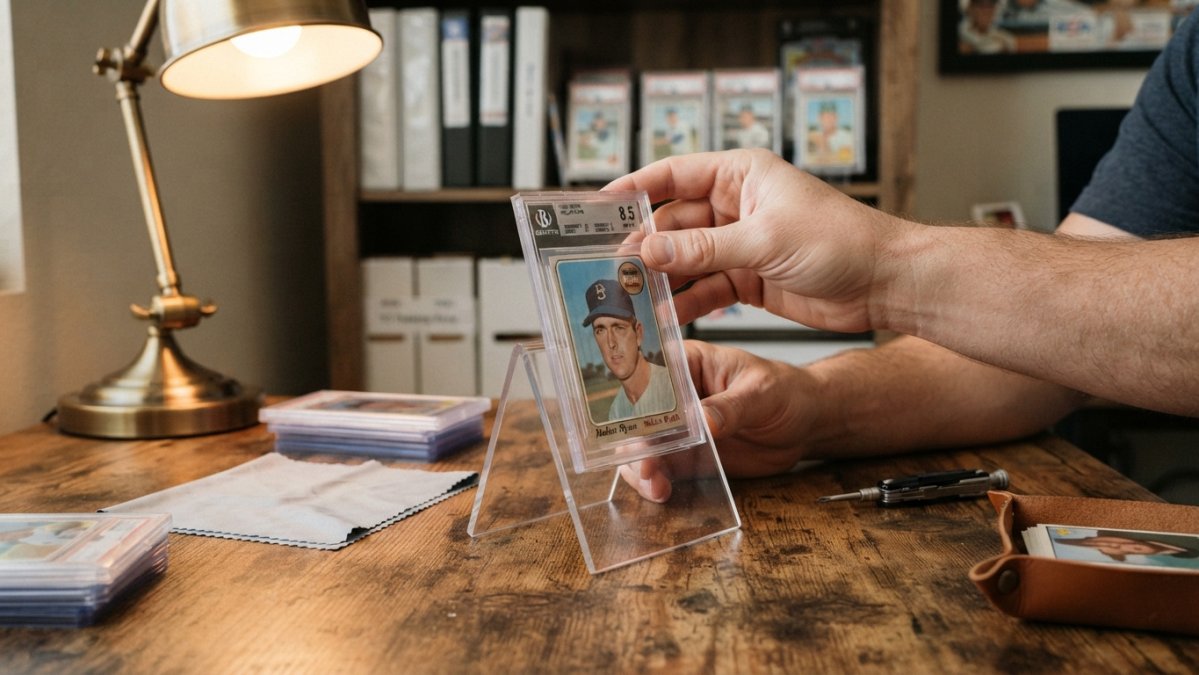
Clean the holder's outside surface with a soft microfiber cloth. Avoid household cleaners, which can leave residue on plastic. Look at the slab every few weeks for dust buildup and wipe it off as needed.
Watch out: leaning a slab against a wall or a book instead of using a proper stand is one of the most common ways holders get cracked or chipped.
Choosing a PSA Slab Stand by Collection Size, Room, and Budget
Stands vary in fit and finish, so check that the stand lists compatibility with your holder before buying. Match the stand to your situation:
- Small collection, one or two cards: A single-card stand is enough. Pick one with a wide base.
- Medium collection, shelf display: A multi-slot stand keeps several cards in a row and saves space.
- Large collection or dedicated room: Consider a modular or shelf system you can expand over time.
- Tight budget: A simple, sturdy single stand delivers most of the protection benefit at low cost.
Compare the stand's base width, slot depth, and whether it fits the holder without rattling. A loose fit is a warning sign.
Stand Materials Compared: Acrylic, Wood, Metal, and 3D-Printed
Material affects how a stand looks, how stable it feels, and how much it costs. Use this table to compare the common options.
| Material | Looks | Stability | Best For | Main Drawback |
|---|---|---|---|---|
| Acrylic | Clean, see-through | Good with a wide base | Modern displays, showing off the holder | Can scratch if cleaned roughly |
| Wood | Warm, traditional | Very good, heavy base | Shelves and desks with a classic look | Heavier, less slim |
| Metal | Sleek, industrial | Strong and durable | Long-term display, dense shelves | Can feel cold; check for scratches on the holder |
| 3D-printed | Varies by design | Depends on the print | Custom or unique designs | Quality varies by seller |
Acrylic: Pros include a clear look and light weight. Cons include scratching under rough handling.
Wood: Pros include a heavy, solid base and warm appearance. Cons include bulk and weight.
Metal: Pros include durability and a slim profile. Cons include cost and the risk of scratching the holder if the slot is tight.
3D-printed: Pros include unique designs and custom fits. Cons include inconsistent quality, so check reviews before buying.
Display Trade-offs: UV Exposure, Dust, Falls, and Theft
Displaying a card protects it from handling, but it adds risks of its own. Most guides mention these risks in passing; this section explains the mechanism behind each one and when a stand is the wrong tool. The short version: a stand improves visibility, but it is not protective storage, and the trade-offs below are the reason why.
UV Exposure
Sunlight and some fluorescent bulbs emit ultraviolet light, which breaks down the dyes in card ink and can fade colors over months or years. A slab's plastic holder does not block UV; it may even trap heat if placed in direct sun. The practical rule is to keep stands out of direct sunlight and away from windows that get strong afternoon light. If a card is valuable enough that fading would matter, an enclosed display case with UV-filtering glass or acrylic is the better choice than an open stand.
Dust
Dust settles on any open-faced display. On a slab, dust is mostly a cosmetic issue, but wiping it off repeatedly is when scratches happen. A stand that holds the slab upright collects less dust on the face than a flat slab, because dust falls past a vertical surface rather than settling on it. Still, plan on periodic wiping with a soft microfiber cloth, and avoid household cleaners that can leave residue on plastic.
Falls
A stand that sits near the edge of a shelf can fall, and a fall can crack a slab. The risk is highest on high shelves, in rooms with foot traffic, and on surfaces that vibrate, such as a desk near a door. A stand with a wide base and a slot that holds the slab snugly reduces the chance of tipping, but it does not eliminate it. If a card is both valuable and frequently handled nearby, a stand placed back from the shelf edge is safer than one placed at the front.
Theft
Theft is a concern for valuable cards in visible spots. A stand puts a card on display, which is the point, but it also advertises what you own. Consider where you place stands and who has access to the room. For high-value cards, a locked cabinet or a display case with a lock is more appropriate than an open stand. The trade-off is visibility versus security, and there is no stand that solves both.
When a Case or Enclosed Display Is Better
Display aesthetics and protection pull in different directions. The more visible a card is, the more exposed it is. A stand is the right tool when you want to see a card daily and the card's value does not justify enclosure. A case or enclosed display is the right tool when UV, dust, falls, or theft are real concerns. A practical pattern is to use stands for cards you enjoy looking at and enclosures for cards you are protecting as assets. Choose a placement that balances what you want to see with what you need to protect.
Pairing Stands with Graded Card Slab Storage
A stand is for display, not long-term storage. When a slab is not on show, store it in a dedicated case or bin. For a broader look at long-term options, see Best Card Storage for Long Term: 2026 Collector's Guide. Pairing a stand for what you show with a bin for what you keep is a practical setup for most collectors.
Start Displaying Your Next Slab Today
Pick one slab you want to show off, choose a stand that fits its holder and your space, and set it up this week. Browse graded cards at Cardboard Superstars to find a slab worth displaying.
Frequently Asked Questions
Do graded card stands fit PSA, CGC, and BGS slabs?
Before buying, check the stand's listed slab dimensions and confirm it accepts the holder you own, since holder generations can differ slightly. A stand that is a few millimeters too narrow can cause the slab to wobble or sit crooked. Measuring your heaviest or thickest slab against the stand's specifications is the simplest way to confirm compatibility before you commit.
Can a card stand scratch or damage a graded slab?
A well-made stand should not scratch a slab, but damage can happen with rough bases, abrasive materials, or a slab that is forced into a stand that is too tight. Look for stands with smooth, finished contact points and a slot or cradle that holds the slab without pressure on the edges or label. Avoid pushing or sliding slabs across the stand's surface, and wipe both the slab and stand with a dry microfiber cloth during routine dusting. Regular, gentle handling is the best way to keep both the holder and the card in good condition.
Are slab stands safe for long-term card display?
Slab stands can be safe for long-term display when they are stable, sized correctly, and placed away from direct sunlight and high-traffic areas. Stability matters most: a stand with a wide, weighted base is far less likely to tip than a narrow one, and a slab that falls can crack or chip. Limit exposure to UV light, which can fade card colors and label printing over time, and keep displays away from dust and humidity. Checking the stand periodically for loose parts also helps keep long-term displays secure.
