


Table of Contents
- Best Beginner Trading Card Sets of 2026: Quick Comparison
- What Makes a Trading Card Set Beginner-Friendly?
- 2026 Topps Series 1 Baseball Value Box: Best Budget Entry Point
- 2024-25 Panini Hoops Basketball Blaster Box: Best for NBA Fans
- 2025 Absolute Football Mega Box: Best Guaranteed Hits
- 2026 Topps Chrome Baseball Mega Box: Best for Chase Cards
- How to Start Collecting Sports Cards Without Overspending
- How to Store Trading Cards Properly From Day One
- Frequently Asked Questions
Last Updated: September 7, 2026
Best Beginner Trading Card Sets of 2026: Quick Comparison
The best beginner trading card sets of 2026 balance affordable entry points with genuine chase value, letting new collectors experience the thrill of the hunt without risking a fortune. As the hobby grows in popularity, the market now offers more accessible options than ever, but that variety also makes choosing your first box feel overwhelming. At Cardboard Superstars, we provide a curated selection of sealed boxes, graded legends, and essential protective supplies, making it easy for enthusiasts at every level to find their next hobby win with total confidence.
Below, we'll compare five standout options across baseball, basketball, and football, then walk you through smart starting strategies and proper storage from day one.
| Set | Sport | Price | Best For |
|---|---|---|---|
| 2026 Topps Series 1 Value Box | Baseball | $43.00 | Budget-friendly set building |
| 2024-25 Panini Hoops Blaster Box | Basketball | $38.99 | NBA rookie collectors |
| 2025 Absolute Football Mega Box | Football | $62.50 | Guaranteed hits per box |
| 2026 Topps Chrome Baseball Mega Box | Baseball | $100.00 | High-end chase cards |
| 2025 Topps Bowman Mega Box | Baseball | $62.99 | Prospect investors |
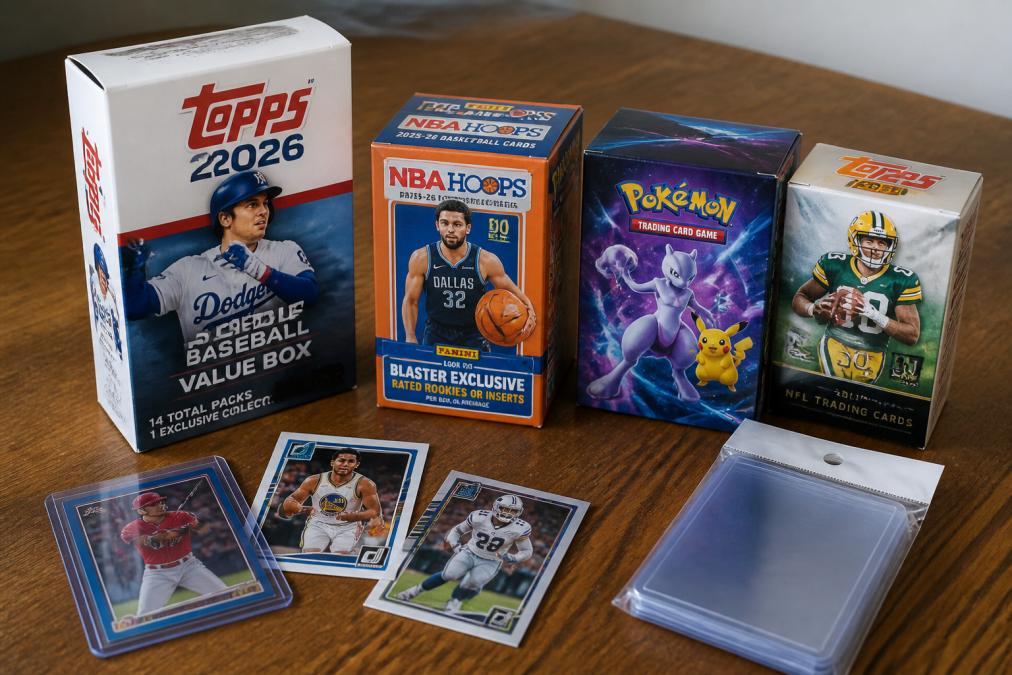
What Makes a Trading Card Set Beginner-Friendly?
A beginner-friendly set keeps the barrier to entry low while still offering meaningful rewards. The best starter products share three traits: reasonable price points, simple configuration, and accessible chase cards that don't require deep knowledge to appreciate.

Price matters most for newcomers. Spending $40 to $70 on your first box lets you learn the rhythms of opening packs, sorting base cards, and identifying hits without financial regret. Higher-end hobby boxes, while exciting, often carry price tags that create pressure to "win" every break, which drains the fun from the experience.
Configuration plays a quieter but equally important role. Products like the 2026 Topps Series 1 Value Box deliver straightforward pack counts and clear odds, making them ideal for learning how to evaluate pulls. Sets with too many parallel variations or confusing rarity tiers can overwhelm beginners before they develop collecting instincts.
2026 Topps Series 1 Baseball Value Box: Best Budget Entry Point
For pure value, the 2026 Topps Series 1 Baseball Value Box at $43.00 is our top recommendation for beginners. Series 1 represents the unofficial start of baseball season, featuring the league's current stars, team cards, and the first flagship rookie cards of newly called-up players.
This box excels because it serves every collector type. Set builders can work toward completing the full Topps Baseball set across Series 1, 2, and Update releases, while team collectors can chase their favorite club's complete roster. The insert sets add creative storytelling through limited-edition designs that highlight the game's biggest names.
The one drawback is that you won't find autographs or memorabilia cards in this configuration. If guaranteed hits matter more than volume, you'll want to look at the football option below.

2024-25 Panini Hoops Basketball Blaster Box: Best for NBA Fans
Basketball newcomers should start with the 2024-25 Panini Hoops Basketball Blaster Box at $38.99. This product features the first Rookie Cards and Rookie Autographs of the highly anticipated 2024 NBA Draft Class, making it one of the most exciting entry points in the hobby.

Each box contains 15 cards per pack across 6 packs, with Blaster-exclusive parallels like Storm and Yellow Checkerboard adding retail-only chase appeal. The huge base set gives beginners plenty of cards to organize and catalog, while the insert variety keeps every pack opening interesting.
The mix of base cards, rookies, and parallels helps new collectors understand rarity tiers and secondary market dynamics without needing to memorize complex checklists.
2025 Absolute Football Mega Box: Best Guaranteed Hits
Football fans who want certainty should grab the 2025 Absolute Football Mega Box at $62.50. Each box includes 42 cards, and on average delivers 12 rookies, 1 autograph or memorabilia card, 5 inserts, and 6 base or rookie black parallels. That guaranteed hit makes it the most satisfying beginner trading card set for players who want immediate rewards.
Absolute's signature inclusions, like Rookie Premiere Materials and Tools of the Trade, return with bold new designs and star-studded checklists. The guaranteed memorabilia or autograph card per box means you'll experience the thrill of a major pull even if your rookie luck doesn't align with the top draft picks.
2026 Topps Chrome Baseball Mega Box: Best for Chase Cards
Collectors ready to graduate to premium products should consider the 2026 Topps Chrome Baseball Mega Box at $100.00. This factory-sealed box contains 7 cards per pack across 6 packs, with Mega Box exclusive X-Fractor Parallels and highly limited Lightboard Logo Variations and Static Noise Inserts.
The chase list reads like a who's who of baseball: Gold Logoman cards and autographs of Aaron Judge, Shohei Ohtani, Paul Skenes, and Derek Jeter, plus rookie autographs of Roman Anthony, Konnir Griffin, and Jac Caglianone. Chrome's holofoil finish and premium card stock also make these cards ideal candidates for grading, which matters if you're thinking about long-term collectible value.
The tradeoff is straightforward: you pay more per card than flagship products, but each card carries higher potential ceiling. Chrome cards historically maintain stronger secondary market liquidity than base flagship cards (psacard.com).
How to Start Collecting Sports Cards Without Overspending
Starting a collection doesn't require a large bankroll if you approach it strategically. Set a monthly budget before your first purchase and treat card buying like any other hobby expense, not an investment you expect to flip for profit.
A common beginner mistake is buying singles immediately after opening a box. The secondary market rewards patience, and prices for new rookie cards often dip after the initial release hype fades. Instead of chasing every hot rookie, focus on players you genuinely enjoy watching, since personal connection sustains collecting interest far longer than market speculation.
For trading card investment tips for beginners, the smartest approach is diversification across sports and product tiers. A balanced starter collection might include one budget value box, one mid-tier mega box, and a handful of singles you love. This spread teaches you how different products behave while limiting your exposure to any single bad break.
- Sealed product: $40-$70 per month (one value or mega box)
- Protection supplies: $8-$15 per month (penny sleeves run about $3 per 100, top-loaders about $10 per 100)
- Storage: $15-$25 one-time (a 800-count cardboard box runs about $12, a binder with 20 pages about $20)
- Singles: $10-$20 per month for cards you genuinely want
That means a sustainable monthly hobby budget lands between $60 and $120, with roughly 10-15% going to protection materials from the start. Skipping the sleeves to save $5 today almost guarantees a damaged card tomorrow that loses far more in value.
A practical way to avoid overspending is the 'one-box rule': allow yourself one sealed box per month, and put any leftover hobby money toward singles you've wanted for at least two weeks. This prevents impulse purchases during release-week hype, when prices are highest. You can also trade duplicates at local game stores or through online communities, which stretches your budget further without additional cash outlay.
Finally, track every purchase in a simple spreadsheet or notes app. Recording what you paid, when you bought it, and why you wanted it helps you spot spending patterns and makes it easier to decide later whether a card is worth selling. Many collectors find that reviewing their purchase history quarterly keeps them honest about what actually brings joy versus what was just pack-opening excitement.
How to Store Trading Cards Properly From Day One
Proper storage from day one protects both the sentimental and monetary value of your collection. Every card you want to keep in collectible value should move immediately from pack to penny sleeve and then into a top-loader or card saver.
For cards you're actively organizing, a three-ring binder with side-loading pages works well for base cards and common inserts. Higher-value pulls, including any autograph, memorabilia, or numbered parallel, belong in individual top-loaders stored upright in a cardboard box designed for trading cards. Never stack loose cards horizontally, as the weight can damage corners and edges over time.
Beyond the basics, serious collectors follow a few additional protocols. First, always wash and dry your hands before handling cards, and handle them by the edges rather than the faces. Finger oils transfer easily to card surfaces and can attract dust or cause subtle surface wear that grading services detect under magnification. Second, avoid rubber bands around stacks of unprotected cards, they create pressure points that dent corners. Use team bags or polypropylene sleeves for grouping instead.
Environmental control matters more than most beginners realize. The ideal storage environment maintains a consistent temperature between 65°F and 75°F with relative humidity around 40-50% (loc.gov). Basements and attics are risky because they experience wider temperature swings and moisture fluctuations. A closet shelf in a climate-controlled living space works well for most collections. If you live in a humid region, consider adding a small silica gel desiccant pack to your storage box and replacing it every few months.
For counterfeit detection, always buy from reputable sellers with verified feedback and clear product photography, since sealed product from authorized distributors eliminates most authenticity concerns. When buying singles, inspect the card under bright light for print quality inconsistencies, and compare the card stock weight against a known authentic card from the same set.
A practical storage upgrade that many beginners overlook is the difference between top-loaders and card savers. Top-loaders offer rigid protection and are ideal for cards you plan to display or keep long-term. Card savers are semi-rigid and are preferred by grading companies because they reduce the risk of surface scratches during transit. If you're considering grading your cards later, store them in card savers from the start to avoid unnecessary handling.
Finally, establish a simple cataloging habit. Write the set name, year, player, and any parallel or serial number on a sticky note or in a notes app when you pull a card worth protecting. This takes 30 seconds per card but saves hours of research later when you're trying to remember which parallel you pulled or whether a card is worth grading. Many collectors use a simple spreadsheet with columns for player, set, year, card number, parallel type, and estimated value. This digital layer also helps you spot duplicates and track your collection's growth over time.
Frequently Asked Questions
What is the best beginner trading card set for 2026?
For most new collectors, the 2026 Topps Series 1 Baseball Value Box at $43.00 is the best starting point. It offers a full set of current stars and rookies at a low entry cost, making it easy to learn the hobby without financial pressure. If you prefer basketball, the 2024-25 Panini Hoops Blaster Box at $38.99 provides the first rookie cards of the 2024 draft class. Both options let you experience the thrill of opening packs while keeping your budget intact.
Should beginners buy sealed boxes or singles?
Beginners should start with sealed boxes for two reasons. First, the experience of opening packs teaches you about pull rates, parallel types, and insert rarity in a hands-on way. Second, sealed product holds its value even if you don't pull a major hit. The 2025 Absolute Football Mega Box at $62.50 guarantees either an autograph or memorabilia card in every box, which gives you a tangible reward while you learn. After a few boxes, you can switch to singles to target specific players.
What protective supplies do I need for a new card collection?
You need three essentials: penny sleeves, top-loaders, and a storage box. Penny sleeves protect the card surface from scratches, while top-loaders provide rigid structural support. Store your best pulls in top-loaders and keep bulk cards in a cardboard box with dividers. For cards you plan to sell or grade, consider a semi-rigid holder or magnetic one-touch case. This basic setup costs under $20 and protects your collection from the moment you open your first pack.
Are sports cards or TCGs better for beginners in 2026?
Sports cards are generally easier for beginners because the value drivers are familiar: player performance, rookie seasons, and team loyalty. TCGs like Pokémon require learning game mechanics, set rotation, and metagame trends. Sports cards also offer more flexible entry points, from the $43.00 2026 Topps Series 1 Value Box to the $38.99 Panini Hoops Blaster Box. If you already play a TCG, start there; otherwise, sports cards offer a simpler path into collecting.
How do I know if my trading cards are worth money?
Check three factors: player, rarity, and condition. A rookie card of a star player like Paul Skenes or Victor Wembanyama holds more value than a veteran base card. Look for serial-numbered parallels, autographs, and memorabilia cards, which are rarer than base cards. Condition matters most, so inspect cards for centering, corner wear, and surface scratches before valuing them. Use price tracking tools like eBay sold listings or Card Ladder to check current market value.