


Table of Contents
- Quick Comparison Table
- How to Choose the Right Pokémon Card Binder
- Pokémon Card Binder with Sleeves: Complete Protection
- Zippered Trading Card Binder Options
- How to Store Pokémon Cards for Long-Term Preservation
- Top Binder Solutions by Collection Goal
- Frequently Asked Questions
Last Updated: October 10, 2026
Quick Comparison Table
| Binder Type | Best For | Capacity | Key Feature | Price Range |
|---|---|---|---|---|
| Side-loading with sleeves | High-value cards | 180-360 cards | Maximum protection | $15-45 |
| Top-loading standard | Casual collectors | 180-360 cards | Easy access | $10-30 |
| Zippered trading card binder | Portable collections | 180-360 cards | Secure closure | $20-50 |
| Ring binder with pages | Budget-conscious | 180-360 cards | Affordable bulk storage | $8-25 |
| BCW storage bin | Large collections | 1,600 cards | Bulk organization | $34.99 |
Finding the right pokemon card binders for collectors means balancing protection, capacity, and long-term preservation. At Cardboard Superstars, we understand that your collection deserves more than just any storage solution, it needs a binder that matches your collecting goals and protects your cards from damage. Whether you're a casual player opening booster packs or a serious collector pursuing rare Pokémon cards, the choice of binder directly impacts how well your cards survive dust, handling, and time.
This guide covers seven practical binder solutions and the key factors that separate a binder that keeps your cards safe from one that puts them at risk.
How to Choose the Right Pokémon Card Binder
The best pokemon card binder depends on three core decisions: how many cards you're storing, what level of protection you need, and whether portability matters. A binder that works for casual play fails for a master set pursuit. A solution that protects rare cards wastes money on common bulk.
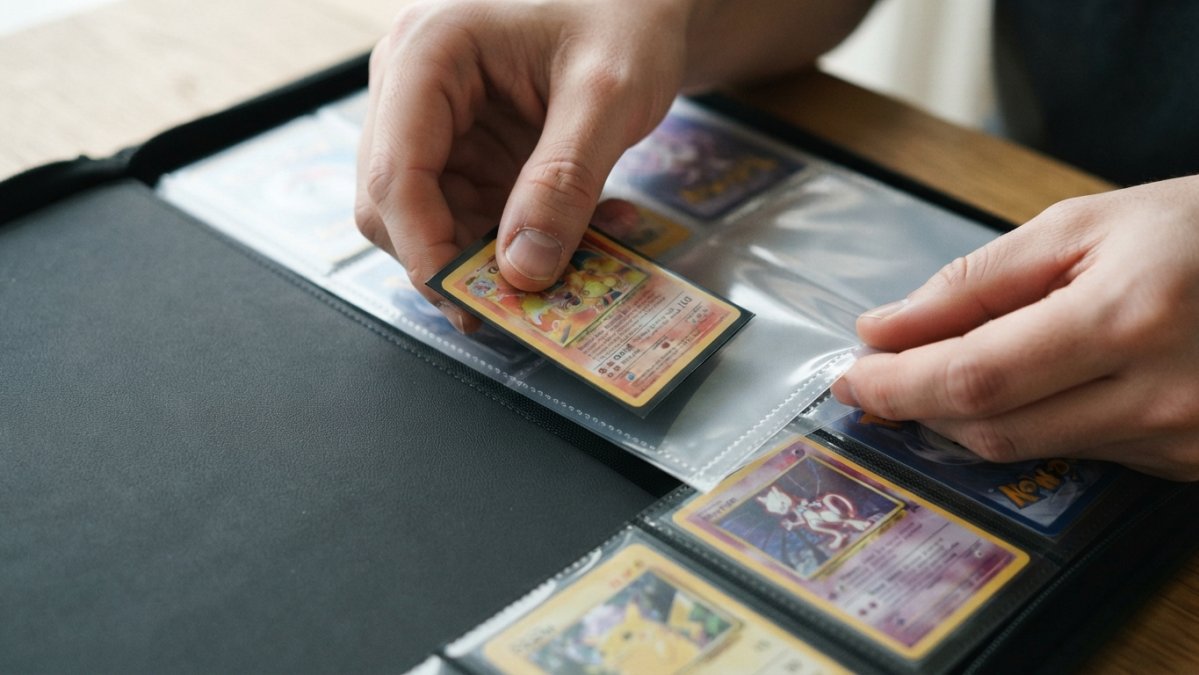
Binder Capacity and Card Slots
Standard pokemon card binders hold between 180 and 360 cards depending on pocket configuration. A 9-pocket page holds 9 standard cards per page. Most collectors use 100-page binders, which translates to roughly 900 cards at full capacity using standard pages.
The BCW Laser Weld® 9-Pocket Pages offer a practical bulk solution. A 100-count box provides storage for up to 900 cards in standard configuration. These pages feature PVC-free material and laser-welded seams, which means they won't degrade or crack your cards over time. For collectors planning long-term storage, acid-free pages prevent the yellowing and brittleness that damages cards after years on a shelf.

If your collection exceeds 1,600 cards, consider the BCW Collectible Card Bin, available in blue, yellow, green, or gray. This holds up to 1,600 standard-sized trading cards and works for Pokémon, Magic, Yu-Gi-Oh!, and sports cards alike.
Side-Loading vs. Top-Loading Pockets
This choice matters more than most collectors realize. Side-loading pockets protect cards from dust and accidental spills better than top-loading. A card inserted from the side slides in horizontally, and gravity alone won't pull it out. Top-loading pockets accept cards from the top edge, which means dust and debris can settle on the card surface inside the pocket.
Side-loading is the standard for serious collectors protecting valuable or rare cards. The trade-off is speed, you can't flip through a side-loading binder as quickly as a top-loading one. For casual play or frequent access, top-loading works fine. For long-term storage of cards you're not handling regularly, side-loading wins.
The BCW Laser Weld® 9-Pocket Pages fit standard 3-ring binders and provide side-loading protection.
Material Quality and Archival Safety
PVC-free materials are non-negotiable for cards you plan to keep for years. PVC (polyvinyl chloride) degrades over time and can leach plasticizers that damage card surfaces, causing stickiness, discoloration, and permanent warping. Acid-free materials prevent yellowing of the card itself and the page material around it.
The BCW pages used in Cardboard Superstars's recommended solutions are PVC-free and designed for archival storage. This means your cards won't develop the cloudy, sticky film that appears on cards stored in low-quality sleeves or binders.
Pokémon Card Binder with Sleeves: Complete Protection
Using sleeves inside a pokemon card binder adds a layer of protection that single-pocket storage can't match. A sleeved card sits inside a protective sleeve, which then goes into a binder pocket.
For cards worth more than a few dollars, sleeving is standard practice. The Standard Card Sleeves from BCW cost $2.25 and fit standard Pokémon cards. Pair these with side-loading binder pages for maximum protection.

Many collectors use the Rip & Protect Bundle, which includes 200 penny sleeves and 200 semi-rigid card savers. This bundle supports both everyday handling and long-term storage. Penny sleeves work for casual play and sorting. Semi-rigid savers protect individual cards during shipping or when preparing cards for grading.
For beginners, the Rookie Supply Pack provides 100 card sleeves and 50 toploaders for $13.75. This starter set covers immediate protection needs without overcommitting to supplies you might not use. The Team Leader Supply Pack steps up to 100 toploaders and 100 sleeves for $16.00, supporting a growing collection.
Zippered Trading Card Binder Options
A zippered trading card binder adds portability and security to your collection. Standard ring binders are open at the top, cards can slide out if the binder tips over or if you're carrying it in a bag. A zippered binder seals completely, keeping cards inside even if the binder is dropped or jostled.
Zippered options work best for collectors who transport their binders to card shops, tournaments, or trading events. If your binder lives on a shelf at home, the zipper adds cost without practical benefit. But if you're taking your collection anywhere, the zipper justifies the price difference.
Quality matters in zippered binders. Check the seam strength. Look for binders with reinforced seams and heavy-duty zippers. The construction should feel sturdy when you open and close the zipper.
How to Store Pokémon Cards for Long-Term Preservation
Proper storage extends the life of your collection by decades. Temperature, humidity, light, and handling all affect card condition over time.
Dust Protection and Environmental Factors
Dust is a concern for card collections. Airborne particles can settle on cards and stick to the surface, creating a haze. A closed binder or bin can help prevent dust exposure. Open card boxes or unsleeved cards in drawers may accumulate dust quickly.
Keep your binders away from direct sunlight. UV light fades card colors over time, especially on older printings. Store binders on a shelf in a dark or dim room, not on a windowsill or near a lamp.
Humidity and temperature stability matter. Extreme swings can cause cards to warp as the cardboard absorbs and releases moisture. Store your collection in a climate-controlled room. Basements and attics can experience wider temperature and humidity swings, making them less ideal storage locations.
BCW Laser Weld® 9-Pocket Pages, 100-Count Box →
The BCW Collectible Card Bin provides sealed storage that protects against dust and minor environmental fluctuations. Its solid construction shields cards from light exposure better than open binders.
Common Storage Mistakes to Avoid
Many collectors damage their own cards without realizing it. Stacking binders flat can create pressure on the bottom cards, potentially causing bending. Store binders upright on a shelf, spine out, like books.
Storing cards in rubber bands or tight stacks without sleeves causes creasing and surface damage. Even casual handling without sleeves leaves fingerprints and microscopic scratches that reduce condition grades.
Using cheap, PVC-containing sleeves can be a mistake. Cards can become sticky and discolored.
Storing cards in basements or garages exposes them to temperature swings, humidity spikes, and pest damage. A climate-controlled closet or bedroom shelf is vastly superior.
Top Binder Solutions by Collection Goal
Different collectors have different needs. A solution perfect for one goal wastes money on another.
For Beginners and Casual Collectors
If you're just starting, you don't need the most expensive setup. A simple ring binder with standard pages and basic sleeves gets the job done. The Rookie Supply Pack ($13.75) gives you sleeves and toploaders to protect cards you pull from booster packs. Pair this with a standard 3-ring binder and BCW Laser Weld® 9-Pocket Pages ($25.99 for 100 pages).
Total investment: under $50 for a complete, functional setup. This covers 900 cards with basic protection. If you quit the hobby, you haven't overspent. If you stay committed, you can upgrade to side-loading pages and zippered binders later.
Standard sleeves and toploaders can handle everyday play and storage.
For Serious Collectors Pursuing Set Completion
Building a complete set requires organization, protection, and storage volume. You need side-loading pages to prevent cards from shifting as you handle the binder frequently. You need multiple binders or a large storage bin to hold 500+ cards.
Start with the Team Leader Supply Pack ($16.00) for sleeves and toploaders, then invest in side-loading BCW Laser Weld® pages. Use the All-Star Supply Pack ($29.99) for 200 toploaders and 200 penny sleeves if you're sleeving a large portion of your collection.
For organizing by set or type, consider the BCW Collectible Card Bin ($34.99). This holds 1,600 cards and works as a secondary storage system while you're actively building your set in a display binder.
The serious collector benefits from archival-safe pages and PVC-free sleeves because the collection will stay active for years. The investment in quality materials prevents condition loss over time.
For High-Value and Rare Card Protection
If your collection includes cards worth significant money, every high-value card should be sleeved before entering a binder. Use semi-rigid card savers for cards over $50 in value, these can provide structure that helps prevent bending during storage or shipping.
The Rip & Protect Bundle ($32.00) includes both penny sleeves and semi-rigid savers, covering both everyday cards and premium pieces. Store high-value cards in a side-loading binder or in individual toploaders rather than bulk storage.

Consider a smaller, zippered binder for your most valuable cards. A binder holding only your rarest or most expensive cards stays secure and portable. Use the All-Star Supply Pack ($29.99) to ensure every card gets proper sleeves and toploaders.
For cards worth over $100 each, many collectors use individual toploaders stored in a small box rather than a binder. This can help prevent pressure on the cards and allows for easy inspection without handling.
Your collection's long-term value depends on the protection you provide today. Explore our selection of BCW pages, sleeves, and storage bins to find cards the protection they deserve. Find cards that match your collecting goals with supplies built for long-term preservation.
Frequently Asked Questions
Should I put my Pokémon cards in a binder?
Yes, a quality Pokémon card binder offers organized storage and protection when chosen correctly. Binders work best for cards you want to display or access frequently. For long-term storage of high-value cards, consider supplementing with sleeves and semi-rigid card savers. The key is matching the binder type to your collection's value and your handling frequency.
What features should I look for in a Pokémon card binder?
Prioritize acid-free, PVC-free materials to prevent card degradation. Check binder capacity and pocket type: side-loading pockets reduce card shifting, while top-loading pockets offer easier access. Laser-welded seams ensure durability. If storing valuable cards, choose a binder that accommodates pre-sleeved cards. Zippered designs add dust protection for long-term storage.
How many Pokémon cards can a binder hold?
Capacity depends on pocket design. A standard 9-pocket binder page holds 9 cards per page. With a 100-page box like the BCW Laser Weld 9-Pocket Pages ($25.99), you can store up to 900 cards. Larger collections benefit from multiple binders or storage bins like the BCW Collectible Card Bin ($34.99), which holds up to 1,600 cards.
Should Pokémon cards be sleeved before going in a binder?
Sleeving before binder storage adds an extra layer of protection, especially for valuable or rare cards. Standard card sleeves ($2.25) guard against dust, moisture, and handling damage. For high-value cards, consider the Rip & Protect Bundle ($32.00), which includes both penny sleeves for everyday protection and semi-rigid card savers for maximum durability during long-term storage.