


Table of Contents
- What Makes a Card Rare and Worth Buying in 2026
- Pricing Rare Cards: Market Value, Price Guides, and Sales Data
- How to Verify Graded Card Authenticity Before You Pay
- Safe Payment Methods for High-Value Collectibles
- Rare Card Appraisal Services and Due Diligence for Private Sales
- Protecting Your Investment: Storage, Shipping, and Insurance
- Tax and Legal Basics for High-Value Card Trading
- Frequently Asked Questions
Last Updated: September 27, 2026
What Makes a Card Rare and Worth Buying in 2026
Rarity in trading cards is not one thing. It is a stack of separate factors, and buying rare cards from collectors means understanding which factors actually drive value before you send anyone money. This guide from Cardboard Superstars walks through the whole process, from reading a pop report to insuring a shipment.
A card can be rare because few were printed. It can be rare because few survived in good condition. It can be rare because a player became a star long after the print run ended. Two cards with identical print numbers can trade at wildly different prices for that reason alone.
That distinction matters more than ever. The market has matured, grading has become standard practice, and buyers now have access to population data that simply did not exist a decade ago. Scarcity is measurable now, and sellers know it.
Rarity Tiers: Collector's Rare vs Player's Rare
Collector's rare describes a card that is scarce in absolute terms: a low print run, a numbered parallel, a pre-production proof that was never meant to reach the public. Player's rare describes a card that is common in print but scarce in demand, usually because the player's following is large and loyal.
The two behave differently. Collector's rare cards hold value through scarcity alone, so their floor is more stable. Player's rare cards swing with performance, news cycles, and season results. If you want stability, lean toward scarcity. If you want upside, player demand is where it lives.
A 1/1 pre-production proof sits at the extreme end of collector's rare. Only one exists. That single fact does more pricing work than any other detail on the label.

Graded vs Raw Cards: What You Are Actually Paying For
A graded card has been examined, assigned a numeric condition score, and sealed in a tamper-evident holder. A raw card is unslabbed and its condition is whatever the seller claims it is.
When you pay a premium for a graded card, you are buying three things: an independent opinion on condition, physical protection, and liquidity. Graded cards sell faster because buyers do not have to guess. Raw cards sell cheaper because they carry that risk.
The catch is that grading costs money and takes time. A raw card bought cheap can be a bargain, but only if you can judge centering, corners and edges, and surface wear yourself. Most beginners cannot, and that gap is exactly where bad purchases happen.
Pricing Rare Cards: Market Value, Price Guides, and Sales Data
Market value is the price a willing buyer and a willing seller agree on, not the number printed in a price guide. Guides are useful starting points. Completed sales are the real evidence.
Before making an offer, pull recent sales of the same card in the same grade. Look at how many sold, how long ago, and whether the price is trending up or down. A card with three sales in six months is a different asset from one with thirty.
| Signal | What It Tells You | What To Do |
|---|---|---|
| Many recent sales | Liquid, well-priced market | Offer near the last sale |
| Few sales, long gaps | Thin market, hard to resell | Negotiate harder, expect a discount |
| Rising sale prices | Demand outpacing supply | Move quickly or wait for a pullback |
| Falling sale prices | Supply catching up | Wait, or buy only at a clear discount |
| Wide spread between asking and sold | Sellers are overpriced | Anchor your offer to sold prices |
Reading Pop Reports and Bid History
A population report tells you how many copies of a card exist at each grade. It is the closest thing the hobby has to a supply figure, and it changes how you should value a card.
If a card has hundreds of copies in high grades, the grade premium is thin. If it has a handful, that premium is doing real work. Compare the pop report against the asking price before you decide anything.
Bid history is the other half. Completed auction results show what people actually paid, including the ones who lost. Look at the number of distinct bidders, not just the final price. A card that drew two bidders is not the same as one that drew twenty.
How to Negotiate With Serious Collectors
Serious collectors are not offended by a low offer. They are offended by a vague one. Come with a number, a reason, and a reference point.
2026 Leaf Baseball Nation Jesus Made →
Try this structure: state the card, cite the most recent comparable sale, name your price, and explain what would change it. Something like: "Last two sales were at this level. I can do that price today, or a bit less if you'd include the original holder." That reads as informed, not cheap.
Two things move a deal more than anything else: speed of payment and certainty. A collector who has been burned by a flaky buyer will take a slightly lower offer from someone who pays immediately and communicates clearly. Say what you will do, then do it.
How to Verify Graded Card Authenticity Before You Pay
Verifying a graded card means confirming the certification number in the grading company's own database, then checking that the physical card matches the record. Counterfeit slabs and swapped cards both exist, and both fail this test.
Start with the number. Every legitimate grading company maintains a lookup tool. The record should show the same card, year, set, and grade as the listing. If it does not, stop.
Then check the physical details. The label font, the holder's seams, the hologram, and the card's centering should all be consistent with the record. A slab that looks slightly off is worth walking away from, even at a discount.
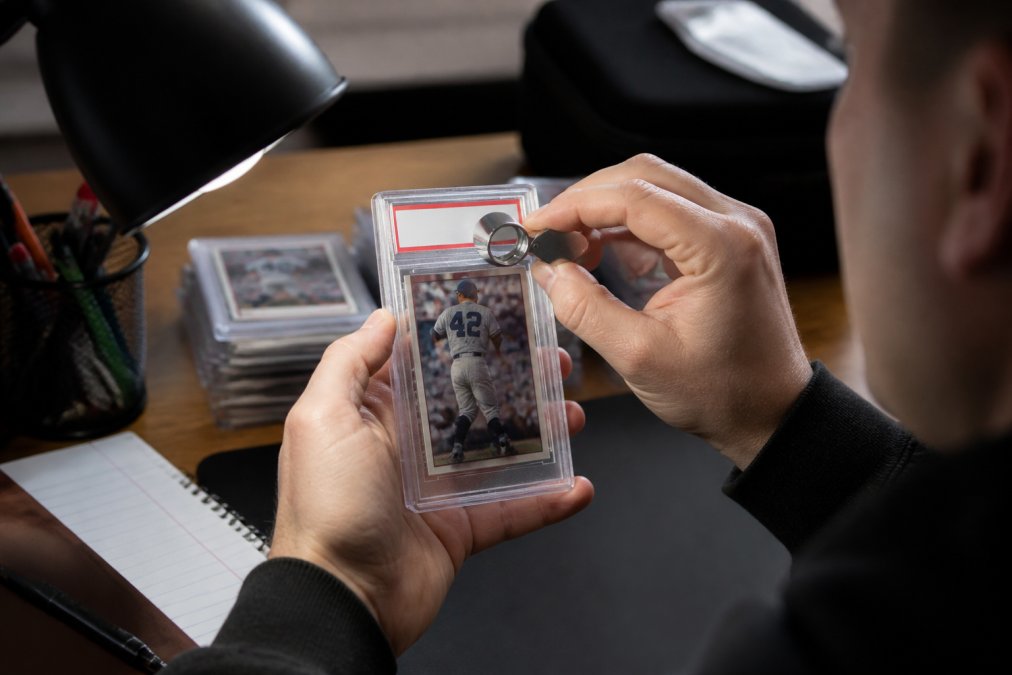
Counterfeit detection gets harder every year.
Safe Payment Methods for High-Value Collectibles
Safe payment methods for high-value collectibles prioritize buyer protection over convenience. A credit card or a platform with a formal dispute process gives you recourse. A direct transfer gives you nothing.
Rank your options like this:
- Platform checkout with buyer protection. Best for most purchases. The platform mediates disputes and can reverse a fraudulent charge.
- Credit card. Strong consumer protections under federal law, and your issuer will investigate a disputed charge.
- Escrow services. Sensible for large private sales between strangers. Funds release only after the card arrives as described.
- Peer-to-peer transfer apps. Fine for small amounts between people who know each other. Risky for anything expensive.
- Wire transfer or crypto. No recourse. Only appropriate with a seller you have verified through a long track record.
Rare Card Appraisal Services and Due Diligence for Private Sales
Rare card appraisal services give you an independent opinion on value, which matters most when the seller sets the price and you have no comparable sales to lean on. Appraisals are not free, and they are not necessary for every purchase. They are necessary when the number is large enough that being wrong would hurt.
- Confirm the seller's identity and history on at least one platform with public feedback
- Verify the certification number in the grading company's database
- Request additional photos of corners, edges, surface, and the label at an angle
- Pull recent completed sales of the same card in the same grade
- Ask about provenance: where the card came from and how long the seller has held it
- Agree on the exact shipping method and who pays for insurance
- Put the condition description in writing in the platform's message system
- Choose a payment method with a dispute process
Protecting Your Investment: Storage, Shipping, and Insurance
Storage and shipping decisions determine whether your card holds its grade. A high-grade card stored badly becomes a lower-grade card, and that is a permanent loss.
Tax and Legal Basics for High-Value Card Trading
Card sales can create a taxable event. In the United States, profit from selling collectibles is generally taxable, and collectibles are subject to a higher long-term capital gains rate than most other investments. Short-term gains are taxed as ordinary income.
Frequently Asked Questions
How do you verify the authenticity of rare cards bought from private collectors?
Start with the slab: check that the certification number matches the grading company's online database, and confirm the label font, hologram, and case seams look factory-sealed.
What are the safest payment methods when buying rare cards from individuals?
Credit cards give you chargeback rights if a card is counterfeit or never arrives. For large deals, use escrow services that release funds only after you inspect the card. Avoid wire transfers and peer-to-peer apps with no buyer protection. Never send full payment before you have seen clear photos of the exact card.
How do you determine the fair market value of a rare card before purchasing?
Pull recent sold prices, not asking prices, from completed auction results. Build a range from at least five recent sales and treat any seller asking far above it as a signal to slow down.
What should you look for in a seller's reputation when buying privately?
Look for a long sales history, recent feedback on high-value items, and clear, well-lit photos of the actual card rather than stock images. A seller who avoids questions about authentication, payment protection, or packaging is a reason to walk away, no matter how good the card looks.