


Table of Contents
- The Real Cost of Grading: Fees, Shipping, and Sunk Cost
- PSA vs BGS vs CGC Grading: Which Slab Holds Value?
- How to Determine if a Card Is Worth Grading
- The Impact of Card Grading on Resale Value and Market Liquidity
- Grading Turnaround Time vs. Market Volatility
- Tax and Insurance Implications for Graded Cards
- Grading for Personal Collection vs. Flipping
- Frequently Asked Questions
Last Updated: September 14, 2026
The Real Cost of Grading: Fees, Shipping, and Sunk Cost
Start with the math most collectors skip. Grading a card is a bet: you pay upfront, wait weeks or months, and hope the grade justifies the expense. If it doesn't, that money is gone. This is the sunk cost problem, and it's the single biggest reason are graded cards worth the investment questions get messy answers.
The total cost of a submission includes more than the grading fee itself:
- Grading tier fee (varies by declared value and turnaround speed)
- Insured shipping to the grader
- Return shipping and handling
- Declared value insurance on both legs
- Your time, if you're submitting dozens of cards
A common mistake is calculating ROI using only the grading fee. In practice, shipping and insurance can add a meaningful percentage on top, especially for single-card submissions.
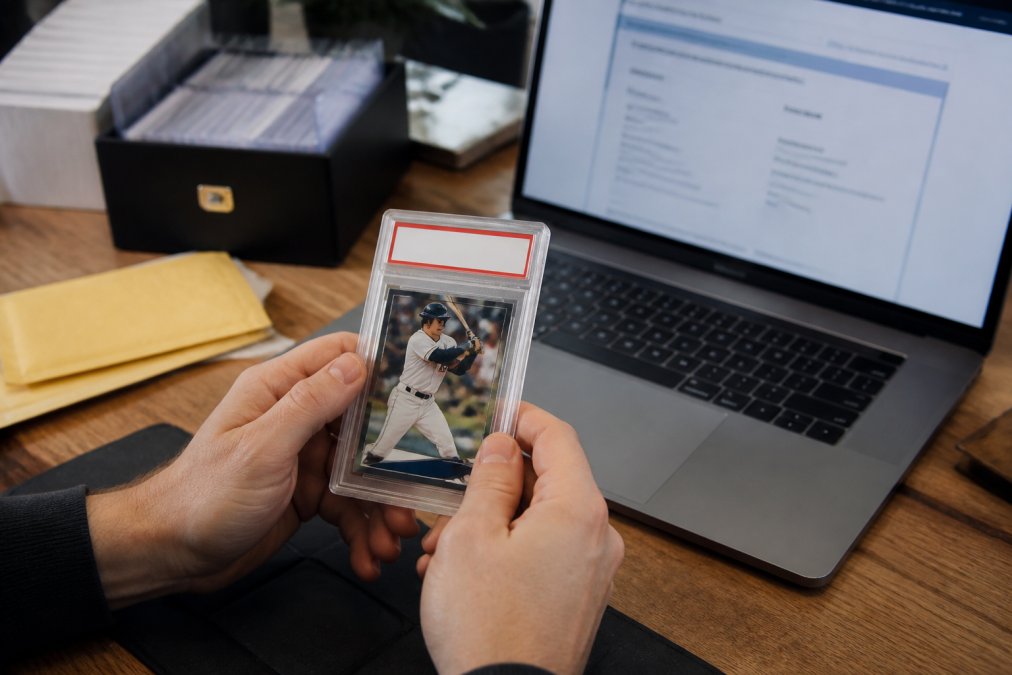
PSA, BGS, and CGC Pricing Tiers
Each major grader structures fees by declared value and turnaround speed. Higher tiers cost more but return faster. Economy tiers are cheaper but can take weeks longer. Check current pricing directly on each grader's site before submitting, since tiers change.
| Grader | Tier Structure | Best For | Notes |
|---|---|---|---|
| PSA | Value, Regular, Express by declared value | Modern rookies, resale liquidity | Largest market recognition |
| BGS | Tiered by speed and value | High-end modern, subgrade detail | Beckett subgrades (centering, corners, edges, surface) |
| CGC | Tiered by speed and value | TCG, modern sports | Growing acceptance in Pokémon and TCG |
PSA vs BGS vs CGC Grading: Which Slab Holds Value?
The grader you choose affects resale value more than most beginners expect, and the reason is structural, not cosmetic. Each company publishes its own grading scale, its own fee tiers, and its own population data, and buyers price cards against those specific standards. The exact same card in the exact same condition can sell for different amounts depending on the slab. That's not market manipulation; it's collector sentiment and buyer trust in third-party verification.

Here's how the three major graders actually differ in ways that move money:
- PSA uses a 1-10 scale without subgrades. It has the broadest buyer pool, particularly for vintage cards and mainstream modern rookies, which is why PSA slabs tend to be the most liquid. PSA's fee tiers are structured by declared value and turnaround speed, so a card you declare at a higher value costs more to grade but is insured and handled accordingly.
- BGS (Beckett) issues a 1-10 overall grade plus four subgrades: centering, corners, edges, and surface. A BGS 10 is harder to achieve than a PSA 10 because all four subgrades must hit 10, and a Black Label (all four subgrades at 10) carries a significant premium precisely because it's so rare (Beckett). BGS is the grader of choice for collectors who want to see why a card graded the way it did.
- CGC has become a strong option for trading card games, especially Pokémon, where its slabs are widely accepted. CGC also issues subgrades on many submissions, and its fee tiers are structured by speed and declared value. For modern TCG and budget-conscious modern sports submissions, CGC often offers the best cost-to-recognition ratio.
For a quick framework:

- Maximize resale liquidity: PSA
- Chase subgrade transparency and Black Label upside: BGS
- Grade TCG or modern rookies on a budget: CGC
Why the Slab Choice Changes the ROI Math
The grader decision isn't separate from the investment decision, it's part of it. A card that would clear your ROI threshold at PSA's fee tier may not clear it at BGS's, because BGS submissions often cost more per card and the subgrade premium only materializes if the card actually hits a 9.5 or 10 across the board. Conversely, a card that's borderline at PSA may be a clear pass at CGC if the buyer pool for that specific card type is deep enough.
A common pattern is to run the same card through two or three graders' published fee schedules before submitting, then compare the projected graded sale price for each grader's likely grade. If only one grader clears the threshold, that's your answer. If none do, the card stays raw.
How to Determine if a Card Is Worth Grading
A card is worth grading when the projected graded sale price exceeds the raw sale price by more than your total submission cost, with margin left over for risk. That's the whole calculation. Everything else is detail, but the detail is where most collectors get it wrong.
Run this checklist before submitting:
- Look up recent sold prices for the raw card and for the specific grade you expect (not the grade you hope for)
- Estimate your total submission cost: grading fee + outbound shipping + return shipping + insurance on both legs
- Confirm the card has no hidden surface wear, trimming, or recoloring
- Check the population report for that card at that grade
- Decide your target grade and walk away if the math doesn't clear
The ROI Math, Worked Through
The formula is simple, but the inputs are where discipline matters:
Net gain = (Projected graded sale price) − (Raw sale price) − (Total submission cost)
If that number is positive but thin, you're taking on real risk for a small edge. If it's negative, you're paying to lose money. A useful rule of thumb many practitioners apply is to require the net gain to be at least large enough to absorb a one-grade miss, because grading is not deterministic, and a card you expect to hit a 10 can come back a 9.
That's why the expected grade matters more than the best-case grade. If a PSA 10 sells for $500 and a PSA 9 sells for $150, and your card has maybe a 30% chance at a 10, the expected value is nowhere near $500. Run the math on the realistic grade distribution, not the highlight reel.
Condition Sensitivity and Population Reports
Condition sensitivity describes how much a card's value swings based on grade. High condition sensitivity means a PSA 10 sells for dramatically more than a PSA 9, which makes grading a genuine upside play. Low condition sensitivity means the grade barely moves the price, so grading rarely pays off. Before you submit anything, pull sold prices for the raw card, the likely 9, and the likely 10. If those three numbers are close together, the card is not condition-sensitive and grading is a fee you don't need to pay.
How to Actually Read a Population Report
The population report tells you how many examples of a card exist at each grade. Most guides tell you to "check the pop report" and stop there. Here's how to use it:
- Find the card's total graded population. A card with thousands of graded examples is a commodity; a card with dozens is a scarcity play.
- Look at the gem-mint count specifically. If the pop report shows 50 total examples but only 3 at gem mint, the 10 is genuinely scarce and the premium is defensible. If it shows 5,000 total and 2,000 at gem mint, the 10 is common and prices will compress.
- Watch the trend, not just the snapshot. Population reports update as submissions are processed. A card with a low gem-mint count today can see that count climb fast if it's a popular modern rookie that thousands of collectors are submitting. A low pop that's rising is a warning sign; a low pop that's stable is a genuine scarcity signal.
- Compare the 10-to-9 ratio. A card where gem mint is 2% of the population is a different investment than one where gem mint is 40%. The first rewards grading; the second often doesn't.
The Decision in One Pass
If the card is condition-sensitive, the pop report shows genuine gem-mint scarcity, and the projected net gain survives a one-grade miss, grade it. If any of those three fail, sell it raw. That's the whole framework, and it's the same framework professional flippers use, they just run it faster.
The Impact of Card Grading on Resale Value and Market Liquidity
Grading does two things to a card: it verifies authenticity and condition, and it standardizes the card so buyers can price it without inspecting it in person. Both improve market liquidity. A slabbed card typically sells faster than a raw card because the buyer's risk is lower.
The trade-off is cost. You pay for that liquidity upfront. For high-demand modern rookies and vintage stars, the premium often justifies it. For commons and low-demand inserts, grading usually destroys value because the slab doesn't unlock a bigger buyer pool.
Grading Turnaround Time vs. Market Volatility
Here's the angle most guides ignore: grading locks your card out of the market for weeks or months. During that window, prices move. A rookie who gets injured, a set that loses hype, or a broader market pullback can all erode the value of the card you're paying to grade.
If you're grading to flip, factor market volatility into the decision. Fast-turnaround tiers cost more but reduce your exposure. Slow economy tiers save money but expose you to price swings you can't react to. For cards tied to active players or trending sets, speed often matters more than saving on the fee.
Tax and Insurance Implications for Graded Cards
Two practical points most collectors learn the hard way. First, collectibles can trigger capital gains tax when sold at a profit, and high-value graded cards are exactly the kind of asset that draws attention (Topic no. 409, Capital gains and losses). Rules and thresholds are specific and change, so confirm current guidance with the IRS guidance on capital gains and collectibles before assuming your sale is tax-free.
Second, insurance. A raw card in a box is hard to value; a slabbed card with a grade has a clear, defensible price. That makes graded cards easier to insure and easier to claim on if something goes wrong. If your collection is worth insuring, graded slabs simplify the conversation with your insurer.
Grading for Personal Collection vs. Flipping
The answer to whether graded cards are worth the investment depends entirely on why you're grading.
For flipping, grading is a numbers game. You grade when the projected graded price minus total cost beats the raw price by enough to justify the wait and the risk. You skip grading when it doesn't. No sentiment involved.
For a personal collection, the math is different. Protecting a favorite pull, displaying a grail, or locking in a card you never plan to sell has value that doesn't show up in a spreadsheet. Grading a card you love is often worth it purely for preservation and display.
A common mistake is grading a personal favorite through a flipping lens and feeling cheated when it doesn't turn a profit. Decide which game you're playing before you submit.
If you're building a collection around authenticated, high-grade cards, Cardboard Superstars curates graded legends and sealed product with clear condition details provided before checkout and collector-grade packaging, so your slabs arrive exactly as described.
Frequently Asked Questions
Do graded cards go up in value over time?
Not automatically. Graded cards can appreciate if the player maintains or improves their performance, the card is part of a scarce population report, and collector sentiment stays strong. However, market volatility affects all cards. A PSA 10 rookie card of a star player may hold value, but a common card in a high grade often sells for less than the grading fee. Research recent sales and population data before assuming appreciation.
How likely is it to get a PSA 10 grade?
PSA 10 rates vary widely by card set and era. Modern cards with sharp corners, perfect centering, and clean surfaces have better odds, but vintage cards rarely earn a 10 due to printing and handling flaws. Population reports show exact counts for each grade, so check those before submitting. If a card has visible surface wear, off-center borders, or soft corners, expect a lower grade and plan your ROI accordingly.
Which grading company offers the best return on investment?
PSA generally commands the highest market premium for sports cards and Pokémon, followed by BGS for pristine sub-grades and CGC for modern rookies and TCG. The best ROI depends on your card type: vintage collectors often prefer PSA, while BGS Black Label 10s can outperform PSA 10s for modern cards. CGC offers lower fees and faster turnaround, which can improve net returns on mid-value cards. Compare grading fees against recent sold prices for each company.
Is a PSA 1 worth more than a raw card?
Sometimes, but not always. A PSA 1 confirms authenticity and protects the card, which adds value for vintage cards that are frequently counterfeited. However, a raw card in similar condition may sell for less because buyers cannot verify authenticity. For low-grade vintage cards, the slab often provides a market premium simply through third-party verification. For modern cards, a PSA 1 usually sells for less than a raw card because the grade signals significant flaws.
The hard part of grading isn't the submission form; it's being honest about whether the card, the grade, and your timing all line up. For collectors who want that decision made easier, Cardboard Superstars offers authentic graded cards with transparent listings, secure collector-grade packaging, and fast shipping, backed by 100% positive eBay feedback and more than 4,600 items sold. Find cards at Cardboard Superstars and build a collection you can trust.