


Table of Contents
- The Criteria That Actually Decide a Grading Service's Value
- PSA vs BGS vs SGC Value Comparison: How the Big Three Stack Up
- Card Grading Turnaround Times and What You're Really Paying For
- How to Prepare Cards for Grading So You Don't Lose Money
- Cost-Benefit Analysis: When Grading a Card Is Worth It
- AI vs. Human Grading: What Changes for Collectors in 2026
- Grading for Your Personal Collection vs. Flipping for Profit
- Frequently Asked Questions
Last Updated: September 22, 2026
The Criteria That Actually Decide a Grading Service's Value
Evaluating card grading services starts with one hard truth: the brand name on the slab matters less than the standards inside it. A card grading company is a third-party authentication and condition-assessment business that inspects a trading card, assigns it a numeric grade, and seals it in a tamper-evident holder. At Cardboard Superstars, we handle graded cards daily, and the services that hold value share the same traits: transparent grading scales, rigorous authentication, and protective holders.
Three criteria separate the serious operations from the rest.
Grading Scale and Subgrades
Most services grade on a 1 to 10 scale, where 10 is a virtually flawless card. The difference between a 9 and a 10 can be thousands of dollars on a desirable rookie card. Some companies publish half-point grades or break the score into subgrades for centering, corners, edges, and surface. Subgrades give you a paper trail for why a card scored what it did; a single number leaves you guessing.
Authentication, Counterfeit Detection, and Slab Security
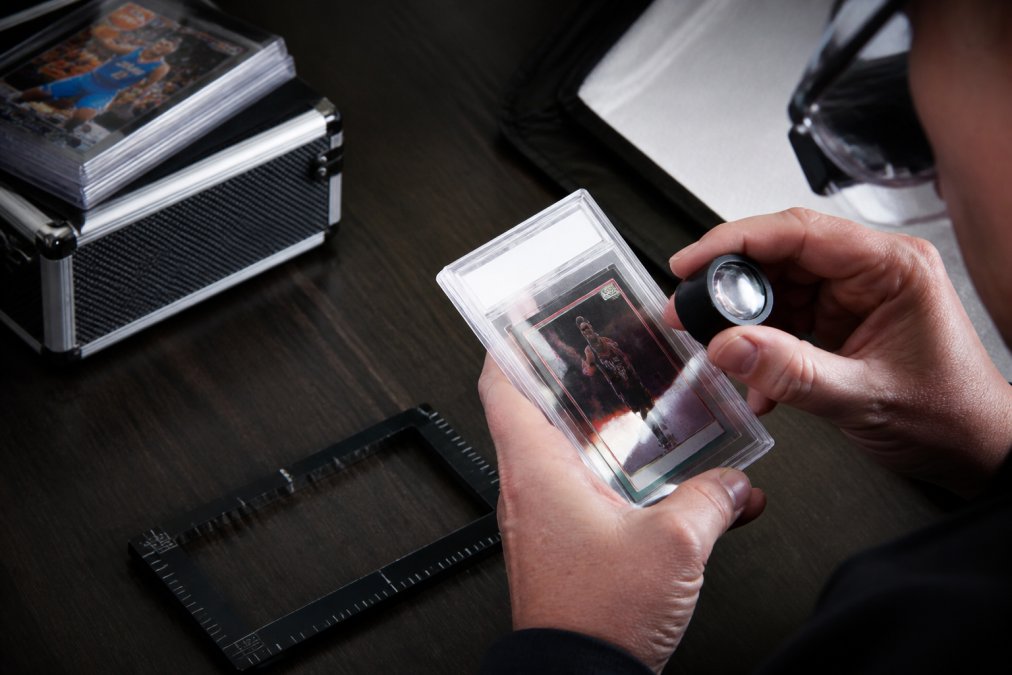
Authentication is the part of grading you never see and can't afford to skip. Reputable graders examine print patterns, card stock, gloss, and cutting under magnification, comparing suspect cards against known examples. The slab is part of the product: a tamper-evident case with a serial number and often UV protection. If a holder can be opened and resealed without obvious damage, the grade inside means nothing.
PSA vs BGS vs SGC Value Comparison: How the Big Three Stack Up
The PSA vs BGS vs SGC value comparison comes down to how the market prices each label, not which is objectively "best." PSA dominates market recognition and resale value. BGS is known for subgrades and black-label 10s, which carry a premium. SGC has a strong following in vintage cards and often turns around submissions faster.
| Service | Grading Style | Market Recognition | Best For |
|---|---|---|---|
| PSA | Single numeric grade | Broadest | Maximum resale value |
| BGS | Grade plus four subgrades | Strong in modern | Subgrade detail, black-label 10s |
| SGC | Single numeric grade | Strong in vintage | Speed and vintage expertise |
Here's what most guides miss: the label premium is a market opinion, and opinions shift. A card graded by a smaller service can sell for less than the identical card in a market-leading holder, even when condition is equal. That gap is the value-add you're paying for, confirm it against recent sold listings before you submit.
Card Grading Turnaround Times and What You're Really Paying For
Card grading turnaround times range from a few business days on expedited tiers to several months on the cheapest bulk options, and the price difference between those tiers is substantial.
A practical way to think about the tiers:
- Bulk tier: lowest cost per card, longest wait, often with a minimum card count per submission. Best for cards you plan to hold for months or years.
- Mid tier: balanced cost and speed, the default for most submissions where you want the card back within a few weeks.
- Expedited tier: highest cost, days not months, reserved for cards where timing affects the sale, an auction deadline, a set release, or a player's playoff run.
Two more variables move the number. Declared value limits are tied to tier, a cheap tier often caps insured value per card, forcing high-value submissions into a pricier tier. And submission volume matters: a large bulk order can sit in intake longer than a small one. Testing a service for the first time? Send a small mid-tier batch before committing a large bulk order.
Drake Maye 2024 Topps Chrome 1974 →
How to Prepare Cards for Grading So You Don't Lose Money
Preparing cards for grading is where careless collectors hand away value. A fingerprint, a soft corner from rough handling, or a scratched surface can drop a card a full grade before it ever reaches an evaluator. Follow these steps:
- Wash and dry your hands, or wear nitrile gloves.
- Work on a clean, lint-free surface in good lighting.
- Inspect the card with a loupe for surface defects and print flaws.
- Check centering with a centering tool or a ruler against the borders.
- Sleeve the card, then place it in a rigid holder or card saver.
- Package between rigid boards with padding, and insure the shipment.
Cost-Benefit Analysis: When Grading a Card Is Worth It
A cost-benefit analysis of grading comes down to one question: will the graded value exceed the raw value plus the grading fee, shipping, and insurance? Run the numbers before you submit, not after.
| Scenario | Raw Value | Grading Cost | Graded Value | Worth It? |
|---|---|---|---|---|
| High-demand rookie, likely 9 or 10 | Moderate | Standard fee | Well above raw | Yes |
| Common card, likely 7 or 8 | Low | Standard fee | Barely above raw | No |
| Vintage star, authentic but low grade | Moderate | Standard fee | Premium for authentication | Often yes |
| Modern base card, uncertain grade | Low | Standard fee | Near raw | Rarely |
Tax and Insurance Implications of Graded Cards
Graded cards create two obligations most collectors ignore until it's expensive. For insurance, a high-value slab usually needs a scheduled item or a collectibles rider rather than standard contents coverage, and insurers typically want an appraisal or documented sold comps to set the value. For taxes, profit from selling cards is generally taxable, and holding period affects the rate. Because rules change and vary by situation, confirm current thresholds with a qualified tax professional or the IRS guidance on capital gains rather than relying on forum advice.

AI vs. Human Grading: What Changes for Collectors in 2026
For collectors, the practical effects are three:
- Standardized criteria are tightening. When centering and surface are measured the same way every time, a grade means more than it did a few years ago, and the gap between a 9 and a 10 narrows to the defects that actually matter.
- The paper trail matters more. A service that publishes subgrades or imaging data gives you a record you can compare against the card in hand, useful both when you buy and when you sell.
- Human judgment is still the tiebreaker. On vintage, error cards, and anything with an authenticity question, the human call is the one that holds value. Do not assume a machine-assisted grade is automatically more reliable on a card that needs context.
The takeaway for evaluation: ask what a service measures automatically, what it leaves to human judgment, and how it documents both. A service that answers those three questions clearly is giving you more than a number, it is giving you a process you can trust.
Grading for Your Personal Collection vs. Flipping for Profit
Grading for your personal collection and grading to flip are different games. If you're keeping the card, grade for protection and display: a slab guards against handling damage, and UV protection matters if the card sits on a shelf. Buy the grade you enjoy looking at.
Frequently Asked Questions
How do I evaluate a card before sending it in for grading?
Inspect the four grading criteria: centering, corners, edges, and surface. Use a loupe under bright light to check for surface defects, print lines, and corner sharpness. Measure centering with a centering tool, since anything worse than 60/40 usually caps the grade. Compare your card to sold listings in the same grade on a population report to estimate whether the submission fee pays off before you ship it.
What are the primary differences between PSA, BGS, and SGC?
PSA grades on a whole-number scale and dominates market recognition, so its slabs often carry the strongest resale value. BGS uses a 1-10 scale with four subgrades (centering, corners, edges, surface) and its 9.5 and 10 labels command attention from serious collectors. SGC is known for fast card grading turnaround times and a tamper-evident slab, making it a popular choice for vintage and mid-value submissions where speed matters more than label prestige.
How does a grading service's reputation affect resale value?
Market recognition drives liquidity. A card in a widely trusted slab sells faster and at a higher price than the same card in an unknown holder, even at an identical grade. Before submitting, check recent sold prices for the same card in each company's holder and review the population report to see how many exist at that grade. Scarcity at a high grade plus a recognized label is what supports long-term resale value.
How do I verify the authenticity of a graded card slab?
Look up the certification number on the grading company's website and confirm the card, grade, and label details match the physical item. Check the slab for tamper-evident seals, consistent label typography, and a clean weld line. Compare the card's centering and surface to the photo in the online record. If anything is off, treat it as a counterfeit and walk away. Buying from a seller with verified feedback reduces that risk.