


Table of Contents
- What Semi-Rigid Holders Are and Why They Matter for Submissions
- Semi-Rigid Holder vs. Top Loader for Grading: Which Should You Choose
- How to Put a Card in a Card Saver 1: Step-by-Step Insertion
- Grading Submission Requirements and Holder Selection
- How to Ship Cards for Grading: Packing and Protection
- Common Mistakes to Avoid When Using Semi-Rigid Holders
- Frequently Asked Questions
Last Updated: October 10, 2026
What Semi-Rigid Holders Are and Why They Matter for Submissions
A semi-rigid card holder is a protective sleeve made from flexible plastic that keeps your trading card secure without the bulk of a hard plastic top loader, and understanding how to use semi-rigid holders for submission is essential for collectors preparing cards for grading. It offers the right balance between protection and ease of use, making it ideal for collectors preparing cards for grading submissions.

Semi-rigid holders work by cradling your card in a snug fit. The material flexes slightly, so your card slides in smoothly without forcing. Yet the holder maintains enough structure to prevent bending, creasing, or edge damage during shipping or handling.
Here's why this matters for submissions: grading companies like PSA, BGS, and CGC often request or recommend semi-rigid holders for intake. They protect your card during transit, prevent damage that could lower your grade, and show the grading service that you've handled your collectible with care.
The key benefit is protection without overkill. A rigid top loader is heavier and bulkier. A penny sleeve alone offers minimal protection. A semi-rigid holder strikes the balance most grading services expect to see.
Semi-Rigid Holder vs. Top Loader for Grading: Which Should You Choose
The choice between a semi-rigid holder and a rigid top loader depends on your submission method and card value.
Rigid top loaders are hard plastic sleeves that offer maximum protection. They don't flex at all. Your card sits in a fixed position with zero movement. Top loaders are thicker, heavier, and more durable for long-term storage on a shelf.
Semi-rigid holders are lighter and more flexible. They offer solid protection while taking up less space. They're easier to pack into submission boxes without adding excessive weight.
For grading submissions, semi-rigid holders are the preferred choice for most collectors. Here's why:
- Grading services handle hundreds of submissions daily. Lighter packaging means faster processing and lower shipping costs for you.
- Semi-rigid holders slide cards in and out smoothly, reducing the risk of accidental damage during intake handling.
- They meet all submission requirements from major grading companies.
- They're more affordable than top loaders for bulk submissions.
Top loaders work better for long-term storage on display shelves. If you're storing a card for years and not shipping it, a top loader provides maximum protection. But for submission purposes, semi-rigid holders are the smart choice.
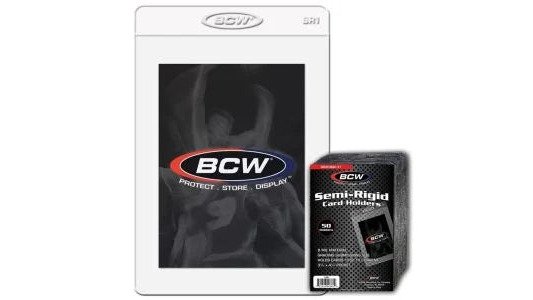
The BCW Semi-Rigid Card Holder #1 from Cardboard Superstars is designed specifically for standard trading cards. It fits Pokémon, Magic: The Gathering, Yu-Gi-Oh!, and sports cards perfectly. At $11.99 per holder, it's a way to protect your submission.
How to Put a Card in a Card Saver 1: Step-by-Step Insertion
Learning how to use semi-rigid holders for submission by inserting a card correctly prevents damage and ensures smooth handling. The process takes less than a minute once you know the technique.
Preparing Your Card and Sleeve
Before inserting your card, prepare it properly.
First, place your card in a penny sleeve. This thin plastic sleeve protects the card's surface from fingerprints and dust. The penny sleeve adds minimal bulk but provides that first layer of defense.
Slide the card into the penny sleeve gently. The card should fit snugly with the penny sleeve covering both sides. Make sure the sleeve is centered on the card with no wrinkles or folds.
The Rip & Protect Bundle from Cardboard Superstars includes 200 penny sleeves and 200 semi-rigid card savers. This combination gives you everything needed for proper card preparation and protection.

Once your card is in the penny sleeve, you're ready to insert it into the semi-rigid holder.
The Insertion Process
Hold the semi-rigid holder with one hand. Use your other hand to guide the sleeved card into the opening.
Position the card at a slight angle, about 45 degrees. This angle helps the card slide in without resistance. Don't try to insert it straight down.
Push the card in slowly and steadily. You should feel gentle resistance as the card enters the holder. This resistance means the holder is gripping the card securely.
Stop when the card reaches the middle of the holder. The card should not stick out the bottom. It should sit centered inside the semi-rigid holder.
Remove your hands. The card should stay in place without sliding around. If it does move, the fit is too loose. If it won't slide in at all, the fit is too tight.
That's it. Your card is now protected and ready for submission or storage.
Troubleshooting a Card That Won't Slide In
Sometimes a card resists insertion. This usually happens when the penny sleeve is too thick or the card is slightly warped.
The card feels stuck halfway through: Stop pushing immediately. Don't force it. Remove the card and check the penny sleeve for wrinkles or folds. Smooth out any creases and try again. If the penny sleeve is crumpled, replace it with a fresh one.
The card won't enter at all: The holder might be too tight for a sleeved card. Try inserting the card without the penny sleeve. If it slides in easily, the penny sleeve is the issue. Use a thinner sleeve or skip the penny sleeve for that particular card. Many collectors insert cards directly into semi-rigid holders without a penny sleeve for high-value cards, then add the penny sleeve afterward.
The card slides in but feels loose: A loose fit means your card could shift during shipping. Remove the card and try a different semi-rigid holder. Holder sizes can vary slightly between batches. Or add a second penny sleeve to increase thickness and create a tighter fit.
Grading Submission Requirements and Holder Selection
Different grading services have specific submission requirements. Knowing these requirements before you submit prevents delays and rejections.
PSA (Professional Sports Authenticator) accepts semi-rigid holders for submissions. They recommend using a penny sleeve inside the semi-rigid holder for maximum protection. PSA's intake team handles thousands of cards daily, so proper packaging speeds up the process.
BGS (Beckett Grading Services) requires semi-rigid holders for most card types. BGS specifically states that cards should be sleeved before insertion into the holder. This protects the card during their intake and grading workflow.
CGC Cards accepts semi-rigid holders and top loaders. They note that semi-rigid holders reduce packaging weight, which can lower your shipping costs. CGC recommends placing the semi-rigid holder inside a protective mailer before shipping.
Before you submit to any grading service, check their official submission guidelines. Most grading companies publish detailed instructions on their websites. Following these guidelines ensures your submission arrives in perfect condition and gets processed without delays.
BCW Semi-Rigid Card Holder #1 →
When you order from Cardboard Superstars, you're getting holders that meet all major grading service standards. The BCW Semi-Rigid Card Holder #1 is commonly used for card grading submissions.
How to Ship Cards for Grading: Packing and Protection
Shipping your cards to a grading service requires careful packing. Your semi-rigid holders protect the cards, but the shipping process adds additional stress. Proper packing prevents damage in transit.
Packing Order and Layering
Start with a sturdy shipping box. The box should be at least 4 inches by 6 inches and 2 inches deep. This size accommodates multiple semi-rigid holders without excessive empty space.
Layer your cards inside the box in this order:
-
Bottom layer: Bubble wrap or packing peanuts. Add 1-2 inches of cushioning material to absorb impact if the box is dropped.
-
Second layer: Your semi-rigid holders with cards inside. Stack them flat, not on edge. Keep them centered in the box.
-
Third layer: More bubble wrap or packing peanuts. Add 1-2 inches above your cards.
-
Top layer: A final protective layer. Some collectors add a sheet of cardboard on top of the packing material to create a flat surface.
Fill any gaps on the sides of the box with packing material. The semi-rigid holders should not shift when you gently shake the box. If they move, add more packing material.
Seal the box with strong packing tape. Use tape on all seams, including the bottom. This prevents the box from opening during transit.
Label the box clearly with the grading service's address. Include your return address. Consider using tracking and insurance for high-value submissions.
Safe Removal and Intake Handling
When your graded cards arrive back, remove them from the box carefully. The intake process at the grading service involves handling, so cards may shift slightly during transit.
Open the shipping box gently. Remove the top layer of packing material. Lift the semi-rigid holders out slowly and place them on a clean, flat surface.
Inspect each holder for damage. Look for cracks, dents, or any sign that the card moved inside. If a holder is damaged, contact the grading service immediately. They track damage reports and can assess whether it affected your card's grade.
Remove your card from the semi-rigid holder by gently sliding it out. The card should come out smoothly without resistance. If it's stuck, don't pull hard. Wiggle it gently from side to side while pulling slowly.
Once your card is out, you can keep it in the penny sleeve, place it in a new semi-rigid holder, or store it in a top loader for long-term display. The choice depends on how you want to display or store your graded card.
Common Mistakes to Avoid When Using Semi-Rigid Holders
Collectors make predictable mistakes with semi-rigid holders. Knowing what to avoid saves your cards and your money.
Mistake 1: Forcing a card into the holder. This is the most common error. Collectors see resistance and push harder.
Mistake 2: Skipping the penny sleeve. Some collectors put cards directly into semi-rigid holders without a penny sleeve.
Mistake 3: Overstuffing the holder. A semi-rigid holder holds one card. Don't try to fit two thin cards in one holder.
Mistake 4: Storing holders in extreme conditions. Semi-rigid holders are plastic. Heat warps them. Cold makes them brittle.
Mistake 5: Reusing damaged holders. If a semi-rigid holder is cracked, dented, or warped, don't reuse it. Replace it with a fresh holder.
Mistake 6: Ignoring grading service requirements. Each grading service has specific submission guidelines. Some require penny sleeves. Some recommend specific holder types.
Preparing your cards for grading submission requires attention to detail, but the process is straightforward once you know the steps.
Start with the right supplies.
Find cards and supplies that protect your collection. Cardboard Superstars stocks authentic, grading-ready protective supplies and high-value cards.
Frequently Asked Questions
Should you use a penny sleeve inside a semi-rigid holder?
Yes. Sleeving your card before insertion adds a protective layer that prevents direct contact between the card and the holder's interior, reducing surface scratches and edge damage. A standard penny sleeve is ideal for this purpose and fits comfortably inside semi-rigid holders without adding bulk.
Which semi-rigid holder size should you use for a grading submission?
Most grading services accept semi-rigid card savers for standard-size trading cards, including Pokémon, Magic: The Gathering, and sports cards. Check your grading service's submission requirements before sending. The BCW Semi-Rigid Card Holder #1 is designed to fit standard trading cards and is commonly used for submissions.
Can a semi-rigid holder damage a trading card?
No, when used correctly. Semi-rigid holders protect cards from bending and pressure damage. Damage occurs only if you force a card into a holder that's too small, apply excessive pressure during insertion, or fail to sleeve the card first. Always insert slowly without forcing, and the holder will keep your card safe.
How do you remove a card from a semi-rigid holder safely?
Gently slide the card out in the same direction it was inserted, supporting the card from below with your other hand. Avoid pulling the card straight up or twisting it, as this can bend corners or edges. If resistance occurs, stop and check that the card is aligned properly before continuing.