


Table of Contents
- Understanding Card Thickness and Why Relic Cards Need Special Protection
- Trading Card Thickness Guide: Measuring Your Cards
- Thick Card Top Loaders: The Foundation of Relic Card Protection
- Thick Card Sleeves: Layered Protection for Maximum Safety
- Magnetic Card Holders for Thick Cards: When and Why to Use Them
- Long-Term Storage and Environmental Control for Relic Cards
- Recommended Protection Bundles and Starter Kits
- Common Mistakes to Avoid When Protecting Thick Relic Cards
- Frequently Asked Questions
Last Updated: October 8, 2026
Understanding Card Thickness and Why Relic Cards Need Special Protection
Relic and patch cards are fundamentally different from standard trading cards. These premium inserts feature embedded memorabilia, actual fabric swatches, jersey pieces, or autographed material, making them thicker and more valuable than regular cards.
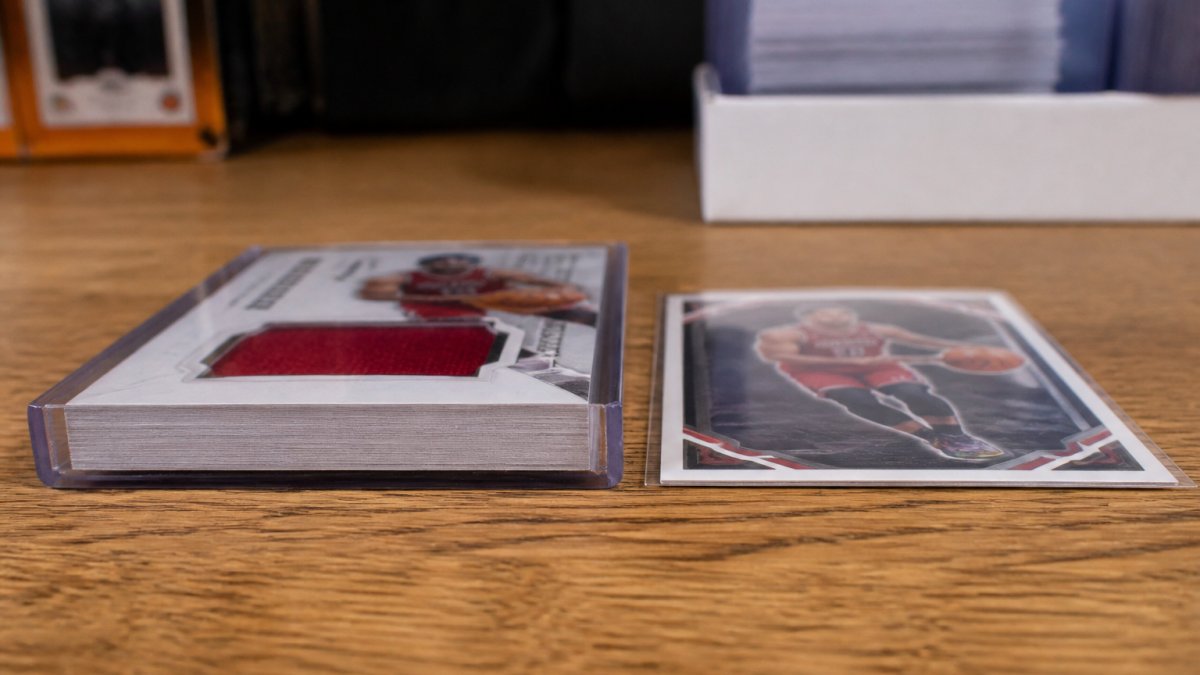
What Makes Relic and Patch Cards Different
A relic card is a trading card that contains an embedded piece of memorabilia, typically game-worn fabric, jersey material, or patch material from an athlete's uniform. Patch cards are a specific type of relic featuring a visible fabric swatch. Jersey cards fall into the same category.
Standard cards measure around 35 points thick (roughly 0.25 inches). Relic cards typically range from 50 to 120 points depending on the thickness of the embedded material. That difference matters enormously when you're choosing protection.
How Card Thickness Affects Storage Decisions
Thickness determines everything about how you store and protect a card. A toploader that works perfectly for a standard card will be too shallow for a relic. Forcing a thick card into a standard holder causes edge stress, potential warping, and surface damage.

This is where most collectors make mistakes. They grab whatever toploader is available without checking the pt (point) measurement. The result is compromised protection for a high-value card. Proper protection requires matching the holder size to the actual card thickness.
Trading Card Thickness Guide: Measuring Your Cards
Understanding card thickness measurements is essential for selecting the right protection. The industry uses "pt" (points) as the standard measurement, where one point equals 1/1000 of an inch.
| Card Type | Typical Thickness | Toploader Size Needed |
|---|---|---|
| Standard trading card | 35pt | Standard toploader |
| Thick relic/patch card | 50-80pt | Thick toploader |
| Extra-thick memorabilia card | 100-120pt | Extra-thick toploader |
Standard Card Thickness and Point Measurements
Standard trading cards measure 35 points thick. This is the baseline for the hobby. Most cards you pull from packs fall into this category. A 35pt toploader is designed specifically for this thickness, providing snug protection without excess space.
Relic cards begin around 50 points and can extend to 120 points or beyond. The variation depends on what's embedded. A thin jersey patch might add only 15 points. A thick autographed relic with multiple layers can double the card's thickness.
Identifying Thick Cards in Your Collection
Look at your card from the side. If it appears noticeably thicker than a standard card, it's likely a relic or premium insert. Most relic cards have visible memorabilia, you can see the fabric, patch, or autograph embedded in the card.
Check your card's product description if you purchased it graded or from a reputable dealer. The listing should specify the card type. If it mentions "relic," "patch," "jersey," or "autographed," you're working with a thick card.
Thick Card Top Loaders: The Foundation of Relic Card Protection
A toploader is a rigid plastic holder that protects cards from bending, edge wear, and surface damage. For relic and patch cards, a thick toploader is non-negotiable. Standard toploaders are too shallow.
The Mixed Case of Thick Card Topload Holders - BCW from Cardboard Superstars is specifically designed for this purpose. These rigid plastic toploaders feature clear construction for safe display and storage. They prevent bending, edge wear, and surface damage, the three most common threats to relic cards.
Rigid vs. Semi-Rigid Toploader Options
Rigid toploaders are hard plastic holders that don't flex. They provide maximum protection against bending and warping. For relic cards, rigid is the standard choice. The card sits inside a fixed structure, completely protected from external pressure.
Semi-rigid card savers offer more flexibility. They're lighter and easier to transport, making them popular for shipping and grading submissions. However, they provide less absolute protection than rigid toploaders.

The BCW Semi-Rigid Card Holder #1 ($11.99) offers that flexibility if you need it.
Why Toploaders Beat Standard Magnetic Holders for Thick Cards
Magnetic holders have a place in card protection, but they're not ideal for thick relic cards. A magnetic holder works by sandwiching the card between two magnetic pieces of acrylic. This works fine for standard-thickness cards. For relic cards, the problem becomes obvious: the magnetic pieces won't close properly around a thicker card.
Toploaders, by contrast, are designed with variable depths. A thick toploader accommodates the extra material without compromising the fit. The card slides in cleanly and sits snugly, protected on all sides.
Thick Card Sleeves: Layered Protection for Maximum Safety
A sleeve is the first line of defense for any card. It protects against fingerprints, dust, and minor handling damage. For relic cards, sleeves are essential even when the card will also go into a toploader. The combination of sleeve plus toploader creates layered protection.
Penny Sleeves vs. Semi-Rigid Card Savers
Penny sleeves are thin, clear plastic sleeves that fit standard cards. They're inexpensive and ideal for bulk protection of regular cards.
Semi-rigid card savers are thicker sleeves with more body. They provide structural support without being fully rigid. A semi-rigid sleeve holds the card's shape, protecting against minor bending and warping.
The Rip & Protect Bundle 200 Penny Sleeves, 200 Semi Rigid Card Savers ($32.00) from Cardboard Superstars gives you both options.
Combining Sleeves with Toploaders for Complete Protection
The best protection strategy uses both sleeves and toploaders. Place the card in a sleeve first. This protects the card surface from direct contact with the plastic toploader, reducing the risk of scratches or PVC damage. Then slide the sleeved card into the toploader.
Mixed Case of Thick Card Topload Holders - BCW →
For relic cards specifically, this layered approach is essential. You're protecting a high-value card with embedded memorabilia. The extra step of using a sleeve takes seconds and significantly extends the card's lifespan. Most serious collectors follow this system automatically.
Magnetic Card Holders for Thick Cards: When and Why to Use Them
Magnetic holders work well for display. The clear acrylic allows you to see the card from both sides without removing it from protection. For standard-thickness cards, magnetic holders are convenient and attractive.
For relic cards, magnetic holders have limitations. The thickness of the card often prevents the magnetic pieces from closing properly.
If you want to display a relic card in a magnetic holder, you'll need an oversized version specifically designed for thick cards. These exist but are less common than standard magnetic holders.
Long-Term Storage and Environmental Control for Relic Cards
Protection extends beyond the physical holder. Environmental factors, humidity, temperature, and light, affect card condition over years and decades. A card stored in a toploader but kept in a hot, humid basement will still deteriorate. Proper storage requires attention to the environment.
Archival Safety: PVC vs. Non-PVC Materials
PVC (polyvinyl chloride) is a common plastic used in card holders. Over time, PVC can off-gas and cause yellowing or staining on cards. Non-PVC materials like polypropylene are safer for long-term storage. Most modern card protection products use non-PVC materials.
When selecting sleeves and toploaders, check the product description. Look for "acid-free" and "non-PVC" labels. These indicate materials safe for archival storage. Avoid older or cheap holders that may contain PVC. For relic cards, which are often high-value and irreplaceable, archival-safe materials are worth the small additional cost.
Humidity, Temperature, and UV Protection
Store cards in a cool, dry environment. Humidity causes warping and mold growth. Temperature fluctuations stress the card and embedded material. Direct sunlight and UV light fade card colors and damage the print.
An ideal storage location maintains 50-55% humidity and 65-70 degrees Fahrenheit. A climate-controlled closet or cabinet works well. Avoid basements (prone to moisture), attics (temperature swings), and windowsills (UV exposure). If you display relic cards, use UV-protective display cases or keep them away from direct sunlight.
Recommended Protection Bundles and Starter Kits
Cardboard Superstars offers several protection bundles designed for different collection sizes and needs.
Mixed Case of Thick Card Topload Holders - BCW
The Mixed Case of Thick Card Topload Holders - BCW ($134.00) is our top recommendation for serious collectors with multiple relic cards. This bulk case provides rigid thick toploaders in various sizes, all designed specifically for relic and patch cards. The rigid plastic construction prevents bending and edge wear. The clear design allows safe display and storage. This is the foundation of proper relic card protection.
Rip & Protect Bundle: Penny Sleeves and Semi-Rigid Card Savers
The Rip & Protect Bundle 200 Penny Sleeves, 200 Semi Rigid Card Savers ($32.00) combines two essentials. Use penny sleeves for handling and sorting. Use semi-rigid card savers for storage and submissions. This bundle is ideal for collectors who need both options and want to start building a layered protection system.
Starter and Expanded Supply Packs for Growing Collections
The Rookie Supply Pack - 100 Card Sleeves + 50 Toploaders ($13.75) is perfect for beginners. This pack includes standard sleeves and toploaders for regular cards. It's not designed for relic cards, but it's an affordable way to start protecting a collection.
For collectors with growing collections, the Team Leader Supply Pack - 100 35pt Toploaders + 100 Sleeves ($16.00) provides more standard protection supplies. The All-Star Supply Pack - 200 Toploaders + 200 Penny Sleeves ($29.99) doubles the supply for larger collections.
Common Mistakes to Avoid When Protecting Thick Relic Cards
The most common mistake is using standard toploaders for thick cards.
Another mistake is skipping the inner sleeve. Some collectors place relic cards directly into toploaders. This risks surface scratches and PVC damage.
Storing cards in poor environments is a silent killer.
Finally, don't store relic cards in magnetic holders unless the holder is specifically designed for thick cards.
Protecting relic and patch cards requires the best card protection supplies for thick relic cards and proper storage practices.
Frequently Asked Questions
What's the difference between a relic card and a standard card, and why do they need different protection?
Relic cards contain actual pieces of memorabilia (jersey, patch, or autographed material) embedded in the card, making them significantly thicker than standard cards. A standard card is typically 25-35pt thick, while relic and patch cards often measure 75pt or thicker. This extra thickness means they won't fit in standard toploaders and require rigid plastic construction to prevent warping and surface damage. The embedded material also makes them more valuable, so archival-safe, acid-free protection is essential for long-term preservation.
How do I measure my card's thickness before buying a holder?
Use a digital caliper or card thickness gauge, which measures in points (pt). Place the card flat and measure from back to front without applying pressure. Standard cards measure 20-35pt, while relic cards typically range from 60-120pt depending on the amount of embedded material. Measure several cards in your collection to determine the right toploader size.
Should I use a penny sleeve with a thick card toploader?
Yes, using a penny sleeve or semi-rigid card saver as an inner sleeve before placing the card in a toploader adds an extra layer of protection against dust, fingerprints, and surface scratches. For high-value relic cards, this two-layer approach is standard practice among serious collectors. The inner sleeve protects the card itself, while the rigid toploader provides structural protection against bending and warping. This combination is especially important if you plan to ship or frequently handle the card.
What's the best way to store thick relic cards long-term?
Store relic cards in rigid toploaders with acid-free inner sleeves in a cool, dry environment between 60-70°F with 30-40% humidity. Keep them away from direct sunlight and UV light to prevent fading and material degradation. Store toploaders upright or flat in archival-safe boxes, never stacked horizontally under pressure. Avoid PVC-containing holders, as PVC can degrade over time and damage the card and embedded material.