


Table of Contents
- Why Vintage Pokémon Cards Need Specialized Protection
- Quick Comparison: Card Sleeve Options at a Glance
- 1. Standard Card Sleeves - BCW: Budget-Friendly Daily Protection
- 2. Rip & Protect Bundle: Penny Sleeves for Cards and Semi-Rigid Savers
- 3. BCW Semi-Rigid Card Holder #1: Archival-Safe Card Sleeves for Submissions
- Top Loader Sleeves vs. Regular Sleeves: Which Works Best for Vintage Cards
- How to Sleeve Pokémon Cards Without Causing Damage
- Selection Criteria: What Makes a Sleeve Safe for Vintage Cards
- Frequently Asked Questions
Last Updated: October 12, 2026
Why Vintage Pokémon Cards Need Specialized Protection
Card sleeves vintage Pokémon collectors use must address unique preservation challenges that standard sleeves simply don't handle, especially for Base Set era cards and earlier. Age, handling history, and material degradation mean your collection needs more than casual protection.

Vintage card protection isn't one-size-fits-all. The cards you're protecting may be decades old. Their paper stock is different from modern cards. The ink has aged. The edges and corners have endured years of handling, storage, and environmental exposure.
What makes vintage cards different? Time. A 1999 Base Set Charizard has survived 25+ years of temperature fluctuations, humidity shifts, and the wear that comes with being handled, stored, and moved. Modern cards manufactured today will never face those same accumulated stresses. Your vintage Pokémon cards need sleeves that respect this reality: protection from further deterioration, not just protection from today's dust and scratches.
The right card sleeves for vintage Pokémon cards do three critical things. They prevent additional edge wear and corner damage from handling. They shield the card surface from scratches, dust, and oxidation. And they create a stable microenvironment, keeping humidity and air exposure consistent so the card doesn't degrade faster than it already has.
Below, we'll walk you through the best card sleeves vintage Pokémon cards need, what makes them work, and how to use them without causing more damage in the process.
Quick Comparison: Card Sleeve Options at a Glance
| Sleeve Type | Best For | Key Feature | Price Range |
|---|---|---|---|
| Standard sleeves | Daily handling and gameplay | Budget-friendly, snug fit | $2-3 |
| Penny sleeves | Temporary storage, sorting | Minimal cost, easy insertion | $0.01-0.05 each |
| Semi-rigid card savers | Submissions and long-term storage | Archival-safe materials, structure | $0.10-0.20 each |
| Top loaders | Display and grading prep | Rigid protection, visibility | $0.15-0.30 each |
1. Standard Card Sleeves - BCW: Budget-Friendly Daily Protection
The BCW Standard Card Sleeves are the entry point for most collectors. They're not fancy, but they work for what they're designed to do: keep cards from getting visibly scratched during handling and play.

These sleeves offer a snug fit that prevents cards from sliding around inside the sleeve. That matters because movement inside a loose sleeve causes edge wear and corner damage over time. The BCW standard sleeve holds the card firmly without crushing it.
What works for vintage Pokémon cards: The material is clear enough to see the card without removing it. The fit is tight enough that casual handling won't shift the card. At just $2.25 per pack, you can afford to sleeve your entire collection without breaking your budget.
What doesn't work for vintage cards: Standard sleeves alone aren't archival-safe for long-term storage. They offer no rigid structure, so stacking sleeved cards creates pressure points. If your vintage Pokémon cards are valuable or grading-bound, standard sleeves are a temporary solution, not a permanent one.
Best for: Collectors who sleeve cards for display and occasional handling, or those building a working collection they'll reorganize frequently.
2. Rip & Protect Bundle: Penny Sleeves for Cards and Semi-Rigid Savers
The Rip & Protect Bundle from Cardboard Superstars pairs two protection layers: 200 penny sleeves and 200 semi-rigid card savers. This combination addresses the real workflow of serious collectors.

Penny sleeves are thin, clear sleeves that fit snugly around a standard card. They cost almost nothing per card, which means you can afford to use them generously. Many collectors use penny sleeves as a first layer, the card goes into the penny sleeve first, then into a more protective outer sleeve or holder.
The semi-rigid card savers in this bundle are the real value. These are thicker, slightly structured sleeves made from archival-safe materials designed to protect cards during shipping, storage, and grading submissions. They prevent the card from shifting inside the sleeve. They don't off-gas like PVC materials do. They're what you use when the card matters.
For vintage Pokémon cards, this bundle gives you a complete protection system. The penny sleeves keep dust off the card surface during sorting and temporary storage. The semi-rigid savers protect cards you're keeping long-term or preparing for grading.
Best for: Serious collectors building a graded collection, sellers preparing cards for shipment, and anyone with vintage Pokémon cards worth protecting.
Trading card grading standards and submission requirements
3. BCW Semi-Rigid Card Holder #1: Archival-Safe Card Sleeves for Submissions
The BCW Semi-Rigid Card Holder #1 is the single best sleeve for vintage Pokémon cards destined for grading. It's designed specifically for that purpose.
Semi-rigid holders offer the structure of a top loader without the bulk. The card sits in a snug chamber that prevents shifting. The material is archival-safe. The design is reusable, so you can move cards in and out without damaging the sleeve itself.
What makes this different from a standard sleeve? Rigidity. Vintage cards are fragile. A standard sleeve lets the card flex slightly when you handle it. A semi-rigid holder keeps the card flat and stable. For a card that's already 25 years old, that stability matters.
The BCW Semi-Rigid Card Holder #1 fits standard-size trading cards, including vintage Pokémon cards. It's commonly used for grading submissions because grading companies know it protects cards in transit. At $11.99, it's an investment per card, but for your most valuable vintage Pokémon cards, it's a good choice.
One limitation: semi-rigid holders aren't meant for shuffling or frequent handling. They're for storage, display, and submission prep. If you want to play with or regularly handle a card, use a standard sleeve. If you want to preserve it, use a semi-rigid holder.
Best for: Protecting high-value vintage Pokémon cards, preparing submissions to grading companies, and long-term archival storage.
Top Loader Sleeves vs. Regular Sleeves: Which Works Best for Vintage Cards
Top loaders are rigid plastic holders that completely enclose a card. A regular sleeve is a thin protective layer that the card slides into. They serve different purposes, and choosing between them depends on what you're protecting and why.
Top loaders offer maximum physical protection. The rigid plastic shields the card from bending, creasing, and pressure. They're excellent for display, you can see the card clearly through the plastic. They're the industry standard for cards in transit and for cards sitting on a shelf.
Regular sleeves (standard or semi-rigid) offer protection from dust, scratches, and oxidation while keeping the card flexible. They're lighter, cheaper, and easier to store in bulk. They don't add visible thickness to your collection.
For vintage Pokémon cards, the choice depends on your goal. If you're displaying the card and want maximum protection from physical damage, use a top loader. If you're storing cards in a binder or box and want to protect surface condition, use a semi-rigid sleeve. Many serious collectors use both: the card goes into a semi-rigid sleeve first, then into a top loader for display or submission.
Top loaders are rigid and visible, great for showing off a card. Semi-rigid sleeves are subtle and archival, great for protecting a card you're not actively displaying.
Best practices for long-term trading card storage
How to Sleeve Pokémon Cards Without Causing Damage
Sleeving a vintage Pokémon card incorrectly can cause more damage than not sleeving it at all. The process matters.
Start by cleaning your hands. Oils and dirt transfer to the card during insertion. Wash your hands with soap and water, then dry them completely. No lotion, no residue.
Hold the card by the edges only. Never touch the face or back of the card. Your fingertips should contact only the white border area.
Insert the card into the sleeve slowly. Don't force it. If the sleeve is snug (which it should be), the card will slide in with gentle, steady pressure.
For semi-rigid sleeves, insert the card lengthwise into the opening. The card should sit flat inside the holder with no bending or pressure. If the card doesn't fit smoothly, stop. Don't force it.
Once the card is in the sleeve, don't remove it and reinsert it repeatedly. Every insertion creates friction and risk.
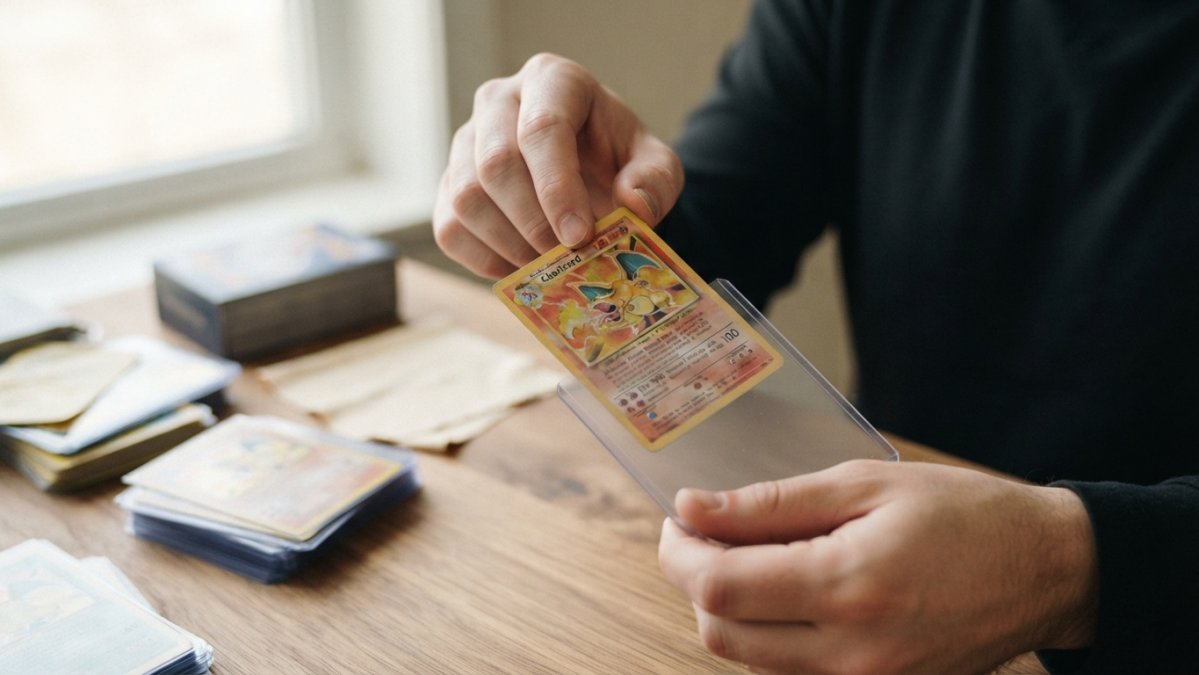
For penny sleeves: These are thin and flexible. Insertion is easier, but the fit is looser. After the card is in, tap the penny sleeve gently on a flat surface so the card settles to the bottom. This prevents the card from shifting during storage.
For semi-rigid sleeves: Insertion should be smooth and effortless. If you feel resistance, stop. Don't push.
For top loaders: These are rigid and have a clear opening at the top. Slide the card in vertically, centering it as it goes. The card should sit flat without any bending.
Selection Criteria: What Makes a Sleeve Safe for Vintage Cards
Not all sleeves protect vintage Pokémon cards equally. Here's what actually matters when you're choosing.
Material safety: Archival-safe materials don't off-gas or degrade over time. PVC and some plastics release chemicals that can damage card stock. Semi-rigid sleeves and penny sleeves from reputable manufacturers are archival-safe.
Fit tightness: A snug fit prevents the card from shifting inside the sleeve. Shifting causes edge wear over time. Too tight, and insertion becomes difficult or risky.
Clarity: You should be able to see the card clearly through the sleeve without removing it. This lets you inspect condition and verify authenticity without handling the card repeatedly.
Reusability: For expensive vintage Pokémon cards, reusable sleeves make sense. You can move the card if needed without destroying the sleeve. Single-use sleeves are fine for bulk storage, but archival-quality sleeves justify reuse.
Thickness and rigidity: Thicker sleeves offer more structure. For valuable cards, semi-rigid or rigid sleeves provide better protection than thin standard sleeves. For bulk storage and organization, thin sleeves are fine.
Cost per card: Your budget matters. Standard sleeves cost pennies. Semi-rigid sleeves cost more. Top loaders cost even more. Match the sleeve quality to the card's value. A $50 vintage Pokémon card deserves a semi-rigid sleeve.
Cardboard Superstars offers multiple options so you can match protection level to card value.
Frequently Asked Questions
Are penny sleeves safe for vintage Pokémon cards?
Penny sleeves offer basic protection from dust and handling but lack rigid support for valuable vintage cards. They work well as an inner layer before placing cards in semi-rigid holders or top loaders. For long-term storage of high-value vintage Pokémon cards, pair penny sleeves with a more protective outer sleeve to prevent edge wear and corner damage.
What's the difference between archival-safe card sleeves and regular sleeves?
Archival-safe card sleeves use materials that won't degrade or damage cards over decades, making them essential for vintage Pokémon card preservation. Regular sleeves may contain chemicals that cause discoloration or brittleness. The Rip & Protect Bundle combines penny sleeves for handling with semi-rigid card savers designed for archival storage and grading submissions.
Should vintage Pokémon cards go in a sleeve and a top loader?
Double-sleeving is recommended for valuable vintage cards. Start with a penny sleeve or inner sleeve for the card itself, then place it in a rigid top loader or semi-rigid holder for maximum protection during storage and shipping. This approach prevents scratches, dust accumulation, and edge wear while keeping cards in grading-ready condition.
How do I sleeve a Pokémon card without damaging it?
Insert the card slowly into the sleeve at a slight angle, keeping your fingers clear of the card face. Avoid forcing it, if there's resistance, check that the sleeve size matches your card. For vintage cards, use a penny sleeve first for gentle protection, then transfer to a semi-rigid holder. Never rush the process; careful insertion prevents corner damage and surface scratches.
Protecting vintage Pokémon cards requires more than grabbing any sleeve off the shelf. Your collection has survived decades. The right sleeves ensure it survives decades more. Find cards that match your collection's value and your long-term goals at Cardboard Superstars, we stock the protective supplies serious collectors trust, with fast shipping and the reliability you need to collect with confidence.