


Quick Summary
The best trading card binders for graded cards are chosen by measuring your slabs first, since a pocket a few millimeters too small is the most common failure. Check height, width and thickness against each page's specifications, and buy for your thickest case.
- Measure your most common slab with a caliper or millimeter ruler before buying any pages or binder.
- Ignore product titles like "fits graded cards" and compare the actual pocket specifications instead.
- If your collection mixes graders, buy pages sized for the thickest case you own.
- A slab should slide in and out with light one-handed pressure without flexing the page.
- Spread heavy slabs across several pages and keep the heaviest pages toward the middle of the binder.
Table of Contents
- Why Graded Cards Need a Different Kind of Binder
- How Slab Dimensions Decide What Fits
- PSA Graded Card Binder Options: Top-Loader and Slab Storage Compared
- Trading Card Binder With Zipper: Portability and Protection on the Move
- Pricing Breakdown: Budget Supplies to Premium Storage
- Storage Environment, Archival Safety and Cleaning Your Binder
- Choosing the Best Trading Card Binder for Graded Pokemon and Sports Slabs
- Frequently Asked Questions
Why Graded Cards Need a Different Kind of Binder
Last Updated: November 11, 2026
Graded cards are not like raw cards. Each one sits inside a rigid plastic slab sealed by a third-party grader, so a standard binder page built for loose cards often will not fit. Choosing the best trading card binders for graded cards means picking storage that respects the slab's size, weight and value. A common mistake is buying a binder that holds sleeved cards well, then discovering the slabs rattle, bind or crack a case when they try to fit them.
The fix starts with understanding what a slab needs. Most graded cards are sealed in a hard case noticeably thicker and heavier than a sleeved card. A page that feels roomy for a raw card can be too tight for a slab, and a page that fits one slab may not fit the next grader's case. That is why the first step is checking dimensions before spending money.
A slab also changes the weight problem. Good binder choices account for how the weight is distributed, not just how many cards fit.
How Slab Dimensions Decide What Fits
Slab dimensions decide which pages, pockets and binders will work, and the single biggest reason a graded-card binder fails is a pocket that is a few millimeters too small. Before buying anything, measure the height, width and thickness of the slab you own most often with a caliper or a ruler that reads millimeters, then compare those numbers to the pocket specifications on any page or binder you are considering. Do not trust the product title alone, "fits graded cards" is marketing copy, not a specification.
Pocket size matters more than the page count.
Thickness is the second check, and it is where mixed collections break down. If your collection mixes graders, buy for the thickest case you own, not the thinnest. A page that fits a slim SGC slab comfortably can grip a thick BGS slab tightly enough to scuff the case and make insertion and removal feel like a two-handed operation. The practical test is simple: a slab should slide in and out with light one-handed pressure and should not require you to flex the page.
A compatibility chart is the fastest way to shop. Build a small table for yourself with columns for grader, measured width, measured height, measured thickness and the pocket size you need, then check every page and binder against that table before you buy. Measure your thickest slab before buying a bulk box of pages, since pages that pinch your cases are hard to recover from.
PSA Graded Card Binder Options: Top-Loader and Slab Storage Compared
Collectors searching for a PSA graded card binder usually face two choices: top-loaders and slab-specific storage. Top-loaders are rigid plastic holders that protect a card while keeping it in a standard-size pocket. They work well for raw cards and for smaller, lighter graded items. Slab storage is built around the full graded case, which is why it tends to fit PSA slabs more reliably.
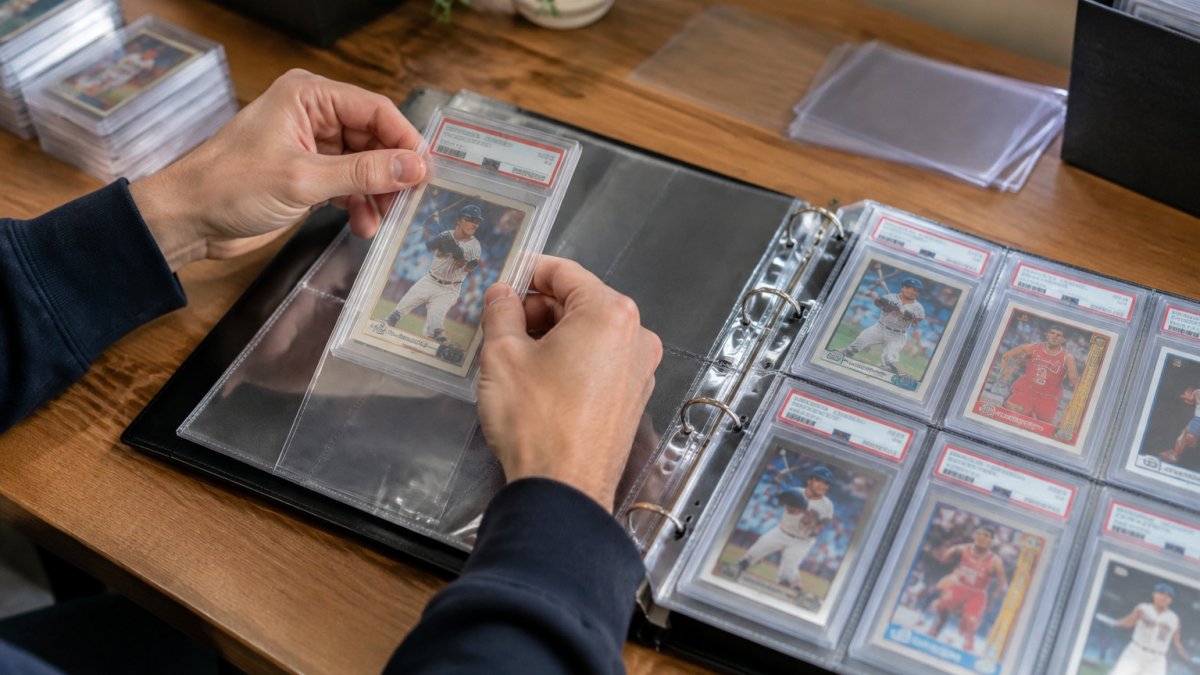
For most collectors, the decision comes down to what they own. A binder full of raw cards in top-loaders gives a clean, consistent look. A PSA slab collection needs pages sized to the case, not a top-loader that was never designed for it.
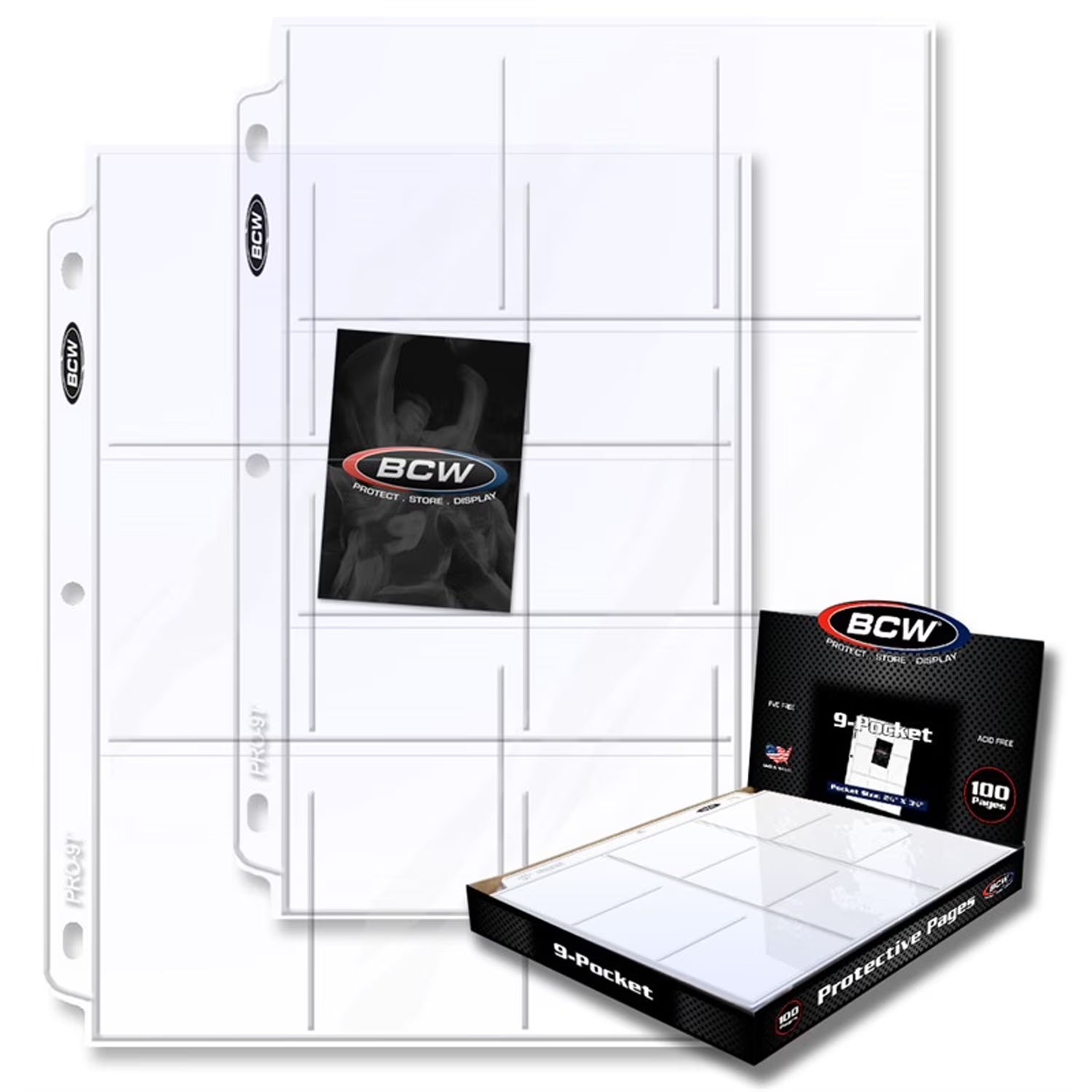
The BCW Laser Weld 9-Pocket Pages, 100-Count Box is a practical starting point for organizing cards in a binder. It is PVC-free and fits standard 3-ring binders. Check your slab dimensions against the pocket size before you commit to a full box, since a bulk purchase is only useful if the pockets fit what you collect.
Ring vs. Ringless Mechanisms
Ring binders are the familiar choice. They let you add or remove pages easily, and standard 3-ring pages are widely available. The downside is that rings concentrate pressure on the pages around them, and heavier slabs can strain the rings over time.
Ringless binders avoid that pressure by storing pages in a flat or strapped format. They suit collectors who value a stable, low-stress display. The trade-off is less flexibility when you want to reorder pages. Pick the mechanism based on how often you expect to change your collection.
Capacity, Pocket Count and Weight Distribution
Pocket count sets how many cards fit per page, but the more useful question is how much each page holds. A 9-pocket page with graded slabs may be far heavier than the same page with raw sleeves. Spread heavy cases across several pages instead of concentrating them in one section of the binder.
Weight distribution is the part most buyers overlook. Keep the heaviest pages toward the middle of the binder, and avoid stacking dozens of slabs in one thick section. Balanced loading reduces strain on the spine and keeps the binder lying flat on a shelf.
Trading Card Binder With Zipper: Portability and Protection on the Move
A trading card binder with a zipper makes sense when you need to carry cards to a show, a store or a friend's house. The zipper closes the binder fully, which keeps pages from shifting and protects the edges from dust and minor bumps.
Portability has limits, though. A zipper binder that holds several heavy slabs can become difficult to carry comfortably, and cramming too many cases into one bag increases the risk of cracking. For transport, carry a smaller binder with only the cards you need, and leave the rest at home in fixed storage.
Zipper binders are also useful for protection during storage. Closing the case keeps out dust, and a firm cover helps the pages stay in place. Check that the zipper runs smoothly and that the binder lies flat when closed. A bent cover can press on slabs over time.
Pricing Breakdown: Budget Supplies to Premium Storage
Storage costs vary widely, so match your spending to the value of what you own. Our current supply options give you a range to work with:
| Product | Price | Best For |
|---|---|---|
| Rookie Supply Pack, 100 sleeves + 50 toploaders | $13.75 | Starting out, standard-size cards |
| Team Leader Supply Pack, 100 35pt toploaders + 100 sleeves | $16.00 | Sleeving and toploading a mid-size collection |
| Rip & Protect Bundle, 200 penny sleeves + 200 semi-rigid card savers | $32.00 | Pack ripping, sorting, shipping prep |
| All-Star Supply Pack, 200 toploaders + 200 penny sleeves | $29.99 | Larger collections needing bulk protection |
| BCW Laser Weld 9-Pocket Pages, 100-Count Box | $25.99 | Organizing cards in a standard 3-ring binder |
Price
For a budget start, the Rookie Supply Pack at $13.75 covers the basics. Once your collection grows, the All-Star Supply Pack at $29.99 offers more volume per dollar. Remember that these supplies protect standard-size cards. For graded slabs, verify fit before buying bulk.
Storage Environment, Archival Safety and Cleaning Your Binder
Where you keep your binder matters as much as the binder itself. For a deeper look at archival options, read the long-term card storage guide. Store it away from direct sunlight, and avoid damp rooms, attics and garages (Care, Handling and Storage of Works on Paper). A stable indoor shelf is usually the safest choice.
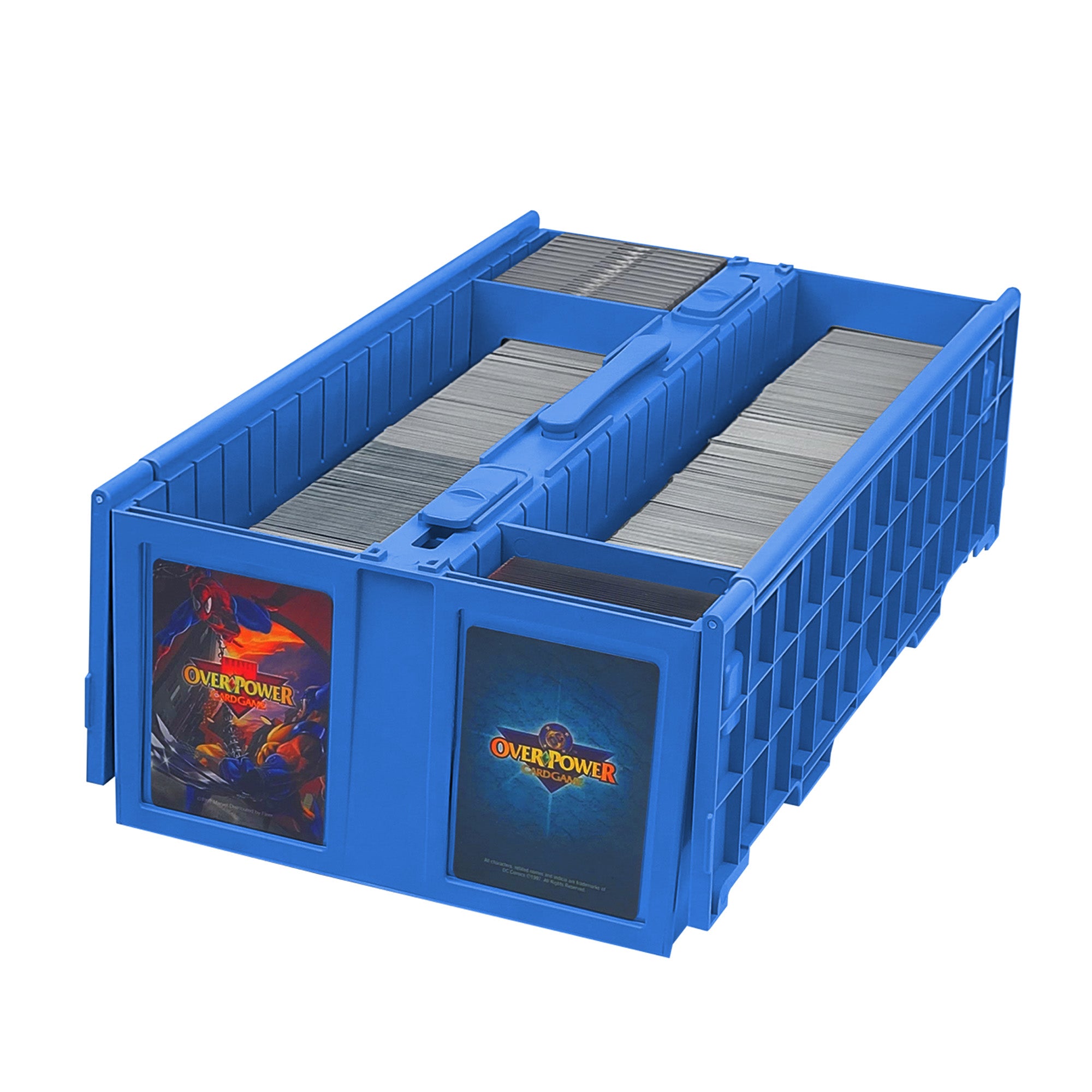
Archival safety starts with the materials touching your cards. For a secure bin to keep cards protected long term, see the BCW Collectible Card Bin. Look for sleeves and pages that are PVC-free. Keep cards out of the binder if the pages look cloudy, warped or sticky.
Cleaning is simple but easy to skip. Dust the outside of the binder with a dry microfiber cloth. Do not use liquid cleaners on the pages or the zipper, as moisture can seep into the pockets. If a page gets dirty, replace it rather than trying to wipe the inside of a sleeve.
Choosing the Best Trading Card Binder for Graded Pokemon and Sports Slabs
Graded Pokémon and sports slabs share the same core needs: a secure fit, balanced weight and clean storage. Measure your most common slab first, then pick pages and a binder that accept that size without pressure on the edges. Keep the heaviest slabs spread out across pages, and choose PVC-free materials for long-term storage.
If you are building a collection, start with a few well-fitting pages and expand as you learn your slab sizes. Cardboard Superstars supplies collectors at every level, and you can browse our selection to match storage to what you own. Browse our find cards selection and build a setup that protects your collection for years.
Frequently Asked Questions
What is the best graded card binder?
The best graded card binder depends on the slab thickness and the number of cards you store. Look for pages sized to hold standard PSA slabs, sturdy rings or a ringless mechanism that lays flat, and a zipper if you carry your collection often. Cardboard Superstars carries storage pages and supply packs that fit standard-size trading cards and sleeves, so check each product listing for exact compatibility before you buy.
Will a PSA slab fit in a graded card binder?
Most PSA slabs fit standard binder pages, but thicker grading holders and oversized cards may not. Measure a slab against the pocket dimensions in the product listing before buying. Pages that use side-loading pockets make it easier to insert slabs without bending the case edges. Keep slabs upright and avoid overfilling, since a tight fit can stress the holder over time.
Are there binders for graded cards?
Yes. Binders designed for graded cards use rigid or semi-rigid pockets, often with a zipper or ringless design, to protect slabs from pressure and movement. Standard binders built for sleeved cards can work for lighter collections, but graded slabs need pockets that support their thickness. Pair any binder with padding or protective sleeves for slabs you plan to transport.
What should I look for in a binder for graded cards?
Focus on four things: pocket dimensions that match your slab size, page material that is PVC-free and acid-free for long-term storage, a secure closure such as a zipper if you travel with your collection, and a layout that distributes weight evenly. Check the capacity and pocket count against your collection size. Cardboard Superstars lists product details such as pocket layout and compatibility before checkout so you can confirm fit.
