


Table of Contents
- Why Buying Rare Cards With Total Confidence Starts Before You Click
- How to Spot Fake Trading Cards: The 7-Point Inspection
- Benefits of PSA vs BGS Grading for Rare Cards
- Best Online Stores for Graded Cards and How to Vet Sellers
- Safe Payment Methods and Escrow for High-Value Transactions
- Post-Purchase Verification Protocols and Shipping Insurance
- Common Red Flags in Online Listings and How to Avoid Scams
- Conclusion: Your Next Steps for Buying Rare Cards With Total Confidence
- Frequently Asked Questions
Last Updated: September 8, 2026
The thrill of landing a rare card is unmatched, but the fear of counterfeit product or a damaged shipment can turn that excitement into anxiety. Buying rare cards with total confidence requires more than just a good eye; it demands a systematic approach to authentication, seller vetting, and secure transactions. This guide breaks down protocols to protect your collection and ensure every purchase is a win.
Most collectors learn this lesson the hard way: the time to verify a card's authenticity is before you click "buy," not after it arrives. A structured inspection process and a clear understanding of grading standards eliminate most of the risk from high-value purchases. Below, we'll walk through the seven-point inspection for spotting fakes, the real differences between PSA and BGS grading, and payment and shipping strategies that can help keep your investment safe. We'll also cover the red flags that signal a scam, so you can shop with peace of mind whether you're buying a $10 single or a four-figure grail card.

Why Buying Rare Cards With Total Confidence Starts Before You Click
The foundation of a safe purchase is laid long before you enter your payment details. Buying rare cards with total confidence begins with understanding that the seller's reputation and the platform's protections are your first line of defense, not the card's photos. A great picture of a fake card is still a fake, and a blurry photo of a genuine card can hide critical condition flaws.
Before you commit, you need a clear answer to three questions: Is the card real? What is its true condition? And what happens if something goes wrong? The seller's feedback history, their return policy, and whether they offer buyer protection should weigh as heavily as the card's appeal. In the trading card market, the buyer assumes most of the risk, so your pre-purchase research is the single most effective tool you have against fraud and disappointment.
How to Spot Fake Trading Cards: The 7-Point Inspection
Counterfeiters have become sophisticated, but they still make mistakes. Learning how to spot fake trading cards means training your eye to catch the small discrepancies that separate authentic prints from fakes. This seven-point checklist covers the physical and visual cues that reveal a card's true origin.
- Light test: Hold the card up to a strong light source. Authentic cards have a specific opacity; fakes often let too much light through or are too dense.
- Card stock feel: Genuine cards have a distinct thickness and a slight texture. Reprints frequently feel slicker or thinner.
- Print quality: Look for sharp, clear images. Fakes often show pixelation or blurring, especially around text.
- Color saturation: Compare the card's colors to a verified example. Counterfeits often have washed-out or overly vibrant hues.
- Centering: Check the borders on the front and back. Poor centering is a common flaw in fakes, though it also affects authentic cards.
- Surface wear: Examine the card under bright light for scratches, indentations, or print lines that a seller might have hidden with photo angles.
- Corners and edges: Look at the card's corners for the sharp, clean cut of a factory edge versus the softer, worn look of a reprint or altered card.
Light Test and Card Stock Feel
The light test is often the fastest way to spot a fake. Hold the card a few inches from a bright bulb and observe how much light passes through the paper. Authentic trading cards have a dense core that blocks most light, while many counterfeits use thinner stock that glows more brightly. This test works best when you have a known-authentic card from the same set to compare against.
The card stock's feel is equally telling. Pick up the card and gently flex it. Authentic cards have a specific stiffness and a slightly waxy surface texture. Fakes often feel flimsier and may have a glossier or rougher finish. If a card feels "off" in your hand, trust that instinct and investigate further before finalizing any purchase.
Print Quality, Centering, and Surface Wear
Even a perfect light test doesn't guarantee authenticity, so you must scrutinize the print itself. Use a magnifying glass to examine the fine details, particularly the text on the back of the card. Authentic cards use a sharp, high-resolution printing process that produces crisp, solid text. Fakes often have slightly fuzzy or broken lettering when magnified.
Centering refers to the symmetry of the borders on the card's front. A card with borders that are visibly wider on one side than the other is off-center, which is a condition flaw that affects value. Surface wear includes scratches, print lines, and indentations that can be hard to spot in a standard photo. Always ask sellers for high-resolution images taken at an angle, which reveal surface issues that flat scans hide.
Benefits of PSA vs BGS Grading for Rare Cards
Professional grading is the most reliable way to verify a card's authenticity and condition. The two dominant services in the market are PSA and BGS, and choosing between them is a strategic decision. The benefits of PSA vs BGS grading come down to how each service treats condition and what the market values for your specific card.
PSA is the industry standard for liquidity and is widely considered the most trusted name in authentication (psacard.com). A PSA slab is easy to sell because most buyers recognize and trust the label. BGS, on the other hand, is known for its more rigorous and precise grading standards, particularly its sub-grades for corners, edges, surface, and centering. For a card that is truly pristine, a BGS "Black Label" 10 can command a significant premium over a comparable PSA 10.
Understanding the Grading Scale and Mint Condition
Understanding the grading scale is essential for evaluating a card's value. Both PSA and BGS use a 10-point scale, where a 10 represents "Gem Mint" condition (psacard.com). A card graded 9 is "Mint," and the value drops considerably with each step down. Cards that are ungraded are referred to as "raw," and their condition is subject to the seller's description, which carries inherent risk.
Mint condition means the card has no visible defects under normal viewing conditions. It has sharp corners, perfect centering, and a clean surface. The difference between a Mint 9 and a Gem Mint 10 can be the difference of hundreds or thousands of dollars on rare cards, which is why professional grading is such a valuable investment for high-value pieces.
Best Online Stores for Graded Cards and How to Vet Sellers
Finding the best online stores for graded cards requires balancing selection, price, and trust. Large marketplaces offer vast inventories, but you must vet individual sellers carefully. Dedicated card shops often provide more curated selections and better customer service, but may have higher prices. The key is to apply a consistent vetting process regardless of where you shop.
When evaluating a seller, their feedback score is just the starting point. Look at the specifics of their recent sales and their return policy. A seller with thousands of sales and a 100% positive rating is a strong signal, but you should also check how they handle disputes and whether they respond to questions promptly. Sellers who provide clear, high-resolution photos and detailed condition notes are usually more reliable than those who use stock images or vague descriptions.
Seller Feedback, Verified Seller Programs, and Provenance
Seller feedback is your window into their past performance, but you should read between the lines. Look for patterns in negative feedback. A single complaint about slow shipping is different from multiple complaints about condition misrepresentation. Pay attention to how sellers respond to criticism, as a professional response to a bad review often indicates a seller who cares about their reputation.
Verified seller programs add another layer of security. These programs often require sellers to meet specific standards and may offer additional buyer protection. Provenance, or the documented history of a card's ownership, is crucial for ultra-high-end pieces. A card with a clear chain of custody from a reputable source is much safer to buy than one with an unknown history. This is where a curated shop like Cardboard Superstars provides clear product details before checkout and ensures every item is authentic, backed by 100% positive eBay feedback.
Safe Payment Methods and Escrow for High-Value Transactions
The payment method you choose is your primary financial protection. For high-value transactions, using a credit card or a payment service with strong buyer protection is non-negotiable (consumer.ftc.gov). These methods allow you to dispute a charge if the card never arrives or is not as described. Paying via wire transfer, cryptocurrency, or peer-to-peer apps leaves you with almost no recourse if something goes wrong.
For very expensive cards, consider using an escrow service. Escrow services act as a neutral third party that holds your payment until you confirm the card is authentic and matches the listing. This adds a step to the process, but it eliminates the risk of sending thousands of dollars to a stranger with no guarantee. While many platforms offer integrated protection, escrow is the gold standard for private sales and auction house purchases.
Post-Purchase Verification Protocols and Shipping Insurance
The moment a package arrives, your verification process should begin immediately. Post-purchase verification is the process of confirming that the card you received is the same card you bought and that it is authentic. Do not rely on the seller's photos alone; you must inspect the card or slab yourself using the same criteria you would apply in person.
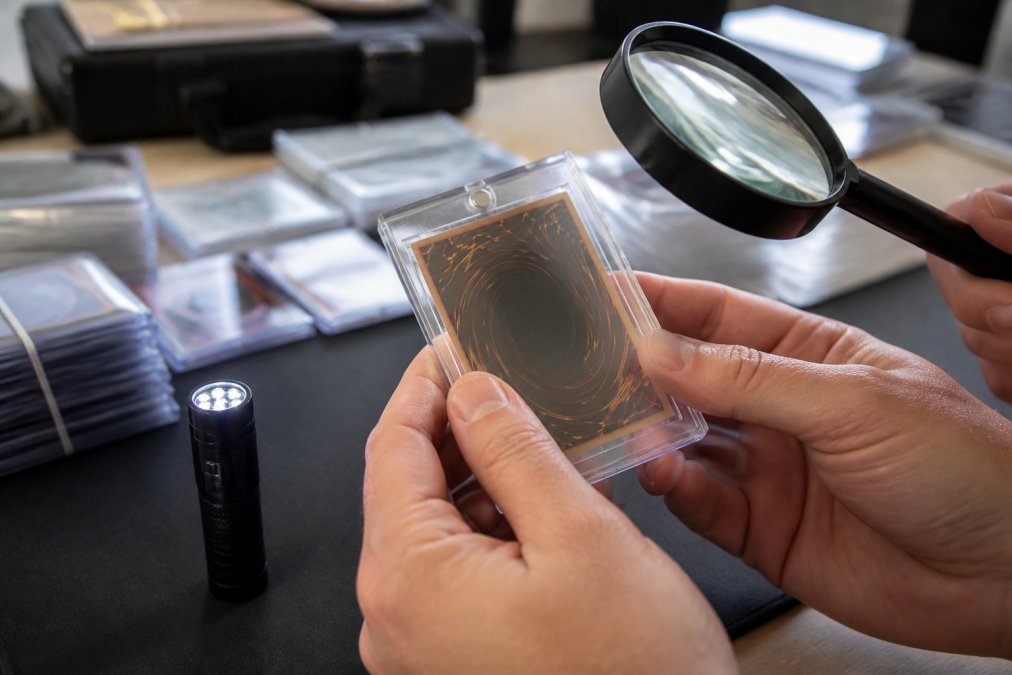
Start by recording the unboxing on video. This provides evidence if the card arrives damaged or is not what was described. Then, verify the card's condition against the listing photos. For graded cards, check that the slab number matches the certification number in the database. For raw cards, perform the light test and inspect the corners and edges. Shipping insurance is your financial safety net for damage or loss in transit, so confirm that the seller insures the package for its full value and requires a signature upon delivery.
Common Red Flags in Online Listings and How to Avoid Scams
Scam prevention is about recognizing the patterns that fraudulent sellers use. The most common red flag is pricing that is significantly below market value. If a deal seems too good to be true, it almost always is. Counterfeiters rely on the buyer's desire for a bargain to bypass their normal caution.
Other red flags include sellers who refuse to provide additional photos, those who use stock images instead of photos of the actual card, and listings with vague condition descriptions. Be wary of sellers who pressure you to complete a transaction quickly or who try to move the conversation off the platform. A legitimate seller will not mind answering questions or providing more evidence of the card's authenticity.
Conclusion: Your Next Steps for Buying Rare Cards With Total Confidence
Building a valuable collection is a marathon, not a sprint, and every purchase is a building block. The strategies outlined here, from the seven-point inspection to using escrow for high-value deals, are designed to protect your investment and your peace of mind. The market is full of incredible cards and reputable sellers, but it also has its share of risks that a structured approach can mitigate.
At Cardboard Superstars, we provide clear product details before checkout, use secure collector-grade packaging, and ship fast. Whether you are hunting for a rare 1/1 pre-production proof or a beginner-friendly sealed box, our goal is to make every transaction feel as safe as buying from a trusted friend.
Frequently Asked Questions
What is the best way to verify the authenticity of a rare card before buying?
Start with a visual inspection for print quality, centering, and surface wear. Authentic cards have crisp registration and consistent color. For high-value purchases, buying rare cards with total confidence means relying on professional authentication. A PSA or BGS slab provides a third-party guarantee of authenticity and condition. If you are buying raw cards, request detailed photos and compare them against known examples from the same set.
What is the safest payment method for buying expensive graded cards online?
Use a credit card or a payment service that offers buyer protection. These methods let you dispute a charge if the card arrives damaged or is not as described. Avoid wire transfers, cryptocurrency, or peer-to-peer payment apps, which offer little to no recourse. For very high-value purchases, consider an escrow service that holds your funds until you confirm the card matches the listing.
How do PSA and BGS grading services differ?
PSA is the industry standard for market value and liquidity, making it the most widely recognized slab in the hobby. BGS provides a more detailed breakdown with subgrades for centering, corners, edges, and surface. The benefits of PSA vs BGS grading depend on your goal. If you want easy resale, choose PSA. If you want a precise condition report on a card you plan to keep, BGS offers more detail.
Get started with Cardboard Superstars and find your next hobby win with the confidence that comes from authentic products, transparent listings, and packaging designed to protect your collection.