


Quick Summary
To identify resealed card slabs, inspect the seam and edges under bright light, check the plastic for cracks, frosting or cloudiness, and look for glue residue or odors. Then verify the label and certification number against the grading company's official record.
- Compare the seam and edges with photos of authentic slabs from the same grading company and era.
- Look for cracks, frosting, cloudiness or uneven thickness in the plastic.
- Check the seam and edges for glue residue, stains or a sharp chemical odor.
- Confirm the PSA certification number matches the card name, set, number and grade on the official record.
- Photograph the slab and save listing details before contacting the seller or opening a dispute.
Table of Contents
- Why Resealed Card Slabs Are a Real Risk for Buyers
- Step 1: Inspect the Slab Edges and Seams
- Step 2: Check the Plastic for Cracks, Gaps, Frosting and Cloudiness
- Step 3: Look for Glue Residue, Stains and Odors
- PSA Slab Authentication: Verifying the Label and Check Number
- PSA Slab Check Number: Confirming the Certification Record
- How to Spot a Fake PSA Slab and Fake PSA Slabs on eBay
- What to Do Next If a Slab Looks Resealed
- Frequently Asked Questions
Why Resealed Card Slabs Are a Real Risk for Buyers
Last Updated: November 18, 2026
Graded cards sell for real money, and that makes them a target. A resealed card slab is a graded card that has been opened, altered, and sealed back up, often to hide damage or to pass off a lower-grade card as a higher one.
Collectors should know what to look for before they pay. This guide walks you through a practical check you can run on almost any graded card. You do not need special tools. You need good light, a close look, and a clear idea of what normal looks like.
Resealing is not always obvious. A clean, well-done reseal can look nearly perfect at first glance. That is why a repeatable checklist matters more than a single quick look.
Step 1: Inspect the Slab Edges and Seams
Start with the edges. Hold the slab under a bright light and tilt it slowly. Look at the seam where the two halves of the plastic meet. On a sealed slab from the grading company, the seam should be even, tight, and consistent all the way around.
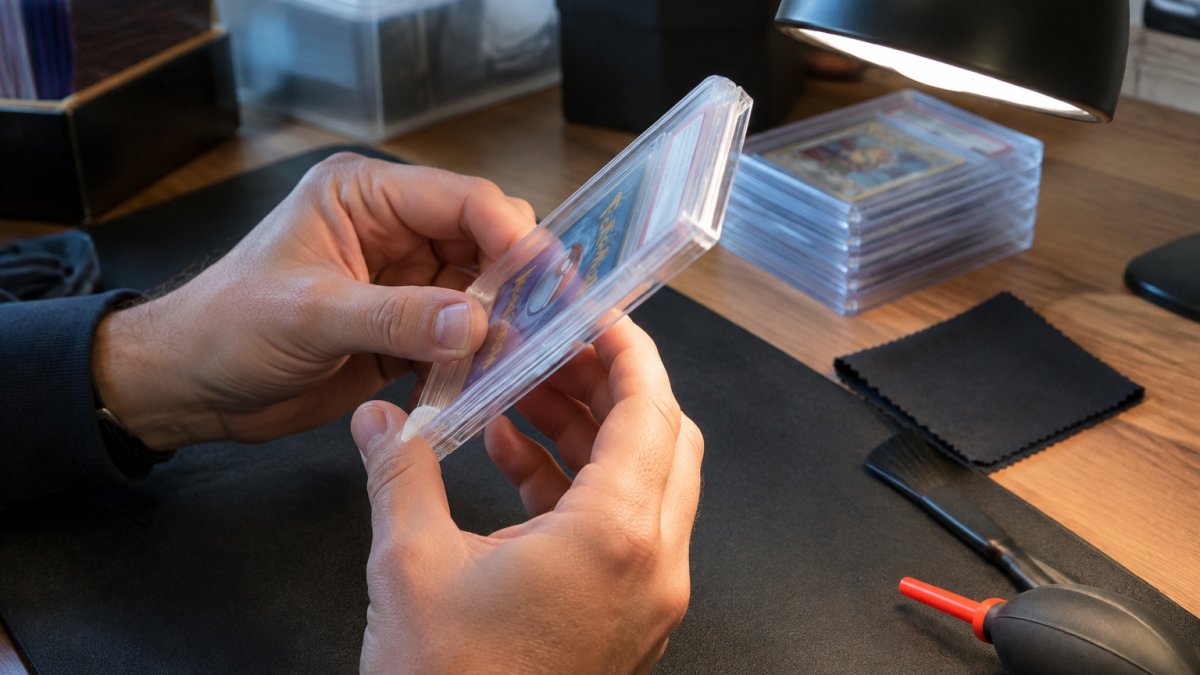
Watch for these signs:
- A seam that looks slightly wider on one side
- Small gaps where the plastic halves do not line up
- Edges that look rough, melted, or unevenly finished
- A seam that catches the light differently from one spot to another
Take a clear photo of each edge from several angles. Compare it with photos of known authentic slabs from the same grading company and era. Side-by-side comparison is one of the most useful checks you can make.
Telling Manufacturing Variation from Tampering
Not every odd edge means a reseal. Slabs can leave the factory with small differences in seam finish. Ordinary wear from handling can also scuff an edge. The goal is to spot patterns, not single quirks.
Ask yourself these questions:
- Does the imperfection appear on both sides of the slab, or only one?
- Does it look like a clean, consistent finish, or like damage or added material?
- Do authentic slabs from the same batch show the same thing?
When an issue looks like it was added by hand rather than made in the factory, treat that as a serious warning.
Use this quick reference to check the most common reseal signs against normal slab appearance.
| Check | Normal slab | Possible reseal sign |
|---|---|---|
| Seam | Even, tight, consistent all around | Wider on one side, small gaps |
| Edges | Smooth, evenly finished | Rough, melted, unevenly finished |
| Plastic | Clear, smooth, consistent surface | Cracks, frosting, cloudiness |
| Thickness | Uniform across the slab | Uneven in one area |
| Seam area | No added material | Glue residue, stains, chemical odor |
Step 2: Check the Plastic for Cracks, Gaps, Frosting and Cloudiness
Next, examine the plastic itself. Authentic slabs have clear, smooth plastic with a consistent surface. Resealed slabs often show signs that the plastic was heated, cut, or pressed again.
Look for:
- Cracks or hairline splits, especially near the seam
- Frosting or cloudiness, a milky haze that may come from heat or solvents
- Uneven thickness, where one area feels or looks different
- Scratches or polish marks that suggest the plastic was re-finished
Shine a light through the slab at an angle. Cloudy patches that do not match the rest of the plastic deserve a close second look.
Step 3: Look for Glue Residue, Stains and Odors
Resealing usually requires adhesive. Check the seam and the edges for glue residue. Look for thin shiny lines, dried film, or spots where the adhesive pooled. Stains around the seam can also point to added material.
Smell is a useful check when you can handle the slab in person. A sharp chemical or glue-like odor is not normal for a sealed slab. Do not hold the slab close to your face for long, and never try to open it.
Keep in mind that a clean-looking slab can still be resealed. The absence of residue does not prove authenticity. Combine this check with the others.
PSA Slab Authentication: Verifying the Label and Check Number
If the slab is from PSA, the label is one of your strongest tools. A genuine PSA label is printed with clean, sharp text and sits flat and straight inside the plastic. Look at the label for:
- Crisp, even printing with no smudges or double edges
- A label that sits centered and does not shift when you tilt the slab
- Consistent font and spacing that match other authentic PSA labels
The PSA check number on the label is what you use to confirm the record. This leads directly into the next step.
PSA Slab Check Number: Confirming the Certification Record
Every PSA slab carries a certification number. Use it to look up the card's grading record on PSA's official website. Compare the card details, grade, and year against what you see in your hand.
Check that:
- The certification number on the slab matches the record
- The card name, set, and number are correct
- The grade on the label matches the grade on the record
A mismatch between the label and the official record is a major red flag. If the number does not return a record at all, do not buy the slab until the seller can explain why. For more on reading the report itself, see our guide on how to read a card grading report.
How to Spot a Fake PSA Slab and Fake PSA Slabs on eBay
Fake PSA slabs are common enough that many collectors now treat every listing with suspicion. Marketplaces make this harder because a convincing photo can hide a lot.
When shopping on eBay, watch for these signs:
- Photos that avoid showing the edges or seam
- Listings with stock photos instead of real pictures of the actual slab
- Sellers who refuse to send extra photos or video
- Prices that look far too low for the grade shown
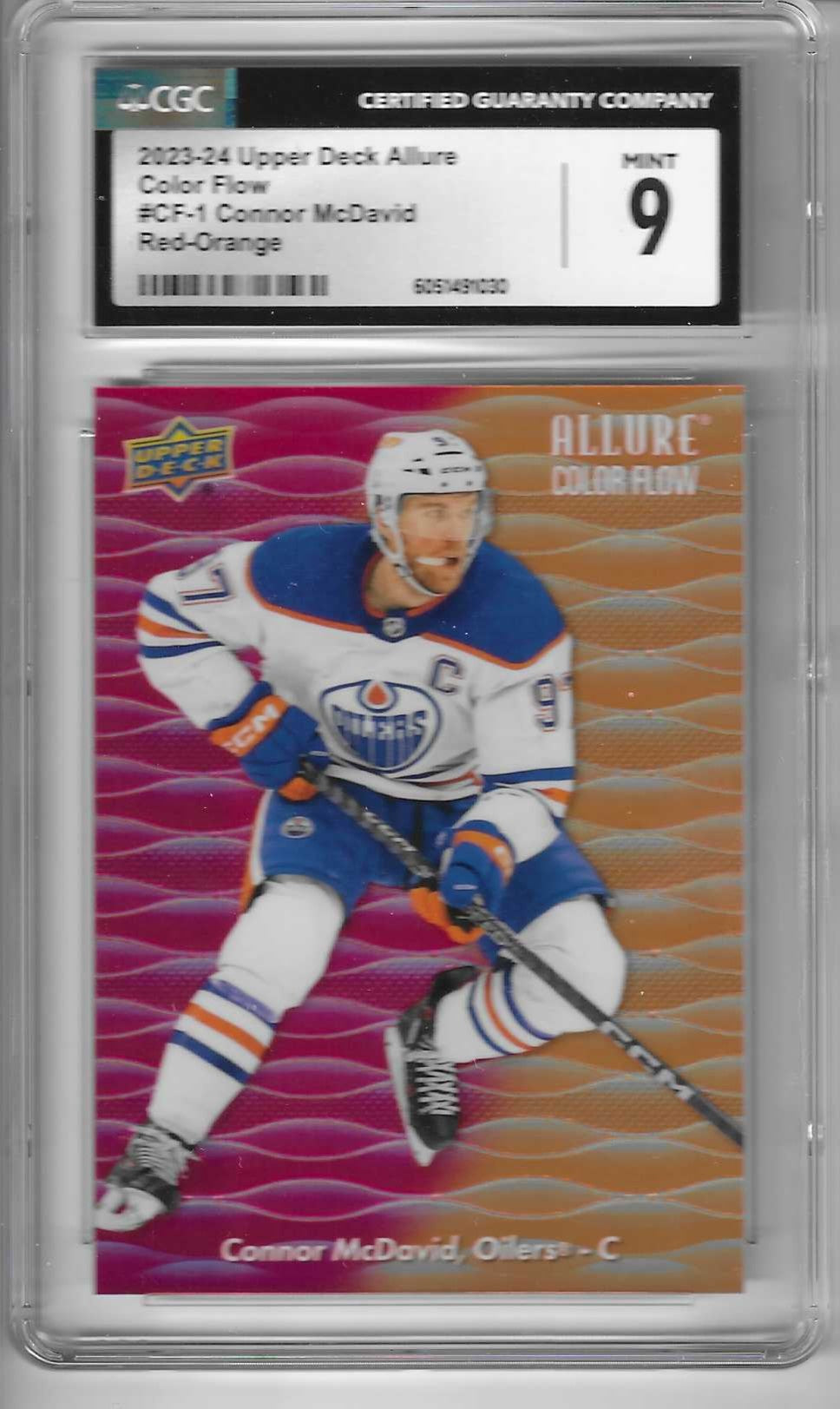
Ask the seller for clear close-ups of the seam, the label, and the back of the slab. A legitimate seller with a real card will usually agree. Cardboard Superstars provides clear product details before checkout, so you can review condition information before you commit. You can also see a graded modern card, the 2023-24 Upper Deck Allure Connor McDavid Color Flow Orange Yellow CF-1 CGC 9, priced at $38.99: https://shop.cardboardsuperstars.com/products/2023-24-upper-deck-allure-color-flow-connor-mcdavid-cf-1-orange-yellow
What to Do Next If a Slab Looks Resealed
If something looks wrong, stop and document it before you do anything else. The single biggest mistake buyers make is opening the slab, cutting the plastic, or trying to "test" the seam. Once the encapsulation is broken, the grading company's guarantee and marketplace buyer-protection programs may no longer apply, and you lose the physical evidence that supports your claim. Treat the slab as evidence, not as a project.
Document the slab before you contact anyone
A dispute is only as strong as the record you build in the first hour. Work through this sequence:
- Photograph the slab on a plain, well-lit surface from the front, back, both long edges, and both short edges. Use a raking light (a flashlight held at a low angle) so seams, frosting, and residue cast shadows.
- Capture a close-up of the certification number and the full label, plus a second shot of the number next to a ruler or coin for scale.
- Photograph the card through the plastic at an angle, so any movement, tilt, or debris inside the holder is visible.
- Save the original listing, the seller's username, the item number, the purchase date, and every message in the thread. Screenshot rather than copy-paste, so timestamps and usernames are preserved.
- Note the slab's weight and dimensions if you have a kitchen scale or calipers; resealed slabs sometimes carry extra adhesive or a slightly thicker seam, and a recorded measurement is hard for a seller to dispute later.
Keep the files in one folder named with the certification number. If the case escalates, you will be asked for the same images more than once.
Contact the seller first, in writing
Send one message that states the concern plainly and asks for specific information. Avoid accusations; ask for close-ups of the seam, the label, and the back of the slab, and ask the seller to confirm the certification number in writing. A legitimate seller will usually comply. A seller who refuses, delays, or answers with stock photos is giving you a useful data point.
Watch out: do not accept a partial refund in exchange for closing the case before you have the slab in hand and have inspected it. Once a case is closed, reopening it is difficult on most marketplaces.
Escalate through the right channel
If the seller will not resolve it, move to the platform's buyer-protection process rather than a public callout. On most marketplaces, that means opening a formal case through the platform's dispute process, which creates a timestamped record. On other marketplaces, use the formal dispute flow rather than direct messages.
If a slab carries a grading company's certification, you can ask the grader directly whether the certification number matches its records.
Know when to walk away
If the seller is unresponsive, the price was far below market for the grade, and the platform's protection window is closing, the cheapest outcome is often to return the slab for a refund and move on. Document the return shipment, photograph the slab in the box before sealing it, and keep the tracking number. Keep tracking information for any returned slab.
If the evidence is mixed, a slightly uneven seam but a clean certification record, for example, an experienced collector or a professional grader's opinion can help you decide whether to pursue the dispute or accept the slab. Visual inspection has real limits, and a second set of eyes is cheaper than a lost card.
Ready to shop with more confidence? Find cards from Cardboard Superstars, where product details come before checkout.
Frequently Asked Questions
How do I tell if my PSA slab is real?
Start by checking the certification number on the label against PSA's online certification verification tool, then confirm that the card, grade and player match the record. Next, inspect the slab edges for even, clean seams, check the plastic for clarity and uniform thickness, and look for glue residue or odd odors. A genuine slab should show consistent label printing and no signs of cracking or resealing. If anything looks off, compare the slab against a known authentic example before buying.
What should the seams on a genuine card slab look like?
Genuine slab seams are typically straight, evenly sealed and free of gaps, glue smears or uneven plastic lips. Slight manufacturing variation can exist, so one minor imperfection does not prove tampering. Look for consistent seam width along all four edges, no lifted corners and no visible adhesive. If a seam shows multiple irregularities at once, such as frosting near the seal plus residue, treat the slab as suspicious and seek a second opinion before purchase.
How do I check a PSA slab check number?
Locate the certification number printed on the label, then enter it into PSA's public certification lookup. The record should match the card's player, year, set and grade shown on the slab. If the number returns no record, or the details differ from the label, the slab may be counterfeit or altered. Always verify the number yourself rather than relying on a seller's screenshot, since images can be edited.
What should I do if I suspect a graded card slab was resealed?
Stop before sending payment or accepting delivery if possible. Document the slab with clear photos of the label, edges, seams and certification number, and save the listing and seller messages. Contact the seller with specific observations and request a return or refund under the platform's buyer protection policy. If a dispute is needed, the platform's resolution process is the most direct route, and PSA can confirm certification records.
