


Table of Contents
- Understanding UV Rays and Ink Degradation
- Choosing UV-Protected Card Cases and Frames
- Selecting the Best Protective Sleeves for Graded Cards
- Controlling Environmental Factors: Temperature and Humidity
- Lighting Your Display: LED vs. Incandescent Bulbs
- Preventing Autograph Fading Through Preventative Maintenance
- Storage vs. Display: Finding the Right Balance
- Frequently Asked Questions
Last Updated: October 4, 2026
Understanding UV Rays and Ink Degradation
Ultraviolet light is the primary culprit behind autograph fading on trading cards. UV rays break down the chemical bonds in ink, causing colors to fade and signatures to lose their vibrancy over time.
The chemistry is straightforward. Ink molecules absorb UV energy, which causes them to degrade. Direct sunlight accelerates this process dramatically. Even ambient light from windows and overhead fixtures contributes to fading over months and years.
How ultraviolet light damages autographs
When UV rays hit an autographed card, they attack the ink at a molecular level. The autograph loses color intensity first. Then the signature becomes harder to read.
This damage is permanent. You cannot restore a faded autograph. Prevention is your only real option.
Different inks fade at different rates. Ballpoint pen signatures typically hold up better than markers or fountain pen ink. But all autographs will fade if exposed to enough UV light.
Direct sunlight vs. ambient light exposure
Direct sunlight is roughly 1,000 times more intense than ambient indoor light.
Ambient light still causes fading, just much more slowly. A card displayed under fluorescent or incandescent bulbs will fade over years rather than months.
This distinction matters for your display strategy. If it's on an interior wall away from natural light, standard protective sleeves may be sufficient.
Choosing UV-Protected Card Cases and Frames
The right display case or frame is your first line of defense against UV damage.
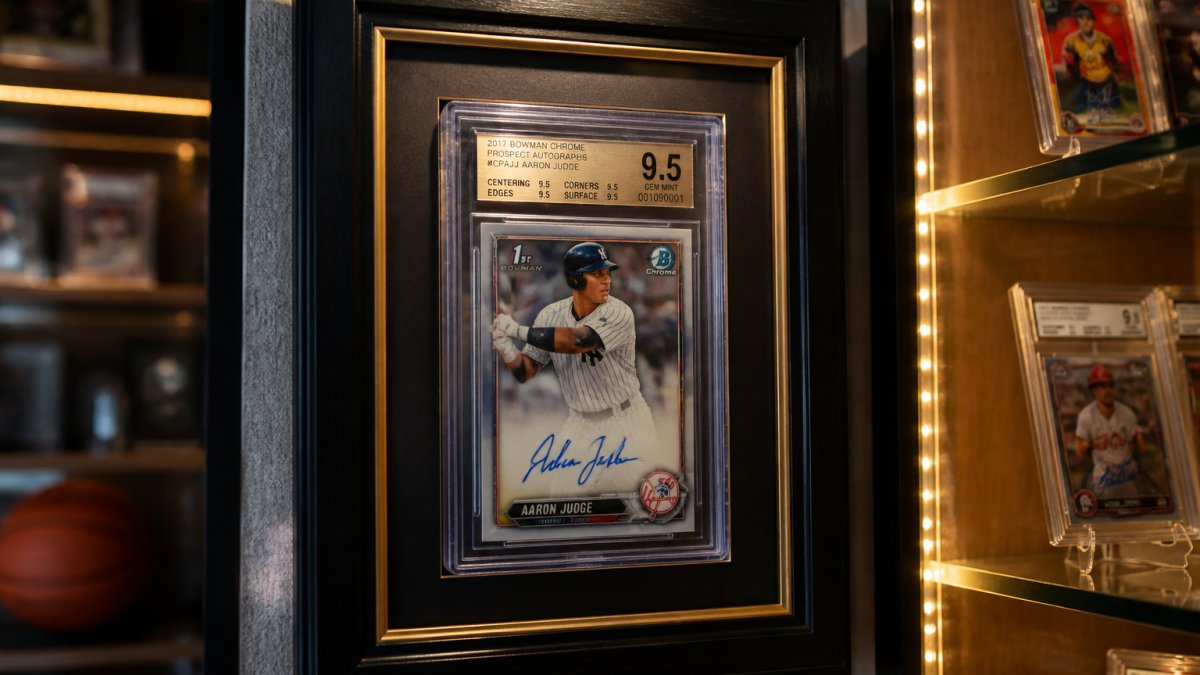
Museum glass blocks 99% of UV rays while maintaining perfect clarity. It's the gold standard for high-value cards. The tradeoff is cost, museum glass frames run significantly more than standard options.
UV-blocking acrylic is lighter, more affordable, and nearly as effective. It blocks around 98% of UV rays.
Museum glass and acrylic display options
Museum glass is treated with special coatings that absorb UV light before it reaches your card. The glass remains crystal clear, you won't see any color shift or distortion.
Use museum glass for:
- High-grade autographed cards worth $500+
- Cards you plan to display permanently
- Signatures you want to preserve for decades
- Cards that will sit near windows or under bright lights
UV-blocking acrylic performs similarly but with practical advantages. It's lighter, won't crack if bumped, and costs less. The downside is that acrylic can scratch more easily than glass and may develop a slight yellow tint over many years.
Use acrylic for:
- Cards in the $100-500 range
- Display cases that get moved or rotated
- Wall-mounted displays where weight matters
- Situations where you need flexibility
Anti-reflective and protective film solutions
If you already own a frame with standard glass, anti-reflective film is a cost-effective upgrade. This transparent film adheres to the inside of your glass and blocks UV rays without requiring you to replace the entire frame.
Apply anti-reflective film to:
- Existing frames you don't want to replace
- Cards displayed in multiple locations
- Temporary displays you might change seasonally
The film works by absorbing UV wavelengths. It also reduces glare, making your autograph easier to view. Installation takes 10-15 minutes and costs far less than a new frame.
Selecting the Best Protective Sleeves for Graded Cards
Protective sleeves are essential whether your card is graded or raw. They shield your autograph from dust, fingerprints, and light damage while your card is stored or in transit.
Archival-quality sleeves are made from acid-free, inert materials that won't degrade your card over time. Cheap sleeves can yellow or off-gas chemicals that damage ink. Archival sleeves prevent this.
For daily handling and storage, we recommend the Rip & Protect Bundle from Cardboard Superstars.
Archival-quality sleeves and card savers
Penny sleeves are thin, clear plastic sleeves designed for standard trading cards. They protect from dust and fingerprints but offer minimal structural support.
Semi-rigid card savers are thicker sleeves with a stiff backing. They protect cards during shipping and prevent bending during storage.
The key difference: penny sleeves flex with the card. Semi-rigid savers hold the card flat and immobile. For autographed cards, semi-rigid protection is worth the extra cost.
Slab protection and grading considerations
If your card is graded and slabbed by a professional grading company, the slab itself provides significant protection.
However, slabs are not perfect. The plastic used in grading slabs varies in UV-blocking capability. Some slabs provide better protection than others.
When shipping a slabbed card, place the slab inside a semi-rigid sleeve or toploader for extra protection. This prevents corner damage during transit.
Controlling Environmental Factors: Temperature and Humidity
UV light is only one part of the preservation puzzle. Temperature and humidity swings cause physical damage to cards and autographs that UV protection alone cannot prevent.
Humidity is particularly destructive to autographs. High humidity causes ink to absorb moisture, which can blur signatures and cause feathering (where ink spreads beyond the original line).
The ideal range is 40-50% relative humidity at a constant temperature between 65-70°F. This matches museum standards for preserving paper documents and photographs.
Optimal climate-controlled storage conditions
Keep your cards in a climate-controlled environment. Basements and attics are poor choices because temperature and humidity fluctuate seasonally. Interior closets and shelves are better.
Avoid:
- Rooms with windows that let in direct sunlight
- Basements prone to moisture or flooding
- Attics with temperature extremes
- Garages where humidity varies with weather
- Bathrooms where steam causes humidity spikes
A simple hygrometer costs under $20 and measures the humidity in your display area. Place one near your collection and check it monthly. If humidity drifts above 55% or below 35%, move your cards to a different location.
Humidity-specific damage and prevention
High humidity (above 55%) causes the most visible damage to autographs. Ink absorbs moisture and spreads. The signature loses sharp definition.
Rip & Protect Bundle 200 Penny Sleeves, 200 Semi Rigid Card Savers →
Low humidity (below 35%) makes card stock brittle. The card becomes prone to cracking and creasing. While this doesn't directly affect the autograph, it damages the overall condition and value.
The solution is simple: maintain steady humidity. Use a dehumidifier in damp rooms. In very dry climates, a small humidifier keeps levels stable.
Lighting Your Display: LED vs. Incandescent Bulbs
The type of light you use matters as much as the intensity. LED bulbs are superior to incandescent and fluorescent options for displaying autographed cards.
Incandescent bulbs emit heat and a broad spectrum that includes UV wavelengths. They fade autographs over time. Fluorescent bulbs are cooler but still emit some UV light.
LED bulbs emit almost no UV light and run cool. They're the best choice for long-term display lighting.
Why LED lighting protects against photo-degradation
LED bulbs produce light through a different mechanism than traditional bulbs. They emit photons in specific wavelengths with minimal UV output.
LEDs also run much cooler than incandescent bulbs. Heat accelerates chemical degradation in inks. By keeping your display cool, LEDs slow fading even when UV protection is in place.
Replace any incandescent or fluorescent bulbs in your display area with LED equivalents.
Light intensity and spectrum considerations
Brighter isn't always better. A card displayed under very bright lights fades faster than one under gentle lighting, even if both lights are LED.
Aim for moderate lighting. Your autograph should be clearly visible without requiring bright spotlights.
Color temperature matters too. Warm white LEDs (2700K) are gentler on autographs than cool white (5000K+). Warm light is also easier on the eyes during extended viewing.
Preventing Autograph Fading Through Preventative Maintenance
A maintenance schedule keeps your display environment stable and catches problems early. Check your cards monthly and your display setup quarterly.
Monthly inspection:
- Look for visible fading or color changes
- Check humidity levels with a hygrometer
- Verify that display cases remain clean and dust-free
- Ensure lighting hasn't shifted toward the card
Quarterly review:
- Test your display environment's temperature and humidity
- Inspect frames and cases for damage
- Verify that UV-protective glass or acrylic is clean
- Check for any signs of moisture or mold
Long-term maintenance schedules and inspection
Establish a routine. Mark your calendar for monthly checks. This takes 10 minutes and catches problems before they cause permanent damage.
Keep a simple log. Record the humidity level, temperature, and any changes you observe. Over time, this log shows trends.
Replace protective sleeves every 2-3 years. Even archival sleeves can accumulate dust and off-gas over time. Fresh sleeves cost little and provide fresh protection.
Testing your own display environment
You don't need expensive equipment to evaluate your display space. A basic hygrometer and thermometer cost under $30 combined.
Place a hygrometer near your collection for one week. Record the readings daily. If humidity stays between 40-50%, your space is ideal. If it swings wildly, you need environmental controls.
Test light levels too. Stand near your display and hold your hand over the card. You should see a clear shadow.
Storage vs. Display: Finding the Right Balance
The safest place for an autographed card is in archival storage, sealed, dark, and climate-controlled. But collectors want to see their cards.
High-value cards ($500+) should spend most of their time in storage.
Mid-range cards ($100-500) can be displayed year-round if your environment is well-controlled. Use museum glass or acrylic, LED lighting, and stable humidity.
Lower-value cards can be displayed freely. The risk-reward calculation changes when a card costs $20 instead of $2,000.
Wall mount and shelf display best practices
Wall-mounted displays keep cards visible and safe from accidental damage. Use frames with museum glass or UV-blocking acrylic. Position displays away from windows and direct sunlight.
Shelves work well for multiple cards. Use acrylic display cases that protect cards from dust while keeping them visible.
Never display cards on top of furniture or in high-traffic areas where they might get knocked over or exposed to temperature swings from heating and cooling vents.
When to keep cards stored vs. on display
Storage is best for:
- Cards worth $500 or more
- Rare autographs you want to preserve for future generations
- Cards you rarely look at but want to protect
- Signatures on fragile or delicate card stock
Display is appropriate for:
- Cards you enjoy viewing regularly
- Autographs in good condition with stable inks
- Cards in climate-controlled environments
- Signatures on modern card stock designed for durability
The decision comes down to value and your commitment to preservation. If you're serious about protecting an autograph for decades, storage wins. If you want to enjoy your card now, invest in proper display conditions and accept some risk.
Protecting an autographed card from fading requires attention to multiple factors: UV protection, environmental control, and proper display materials. Our protective supplies help you preserve your autographs while keeping them visible.
Frequently Asked Questions
How can I prevent autographs from fading on my cards?
Prevent autograph fading by limiting light exposure, especially direct sunlight and UV rays. Use UV-protected cases or frames with museum glass, choose LED lighting for displays, and maintain stable temperature and humidity levels between 45-55% relative humidity. Store high-value autographed cards in archival-quality sleeves when not on display. Regular inspection every 6-12 months helps catch early signs of ink degradation before damage becomes permanent.
Are UV-protected cases worth the investment for autographs?
Yes, UV-protected cases are essential for valuable autographed cards. Museum glass or UV-filtering acrylic blocks 99% of ultraviolet light, which is the primary cause of ink fading and photo-degradation. For collector's items and high-value autographs, the cost of a quality display case is minimal compared to the card's value. Even mid-range autographed cards benefit from protective cases that extend the card's lifespan and preserve ink stability for decades.
What is the best way to display trading cards without damaging them?
Display cards in UV-protected frames or acrylic cases away from direct sunlight and heat sources. Use LED lighting instead of incandescent or fluorescent bulbs to minimize light exposure and heat. Keep cards in a climate-controlled environment with stable temperature (68-72°F) and relative humidity (45-55%). For graded cards, use archival sleeves before placing them in toploaders or slabs. Rotate displayed cards periodically and inspect them every few months for signs of fading or environmental damage.
Does indirect sunlight damage trading cards?
Yes, indirect sunlight still contains UV rays that can fade autographs and degrade card stock over time, though more slowly than direct sunlight. Even ambient light from windows contributes to photo-degradation. To minimize damage, position displays away from windows, use window treatments with anti-reflective or anti-UV films, and rely on controlled LED lighting instead. Climate-controlled indoor displays without window exposure offer the best protection for long-term preservation of autographed cards.