


Table of Contents
- Why Fake Graded Cards Are a Growing Problem
- Step 1: Inspect the Slab for Physical Damage and Seal Integrity
- Step 2: Verify the Hologram and Security Features
- Step 3: Check Label Font, Print Quality, and Alignment
- Step 4: Use UV Light to Detect Tampered Card Slab Signs
- Step 5: Look Up Your PSA Certification Number in the Database
- Step 6: How to Spot Fake Pokémon Cards Inside a Slab
- Step 7: Weigh and Measure the Card and Slab
- Frequently Asked Questions
Last Updated: September 4, 2026
Counterfeit graded cards have become one of the most serious threats in the collecting hobby, with counterfeiters now producing replica slabs that fool even experienced buyers. Learning how to spot fake graded cards is no longer optional for anyone spending serious money on PSA, CGC, or Beckett holders. This guide from Cardboard Superstars walks you through a seven-step verification process that takes about ten minutes per slab and catches the vast majority of counterfeits on the market today.
The stakes are real. A convincing fake of a high-value rookie card can cost you hundreds or thousands of dollars, and once the transaction is complete, recourse is often limited. Below, we will show you exactly how to inspect a slab like a professional, what security features to check, and how to use public databases to confirm certification numbers.

Why Fake Graded Cards Are a Growing Problem
Fake graded cards are proliferating because the profit margin is enormous and the technology to create convincing replicas has improved dramatically. Counterfeiters no longer need to print a fake card and hope it passes inspection; they can now purchase authentic raw cards, place them in replica slabs, and print convincing labels that mimic the real grading services. The Federal Trade Commission guidance on counterfeit goods notes that consumers lose billions annually to counterfeit products across all categories, and trading cards are no exception.
The problem is compounded by the fact that many buyers purchase graded cards online without ever handling the physical product. Photos can hide subtle flaws, and a well-lit image of a replica slab can look identical to the real thing. Authentication is the process of verifying that a graded card is genuine, and it requires you to look beyond the surface. This is why physical inspection, database verification, and understanding security features matter so much.
Step 1: Inspect the Slab for Physical Damage and Seal Integrity
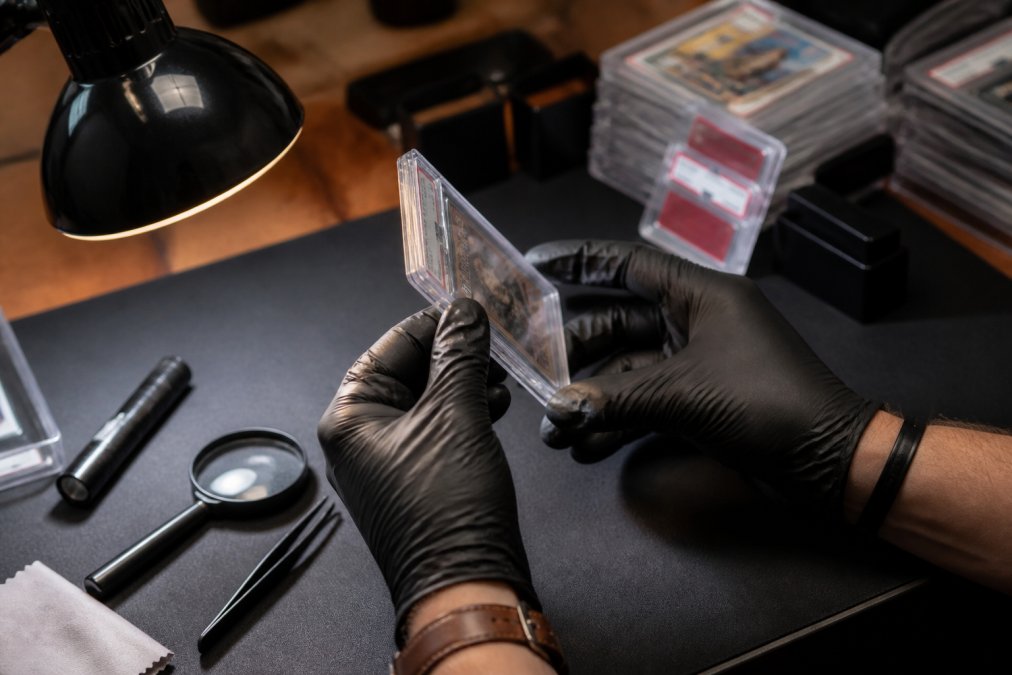
The slab itself is your first line of defense, and most counterfeit slabs fail this inspection. A genuine slab from PSA, CGC, or Beckett has a specific weight, a crisp feel, and ultrasonic welding along the edges that creates a seamless seal. Run your fingers along the perimeter of the case and look for any signs of tampering, including rough edges, slight separation between the two halves, or evidence that the case was pried open and resealed.
Tamper-evident features are standard on modern slabs, and any disruption to the plastic seal is a red flag. Hold the slab up to a bright light and rotate it slowly, watching for micro-scratches or tool marks near the seam that indicate someone opened the case. Edge wear on the slab itself is normal from handling, but a cracked or warped case should immediately raise suspicion. The plastic should feel rigid, not flexible, and the card inside should sit flush with no visible movement.
Step 2: Verify the Hologram and Security Features
Genuine graded cards include a hologram or security sticker that is nearly impossible to replicate. On PSA slabs, this appears as a reflective holographic label that shifts color when tilted. CGC uses a similar holographic element on the label. Tilt the slab back and forth under direct light and watch for a smooth, continuous color shift. Counterfeit holograms often appear flat, pixelated, or have a "sticker-like" look with visible edges.

The hologram is one of the most effective counterfeit detection tools because the printing technology required to replicate it is expensive and rarely used by forgers. The authentication standards used by major grading services describe these security features as layered and difficult to reproduce. If the hologram looks dull, is misaligned, or does not shimmer when moved, treat the card as suspicious. Also check the serial number printed near the hologram; it should be crisp and perfectly aligned with the label.
Step 3: Check Label Font, Print Quality, and Alignment
Label inconsistencies are among the easiest ways to spot fake graded cards, yet they are frequently overlooked. Genuine grading labels use specific fonts, spacing, and print resolution that counterfeiters often get slightly wrong. Compare the label on the slab you are inspecting to a known genuine example of the same grading service. Look closely at the certification number, the card name, and the grade; each character should be sharp and consistent.
Print quality issues are common on fakes. Look for blurry text, inconsistent ink density, or letters that are not perfectly aligned. The label stock itself matters too; genuine labels have a specific finish, often with a subtle security watermark that is difficult to see without magnification. Use a jeweler's loupe or a macro lens on your phone to inspect the fine details. Label alignment is another tell; genuine labels are centered precisely within the slab, while counterfeit labels may sit slightly crooked or off-center. A common mistake is assuming that any label that looks professional is genuine, but counterfeiters have gotten good at mimicking the general layout while missing the microscopic details.
Step 4: Use UV Light to Detect Tampered Card Slab Signs
Ultraviolet light reveals security features that are invisible to the naked eye, making it an essential tool for counterfeit detection. Both PSA and CGC embed UV-reactive elements into their labels, such as a security watermark or fluorescent fibers in the label stock. Shine a UV light on the label and look for these markers. If the label does not fluoresce as expected, the slab is likely a replica.
UV light also exposes tampering that is otherwise invisible. Residual adhesive, cleaning solvents, or heat damage from opening a slab will often fluoresce under UV even when the case looks clean. This is one of the most reliable ways to identify tampered card slab signs because it reveals evidence that is not visible under normal lighting. A genuine, untouched slab will show only the intended UV features, while a tampered slab may show irregular bright spots or streaks.
Step 5: Look Up Your PSA Certification Number in the Database
The PSA certification number lookup is the single most important verification step, and it takes less than a minute. Every genuine PSA slab has a unique certification number printed on the label, and PSA maintains a public database of all certified cards. Enter the number on the PSA website and compare the results to the card in your hand. The database entry should match the card name, the grade, and the population report details exactly.
The database check is powerful because counterfeiters often use real certification numbers from genuine cards, but they cannot replicate the card itself. If the database shows a different card, a different grade, or a different population than what is in the slab, you are holding a fake. The PSA certification verification database is free to use and is the definitive authority on PSA-graded cards. CGC and Beckett offer similar lookup tools on their websites. This step is non-negotiable for any card of significant value.
Step 6: How to Spot Fake Pokémon Cards Inside a Slab
The same principles apply whether you are buying sports cards or Pokémon, but the specific details differ. How to spot fake Pokémon cards inside a slab requires you to examine the card itself, not just the holder. Pokémon cards have a specific print quality, color saturation, and texture that counterfeiters struggle to replicate. The card should have a subtle diagonal foil pattern across the surface, and the text should be crisp with no pixelation.
Check the card's edge for the black layer that is characteristic of genuine Pokémon cards. When you hold a genuine card at an angle, you can see a thin black line between the front and back layers. Counterfeit cards often lack this layer or show a gray or white edge instead. The back of the card is another tell; the blue border and the Poké Ball design should be vibrant and perfectly registered. The Pokémon Company's counterfeit card identification guide provides official examples of genuine versus fake cards. A slab that contains a fake Pokémon card is a total loss, so spend extra time on this inspection.
Step 7: Weigh and Measure the Card and Slab
Precision measurement is the final check, and it catches fakes that pass every visual inspection. Genuine slabs have consistent dimensions and weight because they are manufactured to tight tolerances. A PSA slab, for example, has a specific weight that varies only slightly based on the card inside. Use a digital scale accurate to 0.1 grams and a caliper to measure the slab's length, width, and thickness.
Compare your measurements to known values for the same grading service and card type. If the slab is significantly heavier or lighter than expected, the case may be a replica made from different plastic. The card itself should also measure correctly; a standard trading card is 2.5 by 3.5 inches, and a thicker card stock will affect the overall slab weight. This level of verification is particularly important for high-value cards where counterfeiters invest more effort in making the visual details convincing.
| Verification Step | Primary Tool | Red Flag | Time Required |
|---|---|---|---|
| Seal integrity | Bright light, hands | Seam separation, tool marks | 2 minutes |
| Hologram check | Direct light source | Flat or pixelated hologram | 1 minute |
| Label inspection | Loupe or macro lens | Blurry font, misalignment | 3 minutes |
| UV light test | UV flashlight | No fluorescence, residue streaks | 2 minutes |
| Database lookup | Smartphone or computer | Mismatched card or grade | 1 minute |
| Card examination | Magnification | Missing black layer, poor print | 3 minutes |
| Weight and size | Digital scale, caliper | Off-spec weight or dimensions | 2 minutes |
This seven-step process takes about fifteen minutes total and covers every major counterfeit vector. The most important habit is consistency: run these checks on every graded card you buy, not just the expensive ones. Counterfeiters often target mid-value cards because buyers are less vigilant. For collectors who prefer to skip the risk entirely, buying from a source with a strong authentication track record is the safest approach. Cardboard Superstars sources only authenticated graded cards from established grading services and provides clear product details before checkout, giving you confidence in both condition and authenticity. Whether you are adding a Drake Maye rookie card or a vintage hockey legend to your collection, the verification skills above will serve you well.

Counterfeits are getting harder to spot, and the cost of a mistake continues to rise. The ten-minute inspection routine outlined here, combined with database verification and a healthy skepticism of deals that seem too good, will protect your collection and your wallet. At Cardboard Superstars, every graded card we list is authenticated before it reaches our shop, and our secure collector-grade packaging ensures it arrives exactly as described. The hobby's guide to protecting yourself from counterfeit graded cards reinforces that verification is a shared responsibility between buyers and reputable sellers. Find cards with confidence, and when in doubt, walk away. There will always be another deal.
Frequently Asked Questions
Can a fake card be placed inside a real graded slab?
Yes, this is one of the most common counterfeiting tactics. Fraudsters can open slabs using ultrasonic welding techniques or solvents, swap the authentic card for a counterfeit, and reseal it. This is why you must inspect the slab seal integrity carefully, check for UV fluorescence anomalies, and verify the certification number in the official database. If the slab shows signs of tampering or the number doesn't match the grading service's records, the card inside is likely fake.
How do I verify a PSA certification number?
Visit the official PSA website and use their certification lookup tool. Enter the certification number printed on the slab label. The database will display the card's details: player name, card set, year, grade, and issue date. If your card's information doesn't match what appears in the database, or if the number returns no results, the slab is counterfeit. Always verify before purchasing high-value graded cards, especially from unfamiliar sellers.
What are the common signs of a tampered card slab?
Look for uneven gaps between the card and the plastic casing, cloudiness or frosting in corners that shouldn't be there, misaligned labels, visible glue residue, or a slab that feels lighter or heavier than expected. Under UV light, authentic slabs show consistent fluorescence patterns; tampered slabs often display irregular glowing areas or dark spots where the slab was resealed. The plastic seal should be smooth and continuous with no visible cracks or reheating marks.
How can I tell if a slab label has been altered?
Examine the label under magnification for inconsistent print resolution, faded or misaligned text, uneven ink coverage, or micro-print that appears blurry. Authentic labels have crisp, sharp fonts and consistent color saturation. Check that the grade number, certification number, and player name are all aligned properly. If the label shows peeling edges, wrinkles, or signs of being removed and reapplied, the slab has been tampered with and the card inside is suspect.
This article was written using GrandRanker