


Quick Summary
Sports card grading is the process of having a professional service examine a card's condition, assign it a numerical grade, and seal it in a tamper-evident holder. Collectors use it to verify condition, since buyers often pay more for a card whose condition they can trust.
- Four features drive most grades: centering, corners, edges, and surface.
- Centering is the feature beginners most often misjudge, so check front and back separately.
- Pre-screen cards yourself before paying a service to avoid grading cards that will disappoint.
- Compare grades only within the same service, since each company defines its scale slightly differently.
- Graded slabs often sell for more, but the premium is not guaranteed, so research recent sales first.
Table of Contents
- What Sports Card Grading Is and Why Collectors Use It
- How Card Condition and Grading Scales Work
- How to Grade Sports Cards Yourself Before Paying a Service
- Sports Card Grading Companies Compared: PSA, SGC, CGC, and TAG
- PSA Grading Cost and What Affects Your Total Spend
- How to Submit Sports Cards for Grading, Step by Step
- When Not to Grade and Protecting Your Cards Until Then
- Start Your Collection With Cards You Can Trust at Cardboard Superstars
- Frequently Asked Questions
What Sports Card Grading Is and Why Collectors Use It
Sports card grading is the process of having a professional service examine a card's condition, assign it a numerical grade, and seal it in a tamper-evident holder. Collectors use it to verify condition and make a card easier to buy and sell with confidence, since buyers pay more for a card they trust than for an identical one whose condition is uncertain.
Grading matters most for cards where condition drives value. A common rookie card in poor condition may be worth a few dollars, while the same card graded high can sell for many times more. PSA grading standards and card condition guidance explains how graders assess each card before assigning a grade.
How third-party grading works
Third-party grading means an independent company, not the seller, evaluates the card. You submit cards through a grading service, which inspects each one, assigns a grade, and encapsulates it in a sealed plastic holder called a slab. The slab carries the grade, a certification number, and the card's details, letting a buyer check the label without trusting the seller's word.
Why graded slabs sell for more
A slab removes guesswork: a buyer can see the grade and verify the certification number, reducing the risk of paying for a card worse than described. Learn how graded sports cards are verified.
The premium is not guaranteed. Read how player injuries can also shift card value alongside grading. A card that grades lower than expected can sell for less than a raw card sold at a fair price.
How Card Condition and Grading Scales Work
Grading starts with condition, judged on the same core features every time. Understanding them lets you predict grades before you pay anyone to assign one.
Centering, corners, edges, and surface
Four features drive most grades:
- Centering: how evenly the image sits within the card borders, front and back.
- Corners: whether each corner is sharp or shows wear, rounding, or whitening.
- Edges: whether the border edges are clean or show chipping and roughness.
Centering is the feature beginners most often misjudge. See whether you can still get a card graded if it has minor surface scratches. A card can look perfect and still grade lower because the image is visibly off-center. Check front and back separately, since a card can grade worse on the back.
Reading numerical grades
Most major services use a numerical scale, often from 1 to 10, where higher numbers indicate better condition. Half-point grades such as 8.5 are common in some services. A 10 is the top grade and is rare, which is why high-grade examples carry large premiums.
Each service defines its scale slightly differently, so a 9 from one company is not automatically identical to a 9 from another. Follow a step-by-step guide to reading a grading report to interpret the details. Compare grades only within the same service, or check each company's published definitions.
How to Grade Sports Cards Yourself Before Paying a Service
Grading a card yourself first is the cheapest way to avoid paying for a card that will disappoint.
Start with centering, measuring border widths on all four sides of the front and back. Then examine each corner under magnification, followed by edges and surface. Compare findings against the scale of the service you plan to use.
Store cards in protective holders while you inspect them.
Keep a written record for each card with your estimated grade, the problems you noticed, and photos.
Pre-screening is not a substitute for a professional grade. Your estimate can be wrong, especially on surface issues that only show under specific light.
Sports Card Grading Companies Compared: PSA, SGC, CGC, and TAG
The major grading companies differ in turnaround, cost structure, declared-value limits, and how the market values their slabs. Confirm current fees and tiers on each company's website, because these change often.
What to compare, line by line
Build one row per company and one column per factor so you are comparing like with like:
- Entry-level tier price per card. The cheapest tier is usually the slowest and has the lowest declared-value cap.
- Turnaround estimate. Published as business days from the date the order is logged in, not from the date you ship.
- Declared-value limit per card. The maximum value a card can carry in that tier; above it, you must move up a tier.
Company-by-company starting points
| Company | Common strengths | Typical considerations |
|---|---|---|
| PSA | Strong market recognition and a large public sales history; widely searched by buyers | Higher fees for top tiers; longer waits at peak times; declared-value caps vary by tier |
| SGC | Distinct slab design; competitive entry tiers | Slab recognition varies by card category; check resale demand for your specific set |
| CGC | Established trust in trading cards and comics | Tier structures can be complex to compare; market preference differs by card type |
| TAG | Modern grading technology and a transparent report | Shorter resale track record to compare against older companies |
Pros and cons at a glance:
How to pick for your specific card
Check recent sold listings for graded examples of the same card from each company before deciding, since the company whose slab sells best for your specific card may differ from the cheapest to submit to.
Watch out: published turnaround estimates are targets, not guarantees. Build a buffer into any plan that depends on a card being back by a certain date.
Because fees and tier limits change, confirm the current schedule on each company's website before you budget.
PSA Grading Cost and What Affects Your Total Spend
PSA grading cost is the submission fee for each card, but your total spend includes more: the service tier you choose, shipping both ways, insurance, and any declared value fees.
Several factors change the total:
- Service tier: faster turnaround usually costs more per card.
- Declared value: higher-value cards often require a higher declared value, which affects insurance and fees.
- Batch size: submitting many cards at once can reduce handling costs per card, but it increases your risk if the batch is lost in transit.
Build your total cost before you submit. Add the grading fee, shipping, insurance, and any taxes or surcharges, then compare that total with the expected price difference between a raw card and a graded slab at your estimated grade.
Because fees change, confirm the current PSA fee schedule on the company's website before budgeting.
How to Submit Sports Cards for Grading, Step by Step
The submission process is simple, but mistakes at this stage cause delays, extra fees, and in the worst case lost cards. Follow these steps in order, and treat packing and shipping as seriously as the grading choice.
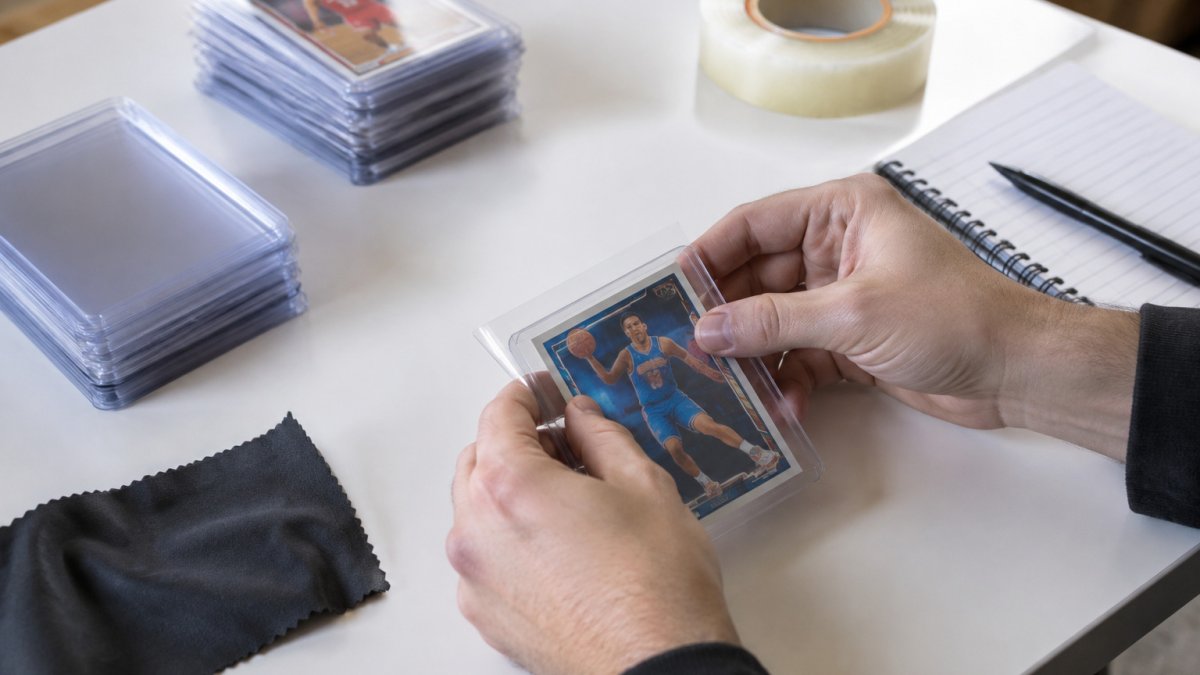
- Pre-screen every card. Inspect each one using the criteria above and sort out cards likely to grade poorly. A card that will not clear the entry tier's declared-value cap is not worth submitting at that tier.
- Choose a service and tier. Compare current fees, turnaround, and declared-value limits on the company's site. Match the tier to the card's declared value, not to how fast you want it back.
- Create an account and fill out the submission form. List each card accurately, including year, set, card number, and player name. Declare a value you can defend if asked. Keep a copy of the completed form.
- Protect the cards. Place each card in a penny sleeve, then in a semi-rigid holder. The [PRODUCT: Rip & Protect Bundle 200 Penny Sleeves, 200 Semi Rigid Card Savers | https://shop.cardboardsuperstars.com/products/rip-protect-bundle-200-penny-sleeves-200-semi-rigid-card-savers] includes 200 penny sleeves and 200 semi-rigid card savers, which are suited to protecting cards for submission and shipping.
- Pack securely. Use a sturdy box with padding so cards cannot shift. Put the cards in a stack or row that fills the box snugly, add padding on all six sides, and include the submission form and a copy of your order as instructed. Do not use a padded envelope alone for a multi-card order.
- Ship with tracking and insurance. Keep the tracking number and proof of declared value. Insure the shipment for the total declared value of the cards inside, not just the grading fee.
- Track your order. Watch for the received notice and the estimated completion date.
Packing checklist
Run through this list before you seal the box:
- Every card in a penny sleeve and a semi-rigid holder.
- Cards stacked so they cannot slide or bend inside the box.
- Padding on all six sides of the box.
If a shipment is delayed or damaged
Check the tracking history first, then contact the carrier with the tracking number before assuming the worst. If the box arrives damaged, photograph the outside and contents before opening further, keep all packing materials, and file a claim with the carrier and, if applicable, the grading company's customer service.
Watch out: submission forms list each card's details, and mismatched information can cause delays or rejection. Double-check every entry before you ship, and keep a photo of the completed form.
After the order is logged in
Do not resubmit or ship a second batch of the same cards while the first is in process; wait for the grades to post before deciding whether a review or resubmission makes sense.
When Not to Grade and Protecting Your Cards Until Then
Grading is not worth it for every card.
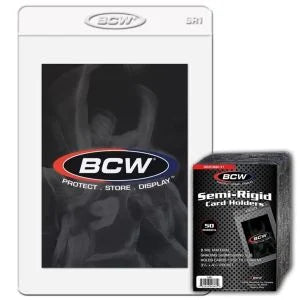
Until you decide, protect your cards. Store them upright in their holders, away from heat, humidity, and direct sunlight. The [PRODUCT: BCW Semi-Rigid Card Holder #1 | https://shop.cardboardsuperstars.com/products/bcw-semi-rigid-card-holder-1] is a semi-rigid holder that can be used for card storage and grading submissions.
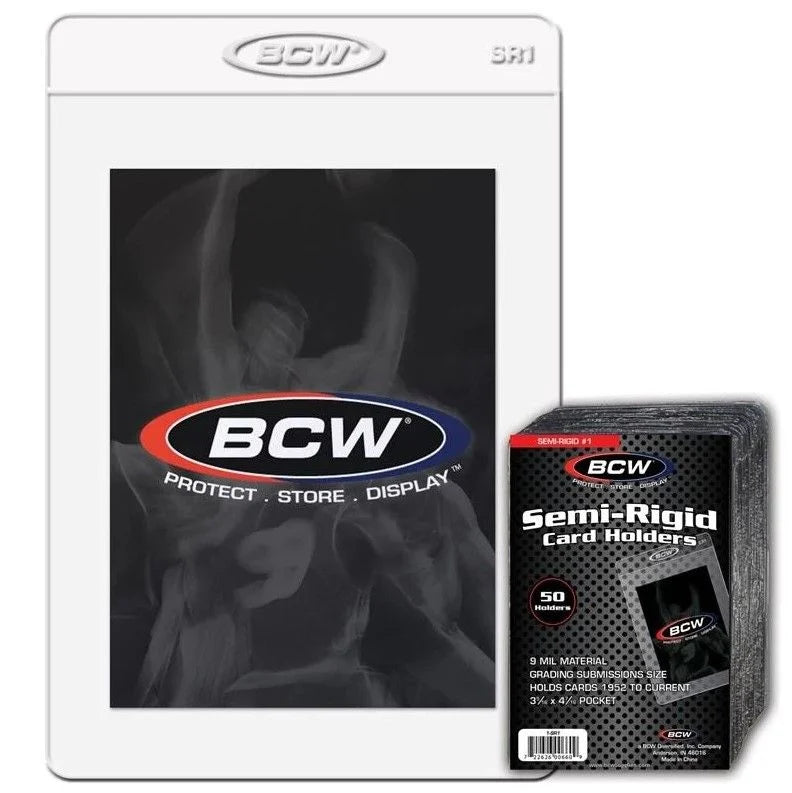
Handle cards only by the edges, keep them out of unprotected pockets and bags, and avoid stacking heavy objects on top of them.
Start Your Collection With Cards You Can Trust at Cardboard Superstars
Buying an already graded card removes much of the submission risk. Cardboard Superstars, LLC is BBB Accredited with 100% positive feedback on eBay and more than 4,600 items sold. Clear product details are provided before checkout, so you can see the grade and contents before you buy. Browse the current selection of graded sports cards and protective supplies, and find cards you can trust.
Frequently Asked Questions
What is the easiest card grading service for beginners?
For most beginners, the right choice is a service whose published tiers and declared-value limits fit the card's value. Compare each company's published tiers, declared value limits and estimated turnaround before you submit, because those three details drive most of the total cost. Start with one or two inexpensive cards so you learn the packing, tracking and return process before sending anything you cannot afford to lose.
How much does it cost to get a $1000 card graded by PSA?
Grading fees depend on the service tier you select, and the card's declared value affects which tier applies. Add return shipping, insurance and any handling charges to the grading fee to get the real total. Check PSA's current published fee schedule before you submit, since fees change over time and the total you pay should match the tier you chose.
How should I prepare a sports card before submitting it for grading?
Inspect the card under good light for centering, corner wear, edge chipping, surface scratches and print defects. Remove it from any old sleeve or toploader, handle it only by the edges, and place it in a penny sleeve and a semi-rigid card saver to protect it in transit. The BCW Semi-Rigid Card Holder #1, available at $11.99, is a semi-rigid holder that can be used for grading submissions. Photograph the front and back before shipping as your own record.
Is it worth grading a sports card?
Grading is usually worth it when the card's expected graded value, after subtracting the grading fee, shipping and insurance, leaves a meaningful profit or preserves a valuable card's authenticity. Low-value cards often cost more to grade than they add in value. Compare recent sold prices for raw and graded copies of the same card before deciding, and remember that a low grade can sometimes sell for less than an ungraded card in similar condition.
