


Last Updated: November 14, 2026
Quick Summary
For most standard PSA submissions in 2026, card grading takes several weeks to a few months from arrival at the grading company until the cards ship back to you. Turnaround depends on the service level you choose, the queue at the grader, and any intake delays, so plan with a buffer.
- Service tier and grader queue volume drive the timeline more than anything else.
- Published estimates often cover only the grading window, not shipping in or back.
- Convert business-day estimates to calendar days by multiplying by 1.4, then rounding up.
- Add one to two weeks of buffer, and more if you have a hard deadline.
- Check the official service updates page and order status before contacting customer service about a delay.
Table of Contents
- How Long Card Grading Takes in 2026: The Short Answer
- PSA Turnaround Times 2026 by Service Level
- Comparing Turnaround Times Across Grading Companies
- How Long It Takes PSA to Ship Cards Back After Grading
- How Long PSA Grading Takes Through GameStop
- PSA Grading Cost in 2026 and How Tier Choice Affects Wait Time
- Estimating Your Submission's Completion Date and Troubleshooting Delays
- Planning Your Next Submission Around Your Timeline
- Frequently Asked Questions
How long does card grading take in 2026? For most standard PSA submissions, expect several weeks to a few months from the day your cards arrive at the grading company until they ship back to you. Turnaround depends on the service level you choose, how many cards are in the queue, and whether the submission gets delayed during intake. Timelines shift, so the best approach is to plan with a buffer.
Because published estimates change and backlogs grow or shrink, treat any single number as a snapshot. The details below explain how to read current estimates, how to compare services, and what to do when a submission stalls.
How Long Card Grading Takes in 2026: The Short Answer
Card grading turnaround is the time between a submission being received and the graded cards being returned. Most collectors should plan for weeks rather than days, and longer when submission volume is high.
Two things drive the timeline more than anything else. The first is the service tier you pick. The second is the queue at the grading company when your package arrives. Shipping time, which covers both sending cards in and getting them back, sits on top of that. Add those together and a submission often takes longer than the headline estimate suggests.
PSA Turnaround Times 2026 by Service Level
PSA organizes submissions into named service levels, and each level carries its own published turnaround estimate and per-card fee. The exact numbers change as PSA adjusts capacity, so always confirm the current figures on PSA's own service-level page before you ship.
Check PSA's current service-level page for fees and turnaround windows before you commit, and convert business days into calendar dates using the estimating method below.
Comparing Turnaround Times Across Grading Companies
Different grading companies post different estimates, and their queues do not move at the same speed. To see whether the wait and cost are justified for older sealed product, read Professional Card Grading: Worth It for Vintage Packs?. Comparing them fairly requires a few steps:
- Note whether each company quotes business days or calendar days.
- Check whether the estimate starts when the package is received or when it is shipped.
- Confirm whether the figure reflects the tier you intend to use.
- Look at recent community reports for the actual completion times people are seeing.
A shorter posted estimate is not always faster in practice, so read the fine print before deciding.
How Long It Takes PSA to Ship Cards Back After Grading
Once grading is complete, the cards still need to be packaged and shipped. This return leg adds time that many collectors overlook. Plan for the return transit on top of the grading window, and factor in holidays and weekends, since those can stretch the calendar even when the grading team is working through its queue.
If you need the cards back by a specific date, work backward from that date and include the return shipping time in your plan.
How Long PSA Grading Takes Through GameStop
Some collectors submit through retail drop-off programs rather than directly. Timelines through a retailer can differ from direct submissions, because the cards first travel to the drop-off point and then move through the grading company's intake. Check the current program details and expected timing with the retailer before you commit, since intake schedules and submission windows vary.
PSA Grading Cost in 2026 and How Tier Choice Affects Wait Time
Grading fees are set by PSA and change over time, so confirm current fees on the PSA website rather than relying on any figure printed in an article.
Choosing a tier is a trade-off. Paying for speed makes sense for higher-value cards or when you have a firm deadline. For lower-value cards where the grade may not change the outcome much, a slower and cheaper tier is often the better choice. Weigh the fee against the card's value and how long you can afford to wait.
Pricing for grading services comes directly from the grading company, so check their current fee schedule before you ship. For help with your own collection, reach out to Cardboard Superstars.
Estimating Your Submission's Completion Date and Troubleshooting Delays
Turnaround figures are often quoted in business days, which makes them hard to translate into a real date. The method below turns a business-day estimate into a calendar date you can plan around, then walks through what to do when a submission runs late.
Step 1: Build the full timeline, not just the grading window. A submission has five legs, and the published estimate usually covers only the middle one:
- Outbound shipping, the time your package spends in transit to the grader.
- Intake, the queue between delivery and the order being logged as received.
- Grading and encapsulation, the published turnaround window for your tier.
- Quality check and packaging, usually folded into the published window, but it can add days at high volume.
- Return shipping, transit back to you, plus any signature or insurance handling.
Step 2: Convert business days to calendar days. Count only Monday through Friday, then skip federal holidays. A simple rule of thumb: multiply business days by 1.4 to approximate calendar days, then round up. A 20-business-day estimate becomes about 28 calendar days. A 45-business-day estimate becomes about 63 calendar days, or roughly nine weeks.
Step 3: Work a concrete example. Suppose you ship on a Monday, transit takes four business days, intake takes five business days, your tier carries a 20-business-day estimate, and return shipping takes four business days. That is 4 + 5 + 20 + 4 = 33 business days, or about 46 calendar days, roughly six and a half weeks, before the cards are back in your hands. If a federal holiday falls inside that span, add a day for each one.
Step 4: Add a buffer. A common pattern among experienced submitters is to add one to two weeks on top of the calculated date for backlog swings and intake delays. If you have a hard deadline, such as a show or a sale, add the full two weeks and ship earlier than you think you need to.
Troubleshooting an overdue submission. When an order runs past its calculated date, work through these steps in order:
- Check the official service updates page. Grading companies may post announcements there about delays or backlogs.
- Confirm which status your order is in. Statuses typically move from received, to processing, to grading, to assembly, to shipped. An order stuck at received is an intake problem; an order stuck at grading is a queue problem.
- Compare against the stated window, not your calculated date. If the order is still inside the published business-day window for its tier, it is not officially late yet.
- Contact customer service with specifics. Once the order is past its published window, reach out with your order number, the date the package was delivered, and the tier you paid for. Keep your tracking receipt and proof of delivery in case the package is disputed.
- Escalate only after a documented first contact. If the first response does not resolve the issue, follow up referencing the original ticket and the dates you supplied.
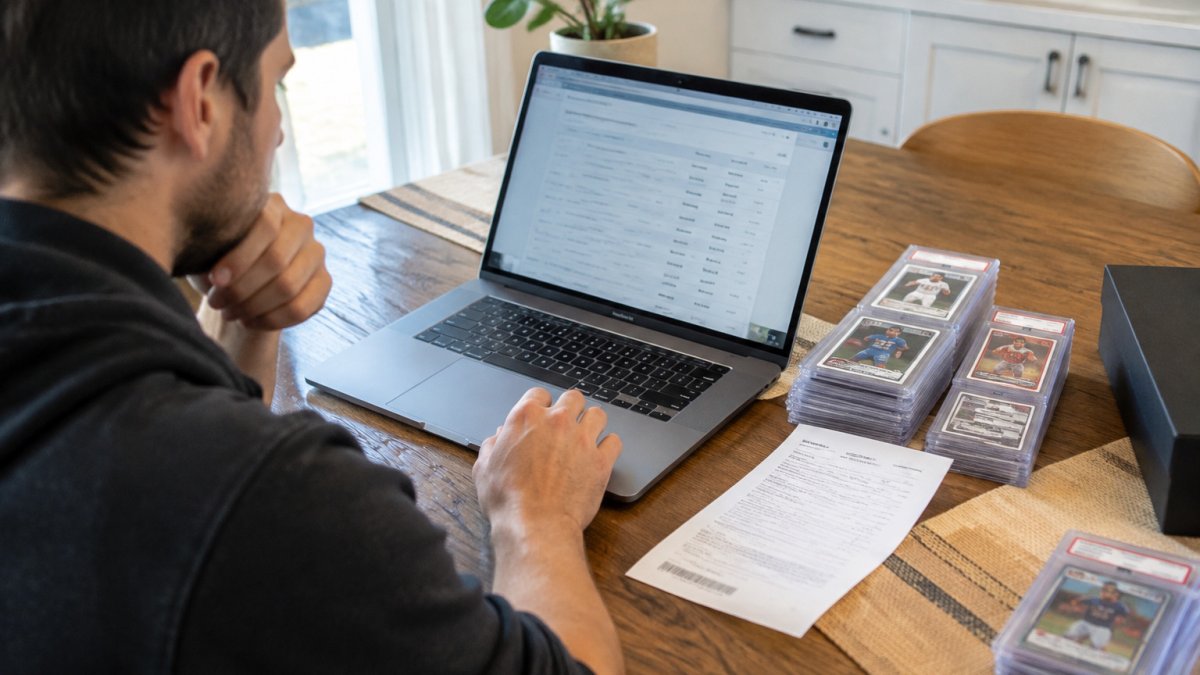
The article breaks a submission into five legs, and the table below summarises them so you can see where the time goes.
| Leg | What happens | Time it adds |
|---|---|---|
| Outbound shipping | Package travels to the grader | Transit time |
| Intake | Order is logged as received | Queue time |
| Grading and encapsulation | Cards are graded and sealed | Published tier window |
| Quality check and packaging | Cards are checked and packed | Often included, can add days |
| Return shipping | Cards travel back to you | Transit time |
| Holidays | Federal holidays fall in the span | One extra day each |
Planning Your Next Submission Around Your Timeline
Start planning before you need the cards back. Decide your deadline, pick a tier that fits it, and add the return shipping time and a buffer. If you are submitting for a show, a sale or a sale to a buyer, the buffer matters most, since a delay can cost you the opportunity.
Track each submission in a simple list with the ship date, tier, estimated window and your planned buffer. That record makes it easier to spot stalled orders early and to set realistic expectations for the next batch.
For a deeper look at evaluating services, see How to Evaluate Card Grading Services: 2026 Guide. If you are weighing whether grading suits lower-value cards, read Is Card Grading Worth It for Low Value Cards?. Planning your first batch? Are Graded Cards Worth the Investment? A 2026 Guide walks through the cost side. Once your cards return, How to Read a Card Grading Report Step by Step explains what the report says.
Ready to start building your collection? Find cards at Cardboard Superstars.
Frequently Asked Questions
How long does PSA grading take in 2026?
PSA turnaround times in 2026 vary by service level, submission volume, and backlog conditions. Estimated windows shift over time, so check the current estimates on PSA's website before you submit. Add shipping time in both directions, because the total time from leaving your hands to returning to them is often longer than the grading window alone. Plan around the estimate, not the minimum, and build in a buffer for delays.
How long does it take for PSA to ship cards back after grading?
Return shipping is usually separate from the grading window, and the time it takes depends on the shipping method you selected and the destination. Track the shipment after it leaves PSA, and keep your order number handy if you need to contact support about a delay in transit.
How long does PSA grading take through GameStop?
Confirm the current timeline with the store or GameStop's submission page before you hand over your cards.
Is PSA grading worth the wait in 2026?
Whether grading is worth the wait depends on the card's value, how you plan to sell or keep it, and how soon you need the result. Higher-value cards often justify a slower, cheaper tier because the grade affects resale value, while lower-value cards rarely do. Compare the grading fee and expected wait against the difference a grade would make to the card's price before you submit.
